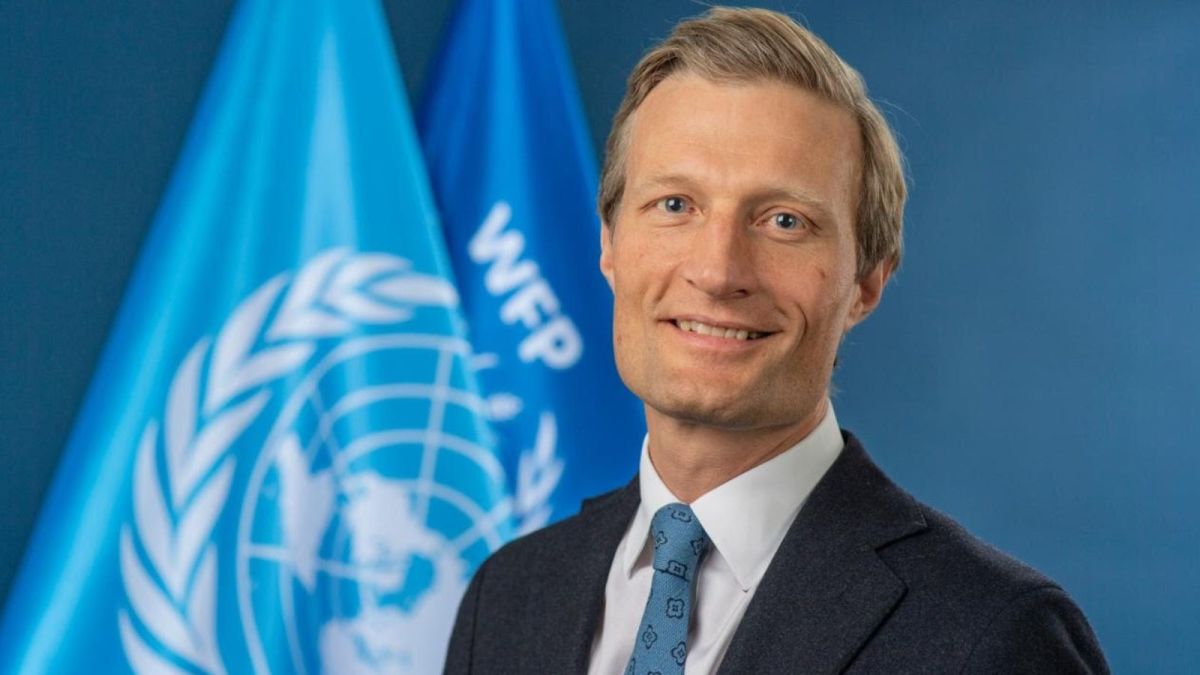
The Acting Executive Director of the United Nations World Food Programme (WFP), Carl Skau, said on Tuesday that Sudan risks slipping into even more severe levels of hunger due to the combined effects of the ongoing war, cuts in humanitarian funding, and rising agricultural costs linked to disruptions associated with the Iran conflict and instability affecting the Strait of Hormuz.
These factors, he warned, could undermine the progress made in containing famine in parts of the conflict-ridden country.
The war, now in its fourth year, between the Sudanese Armed Forces and the Rapid Support Forces (RSF) has displaced millions of people and devastated large parts of Sudan. Humanitarian agencies have repeatedly warned of worsening food insecurity and increasing obstacles to delivering aid.
Speaking to Reuters, Skau said Sudan remains the world’s largest humanitarian crisis, with nearly five million people still facing Emergency or Catastrophic levels of hunger, despite an intensified humanitarian response that has reduced the number of people living in famine-like conditions.
> “This is an enormous crisis, both in terms of its scale and its severity,” Skau said.
He added that more than 100,000 people continue to endure famine-like conditions, placing them in IPC Phase 5, the highest level of the Integrated Food Security Phase Classification (IPC), which is supported by the United Nations.
> “When you have numbers like these in IPC Phase 5, the situation is extremely serious,” he said.
According to IPC data, nearly 19.5 million people across Sudan are experiencing severe acute food insecurity.
Skau also expressed concern over recent fighting around El Obeid, the capital of North Kordofan State, warning that the city could face a situation similar to El Fasher in North Darfur, where conflict and siege have trapped civilians and severely disrupted humanitarian assistance.
However, he noted that violence has eased somewhat in recent days, raising hopes that food assistance in El Obeid can be expanded from 100,000 to 250,000 people.
The WFP is also deeply concerned about renewed fighting in Darfur, which has led to the closure of the Tina border crossing between Chad and Darfur, disrupting a key humanitarian supply route.
Funding shortages have forced the agency to reduce the number of people receiving assistance from five million a year ago to around 3.5 million today. Food rations have also been cut in several areas, including Tawila in Darfur.
The programme is currently facing a funding gap of US$646 million, following major reductions in contributions from key donors, including the United States, several European countries, and the United Kingdom.
> “We are moving in the wrong direction—we are going backwards,” Skau warned.
He also cautioned that higher diesel prices and fertilizer shortages linked to the Gulf conflict and potential disruptions to shipping through the Strait of Hormuz could further weaken Sudan’s food security during the current agricultural season.
Sudan relies heavily on fertilizer imports from Gulf countries, while much of its agricultural sector depends on irrigation pumps powered by diesel, making farming increasingly expensive for producers amid rising fuel costs.