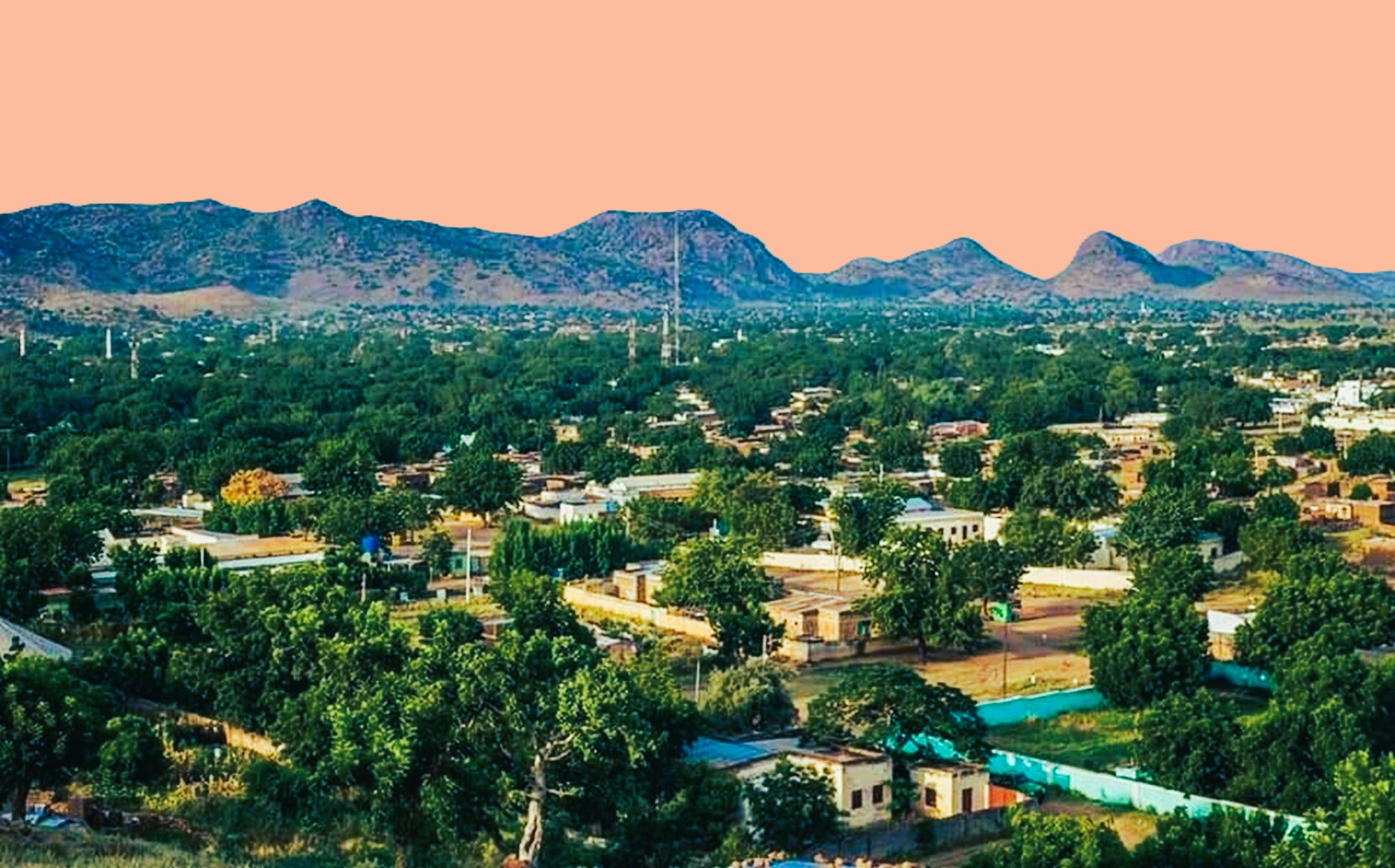
Homes in South Kordofan Bear Fruit to Ease the Hunger of War
Kadugli – Mashaweer Report
As drone attacks, artillery shelling, and a crippling blockade continue to affect the cities of Dilling and Kadugli in South Kordofan State, civilians remain trapped in an escalating struggle against hunger.
The destruction of the vital bridge linking Dilling and Kadugli—previously the main route for humanitarian aid and supplies—has further worsened the humanitarian situation, leaving residents under an effective siege.
The deteriorating security situation has also disrupted agriculture for more than three years. Fear of death, arrest, or attacks by armed groups has prevented many farmers from cultivating their land. Large areas have fallen out of production due to insecurity, shortages of financing, improved seeds, fertilizers, pesticides, and other agricultural inputs, as well as limited fuel supplies and soaring prices.
Faced with these conditions, thousands of families in Dilling and Kadugli have turned to cultivating vegetables and staple crops in their home gardens and vacant plots within residential neighborhoods. Others have relied on small plots surrounding villages—locally known as jabraka gardens—to grow food for household consumption and sell surplus produce, particularly sorghum, millet, sweet potatoes, onions, okra, molokhia, and purslane.
Meeting Basic Needs
Ahmed Khidr, a resident of the Al-Tomat area, said fear dominates farmers in Dilling whenever they attempt to prepare for the planting season, citing the risks of being killed, robbed of their farming equipment, or detained by armed groups.
He explained that cultivating crops around homes has long been part of rural Sudanese life, where spacious household compounds naturally extend into fertile agricultural land. Families are now using these spaces to grow fast-maturing vegetables and sorghum to meet their daily food needs.
According to Khidr, many residents have embraced home gardening as a practical response to food shortages and soaring prices while also ensuring access to fresh fruits and vegetables.
Securing Food Supplies
Suleiman Awad, a resident of the Al-Muwazzafeen neighborhood, said insecurity has prevented many people from reaching their farms because roads remain unsafe and armed robberies have become increasingly common.
He noted that most residents have therefore turned to farming in residential areas, including the Airport, Al-Qalaa, Agoz, and Gaar Al-Hajar neighborhoods. Although production is lower than on larger farms, these gardens have helped many households maintain a basic level of food security.
Awad added that after the success of household farming and the achievement of self-sufficiency by some families, residents began sharing surplus sorghum and vegetables with nearby neighbors, encouraging more households to adopt the practice as a way of coping with scarcity and rising prices.
Practical Solutions
Abu Aaga Al-Fateh, a resident of Kadugli, said the closure of roads and the interruption of commercial supplies prompted many families to cultivate small plots behind their homes to secure food and sell surplus crops to cover essential household expenses.
He described home gardening as one of the most effective coping strategies adopted during the war, providing many remaining residents with food while generating modest income through local markets, particularly from sorghum, millet, peanuts, and a variety of vegetables.
He noted that residents have focused on crops that mature quickly, such as okra, molokhia, zucchini, watermelon, and cucumbers, many of which can be harvested within two months.
Abundance Through Adaptation
Makarem Hussein, who lives in the Tafari area, said many families have sought alternatives to vegetable shortages by using household compounds and vacant residential plots for cultivation.
She explained that she and two of her neighbors began growing fast-producing crops such as arugula, snake melon, okra, radishes, fennel, and watermelon, adding that the fertile soil of South Kordofan contributed to the success of the initiative.
According to Hussein, home gardening has spread rapidly because it offers a practical response to worsening food insecurity. Today, many families grow sorghum, millet, maize, okra, sweet potatoes, molokhia, arugula, and other crops, making these foods far more accessible than before.
A Rural Development Opportunity
Food policy researcher Salah Madawi said that most residents of South Kordofan come from rural farming backgrounds, and many homes have spacious compounds that are now being used to cultivate sorghum, millet, and various vegetables that require relatively little expertise or time.
Madawi believes that home gardening plays an important role in strengthening household food security and supporting rural development. He said the practice has become an effective solution for many urban families during the conflict, helping meet essential food needs while allowing some households to earn additional income by selling surplus produce in local markets.
He added that home gardening could continue even after the war ends because of its economic and nutritional benefits, particularly for low-income families, as it improves dietary diversity while reducing household food costs.