Refugee Camps Under Fire from the Tigray Conflict: Sudan’s Border Faces a New Test
Doha – Mashaweer | Report by: Magdi Ali
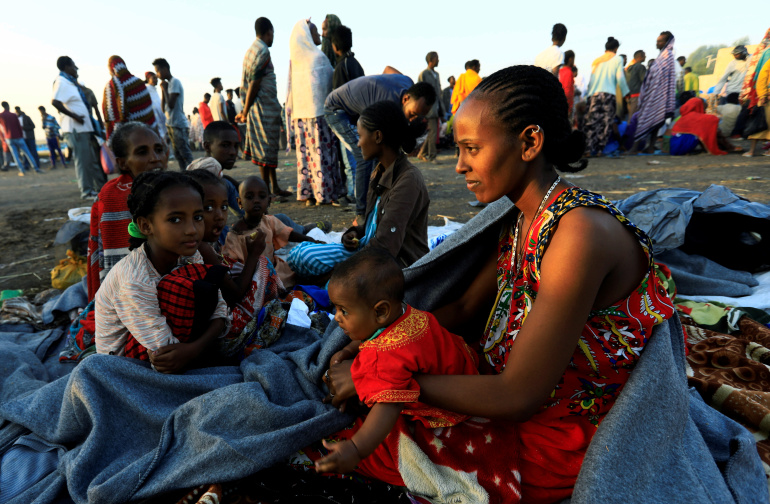
The refugee camps along the Sudan–Ethiopia border were never meant to become part of a battlefield. They were established as safe havens for people fleeing war—places of refuge for families who carried only a few belongings, leaving behind destroyed villages and painful memories. However, with the renewed fighting in Ethiopia’s Tigray region, these camps have once again found themselves facing the very danger they had escaped.
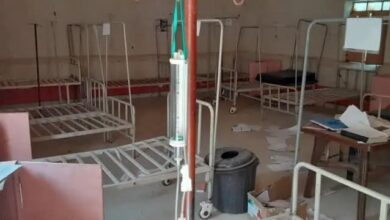
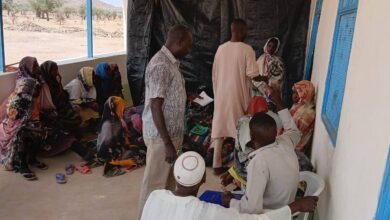
On the evening of Friday, July 31, 2026, projectiles fired during clashes between the Ethiopian National Defense Forces and Tigray regional forces crossed the border and landed inside refugee camps on Sudanese territory. The incident resulted in deaths and injuries among civilians who had sought safety across the border. More than an isolated military incident, it exposed the fragility of a region caught at the intersection of multiple crises: an unresolved conflict in Ethiopia, Sudan’s ongoing war that began on April 15, 2023, and a border that has long been vulnerable to instability and conflict.
In eastern Sudan, where refugee camps stretch along the frontier, geography itself appears burdened by the surrounding conflicts. Refugees who fled the Tigray war several years ago now once again find themselves within earshot of artillery fire, raising renewed questions about the resilience of border regions where multiple wars overlap.
A Crisis Beyond the Camps
Khartoum was quick to express its concern. Sudan’s Ministry of Interior issued a statement warning of the security and humanitarian consequences of violence spilling into refugee camps, emphasizing that the impact of the fighting on these areas poses a direct threat to civilians and further complicates the already dire humanitarian situation.
The ministry confirmed that casualties had occurred inside the camps and called on the United Nations, the African Union, and international and regional organizations to intervene urgently to contain the escalation, secure refugee sites, and prevent the conflict from spreading. It also stressed that Sudanese authorities were closely monitoring developments and taking necessary measures to protect the border and shield civilians from the fighting.
Two days later, Sudan’s Commission for Refugees, affiliated with the Ministry of Interior, issued another statement expressing deep concern over the developments. It noted that the border strip serves as a major entry and reception point for asylum seekers arriving from Ethiopia. The Commission warned that continued military build-up near the border could trigger new refugee influxes while increasing humanitarian and security risks for civilians in and around the camps. It appealed to the international community, regional organizations, the United Nations, and humanitarian agencies to provide urgent protection and assistance to prevent the crisis from worsening.
The sensitivity of the situation lies in the fact that the affected camps are located inside Sudan and host hundreds of refugees, most of them Ethiopians, making any military escalation near the border a direct threat to people who sought safety there.
Fragile Peace Gives Way to Renewed Escalation
The latest escalation comes less than four years after the Pretoria Peace Agreement, signed on November 2, 2022, ended the war between the Ethiopian government and the Tigray People’s Liberation Front (TPLF). That conflict lasted two years and, according to African Union estimates, claimed hundreds of thousands of lives.
Yet while the agreement silenced the guns, it failed to resolve the underlying disputes. Tensions persisted over implementation of the peace deal, the future of disputed territories, and governance and security arrangements within Tigray. By early 2026, sporadic clashes had resumed before intensifying in late July near the Sudanese border.
According to TPLF officials, Ethiopian government forces launched attacks on the movement’s positions in the Sherina area near the Sudanese border using heavy weapons, while fighting continued in disputed areas in western Tigray.
As both sides continue exchanging accusations, fears are mounting that the fragile truce could collapse entirely, reigniting a broader conflict reminiscent of the devastating 2020–2022 war and driving even more civilians toward Sudan.
A Border Carrying Multiple Crises
The seriousness of these developments extends beyond renewed fighting in Tigray. They unfold within an already unstable regional environment. For years, the Sudan–Ethiopia border has been marked by complex disputes, most notably the conflict over the Al-Fashaga area, alongside recurring political and security tensions between the two countries.
Reports have also indicated Ethiopian military movements inside Sudanese territory in the Umm Barakit sector of Greater Al-Fashaga, coinciding with Sudan’s own internal conflict. These developments underscore the fragile security situation along the eastern border and further complicate the humanitarian landscape in a region hosting one of East Africa’s largest refugee populations.
The Sudan–Ethiopia border has become more than a dividing line between two states. It has evolved into a two-way corridor for people fleeing violence. Sudan continues to receive Ethiopian refugees escaping Tigray and other regions, while human rights organizations have documented the plight of Sudanese refugees inside Ethiopia as violence has intensified there.
The situation is made even more challenging by Sudan’s ongoing war, which has severely weakened state institutions and their ability to respond to humanitarian emergencies. Protecting refugee camps and securing border communities has become an increasingly difficult task, highlighting the urgent need for international engagement to safeguard civilians and prevent the border from becoming an expanding conflict zone.
Between Containing the Escalation and the Risk of Wider Conflict
The shelling of refugee camps demonstrates that wars rarely remain confined within political borders and that civilians are often the first to bear the consequences of conflicts over which they have no control.
Although there is no indication that the projectiles were deliberately aimed at Sudanese territory, the incident illustrates the grave risks posed by military operations conducted close to civilian areas. Similar incidents remain possible as long as armed forces from both sides remain deployed near the border.
Ultimately, the future of the region depends on the ability of Ethiopian parties to contain the escalation and preserve the peace agreement, as well as on the willingness of the international community to act before refugee camps—created as places of protection—become new battlegrounds where civilians once again pay the price for wars that are not their own.
In East Africa, borders are no longer merely lines separating states. They have become spaces where the memory of war, mass displacement, political rivalries, and armed conflict intersect—placing civilians once again at the center of the storm.