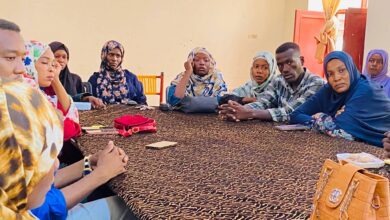
The arrests and harassment targeting Sudanese journalists are no longer isolated incidents within the context of the war. They have become part of an escalating pattern that reveals the immense danger facing a profession whose essential role is to report events and document daily life in a country experiencing one of the most complex wars in its modern history.
As the space for independent journalism continues to shrink and many journalists become direct targets, the struggle is no longer limited to accessing information—it has become a battle to protect those who seek to tell the truth.
In a recent development highlighting the growing risks facing Sudanese journalists, journalist Al-Rayeh Essam Jaksa was arrested last Sunday at the entrance to Wad Madani in Al Jazirah State while returning from covering events in Al-Hasahisa. According to a statement issued by the Sudanese Journalists Syndicate on August 3, 2026, he was detained by a force affiliated with the Sudan Shield Forces and taken to an undisclosed location. No confirmed information has since emerged regarding his whereabouts or health condition.
His arrest comes as the Syndicate continues to express concern over the fate of three female journalists detained by the Rapid Support Forces (RSF) in Nyala since February 2026: Ishraqa Abdelrahman, Zahraa Mohamed Al-Hassan, and Mawahib Ibrahim. Reports indicate that their health has deteriorated, prompting calls for them to receive medical treatment and for their safety to be guaranteed.
These developments coincided with the detention and questioning of Al Sharq TV correspondent Maha Al-Talib in Port Sudan, the transfer of journalist Nader Atta from Khartoum to Port Sudan over a published article, and controversy surrounding arrest warrants issued against several journalists and media professionals for publishing or republishing an investigative report alleging corruption.
These are not isolated incidents but rather part of a broader pattern of pressure facing Sudanese journalists. Increasingly, journalists are no longer merely observers documenting events—they have themselves become part of the danger they seek to report.
A Witness Under Fire
Since the outbreak of war on April 15, 2023, Sudan’s media landscape has suffered a profound upheaval. The conflict has extended beyond cities and institutions to the journalists themselves, who have become vulnerable to killing, arrest, intimidation, enforced disappearance, and displacement.
The war’s damage has gone far beyond human losses. It has devastated the country’s media infrastructure, which serves as society’s collective memory and its primary means of understanding unfolding events. Newspaper offices, radio stations, and television channels have been looted or destroyed, while many media organizations have ceased operations due to the loss of equipment, limited access to information, and the absence of a safe working environment.
Trade union and human rights estimates suggest that between 80 and 90 percent of Sudan’s media infrastructure has been destroyed or rendered inoperative. More than 20 political and sports print newspapers have stopped publication, dealing a severe blow to a print media sector that had long played a central role in shaping public opinion.
The loss of media institutions was not merely material; it also meant the disappearance of newsrooms responsible for verifying information, producing professional journalism, and preserving archives documenting Sudan’s social and political transformations.
Numbers That Tell the Story
Statistics illustrate the scale of the crisis affecting Sudan’s media sector since the war began. According to data documented by the Sudanese Journalists Syndicate, 32 journalists have been killed, while 556 violations against media workers have been recorded, including killings, arrests, detention, threats, and other forms of intimidation related to their professional work.
These figures represent more than statistics—they reflect the experiences of journalists who have lost their lives, their freedom, or their ability to continue working. Some face the immediate risk of arrest, while others struggle daily with communication blackouts, restricted movement, and accusations of bias from the warring parties.
The war has also forced large numbers of journalists to flee their homes or seek refuge in neighboring countries, particularly Egypt, where new digital media initiatives have emerged in an effort to preserve the presence of Sudanese journalism from exile.
Yet exile has not been an easy solution. Journalists continue to face limited funding, instability, and the challenge of rebuilding professional networks. Those who remain inside Sudan work under exceptionally difficult conditions, relying heavily on individual efforts and digital platforms despite limited resources, internet outages, and immense challenges in verifying information amid propaganda and deep political polarization.
The Law and the Press
Recent arrests and summonses demonstrate that pressure on journalists is no longer confined to the act of reporting itself. It increasingly extends to investigations, criminal complaints, detention, and, in some cases, enforced disappearance without clear information being provided to families or colleagues.
The Sudanese Journalists Syndicate and several human rights organizations argue that using legal procedures against journalists because of their reporting or publications risks becoming a tool for restricting press freedom. Government authorities, however, maintain that measures taken against certain journalists are based on legal procedures and investigations into specific complaints or alleged violations, rather than an attempt to suppress the media.
Regardless of these differing positions, the continued detention of journalists under unclear circumstances raises serious concerns about press freedom and journalists’ ability to perform their work safely.
Observers argue that protecting journalists during wartime requires practical measures to ensure their safety, safeguard their access to information, investigate attacks against them, and hold perpetrators accountable. Protecting journalists ultimately means protecting society’s right to know.
A Crisis of Professional Representation
The crisis facing Sudanese journalism did not begin with the war. It was preceded by years of debate over the independence of journalists’ professional representation and the relationship between the profession and political authority.
Since 1989, elected trade unions had been dissolved and replaced by officially registered professional unions operating under state oversight. Among the most prominent was the General Union of Sudanese Journalists, which served as the officially recognized representative body for journalists during that period.
The issue of an independent professional union remained central within the media community, with many arguing that an autonomous organization is essential for defending press freedom and protecting media professionals.
Following Sudan’s December 2018 Revolution, calls to rebuild an independent journalists’ union gained renewed momentum as part of broader demands to restore democratic and independent professional institutions.
This process culminated in the election of the Sudanese Journalists Syndicate in August 2022—the first free journalists’ election in decades—with Abdel Moneim Abu Idris elected as president.
However, the establishment of the new Syndicate did not end disputes within the profession. The General Union of Sudanese Journalists rejected its legitimacy, describing it as a parallel body, while the elected Syndicate maintained that it derived its legitimacy from a free democratic election and sought to restore the independence of professional unionism while defending journalists’ rights.
When war erupted in April 2023, these internal disputes became secondary to the immediate dangers confronting journalists, including arrests, threats, displacement, and the collapse of media institutions. Nevertheless, the continued existence of competing representative bodies weakened the sector’s ability to respond collectively to widespread violations.
The fragmentation has also revived questions about the independence of certain professional organizations and their ability to represent journalists free from political influence at a time when the media itself has become entangled in the broader conflict.
The Last Witness Endures
Despite the widespread collapse of Sudan’s media sector, journalists have continued striving to preserve their profession through independent digital platforms dedicated to documenting the war, amplifying civilian voices, and recording human rights violations. Meanwhile, the Sudanese Journalists Syndicate has continued documenting abuses against media workers and advocating for press freedom.
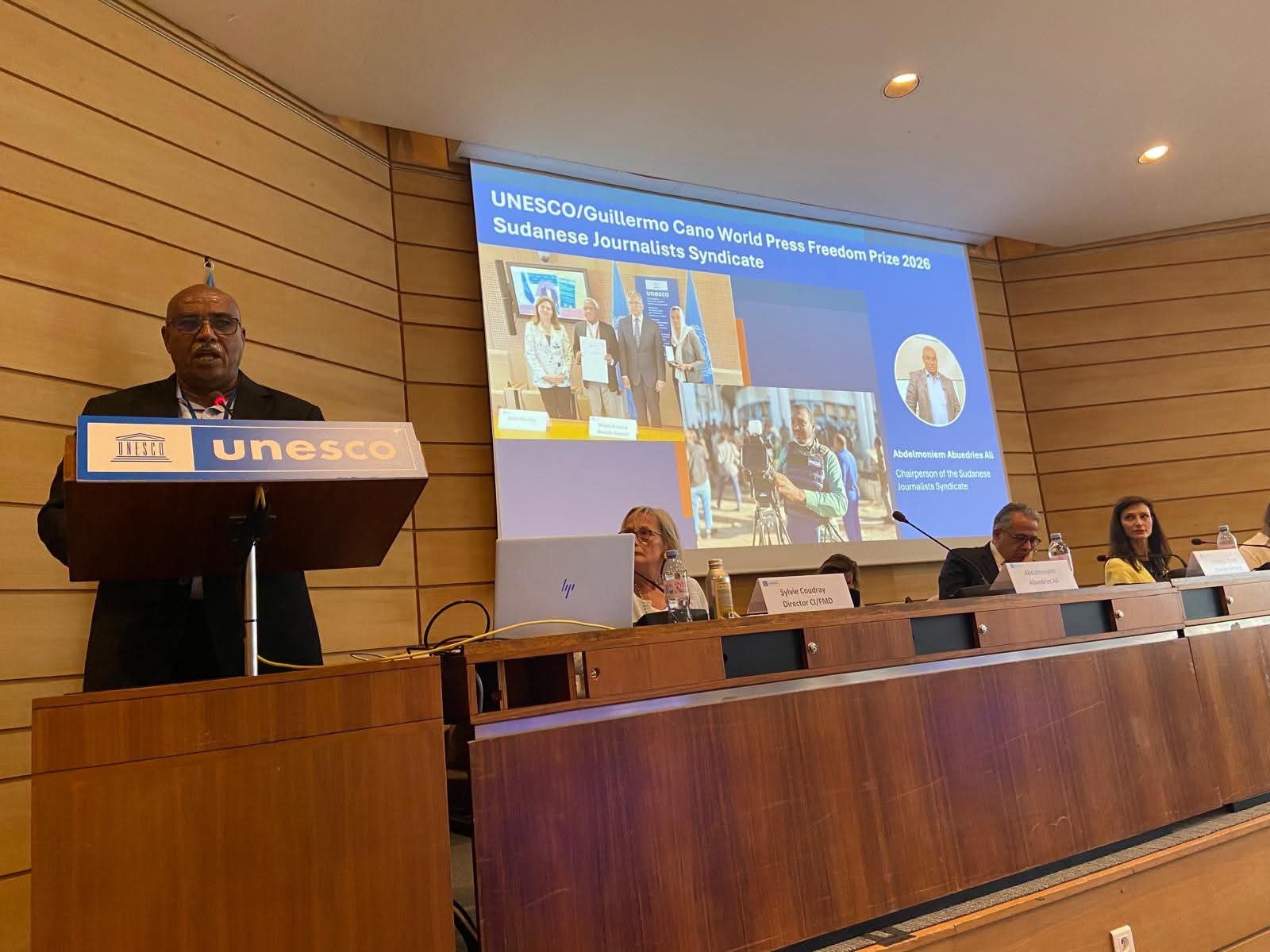
In recognition of these efforts, the United Nations Educational, Scientific and Cultural Organization (UNESCO) awarded the 2026 UNESCO/Guillermo Cano World Press Freedom Prize to the Sudanese Journalists Syndicate for its role in protecting journalists and documenting violations throughout the conflict.
The decline of professional journalism has not only harmed media institutions and practitioners. It has also created an information vacuum that has fueled sensationalism, polarization, and the spread of unreliable information in the absence of professional newsrooms capable of verification, analysis, and contextual reporting.
Caught between arrest, disappearance, persecution, and displacement, Sudanese journalists continue a daily struggle to preserve the truth in a country where war threatens to erase the details of its own tragedy. Attacks on journalists do not merely silence those who report the news—they undermine society’s fundamental right to know and understand what is happening around it.
As misinformation spreads and propaganda intensifies, the work of journalists becomes ever more difficult, and defending the truth itself becomes part of the struggle for survival.