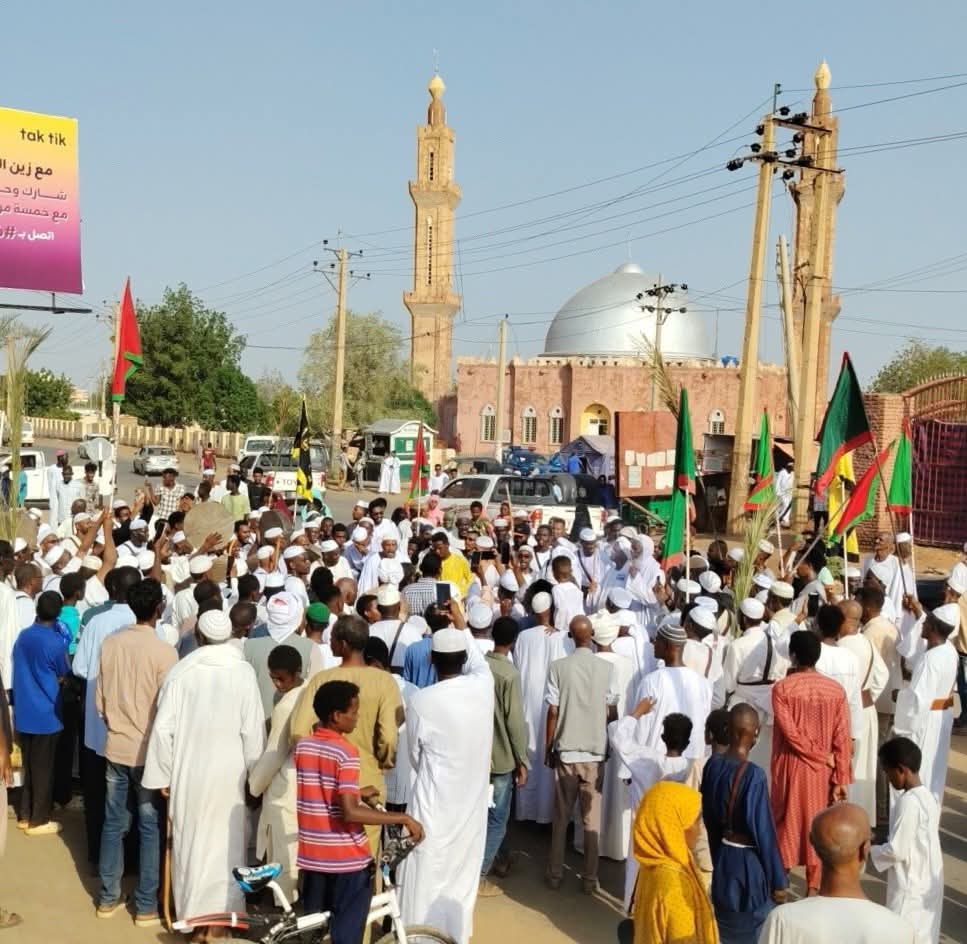
A number of leaders of Sufi orders in Sudan have affirmed that “the celebration of the Prophet Muhammad’s birthday represents a religious and social occasion that can contribute to promoting peaceful coexistence, strengthening the values of tolerance and solidarity, and rejecting hate speech, particularly in light of the social divisions caused by the war.”
Abdel Qader Mohamed Ahmed, a follower of the Burhaniyya Sufi order, told Mashaweer that “celebrations of the Prophet’s birthday bring Sudanese people together, regardless of their affiliations, in a shared space based on love and tolerance.”
He noted that “such occasions can strengthen communication among different components of society and help rebuild relationships that have been affected by the war.”
He added that “the values embodied in the Prophet’s life, foremost among them compassion, forgiveness and acceptance of others, provide a foundation upon which a culture of peace can be built.”
He called for “using religious occasions to strengthen social unity and reject violence and discrimination.”
For his part, Osman Abshir, a leader of the Khatmiyya Sufi order, told Mashaweer that “the Prophet’s birthday has long been a unifying occasion for Sudanese people, bringing together communities from different regions and backgrounds, while highlighting values of solidarity, hospitality and helping those in need.”
He explained that “reviving these values under the current circumstances could help mitigate the effects of the war and strengthen bonds among people,” stressing that “peaceful coexistence begins with accepting others, respecting their differences, and staying away from hate speech and incitement.”
Meanwhile, Salah Ali Mahmoud, a follower of the Tijaniyya Sufi order, told Mashaweer that “the celebration of the Prophet’s birthday should not be limited to festivities, but should become an opportunity to renew commitment to the values of peace, brotherhood and compassion among members of society.”
He called for mosques, khalwas (Qur’anic schools) and Sufi orders to be used to spread messages of peace and tolerance and to promote dialogue among communities, particularly among young people, in ways that can help confront hate speech and rebuild the social fabric damaged by the war.