In Khartoum, at the confluence of the Blue and White Nile rivers, the contradiction today appears harsher than ever. A city that grew along the banks of two rivers and whose identity and life were shaped by water has become dependent on wells and water tankers, paying for water according to the disruptions caused by power cuts, the shutdown of pumps, and damage to the water networks. Water is no longer merely a basic service in the city; it has become a measure of whether life there is possible.
The return of residents to their neighborhoods adds another dimension to the crisis. Returning home does not necessarily mean returning to the life that once existed there.
A returnee may find the walls of their house still standing, but no water. A school may be open, but its water point destroyed. A health facility may be operating partially, while water shortages limit its capacity to receive patients.
Water has therefore become part of the question of return itself. The city cannot recover simply by bringing its residents back or reopening roads and markets. Recovery depends on restoring the services that make it possible for people to remain there.
Water: A Daily Cost
During August 2026, the price of a barrel of drinking water transported by karro carts reached around 4,000 Sudanese pounds in some parts of the capital, while in some areas of western Omdurman it rose to about 8,000 pounds. With food and fuel costs rising and purchasing power declining, water has become an additional daily burden on households.
The water crisis is directly linked to electricity and fuel. Water treatment plants and wells require energy to operate pumps and maintain supply. As a result, following the collapse of electricity from the national grid, the Khartoum State Water Corporation resorted to operating generators and high-yield wells, in addition to running 600 solar-powered wells. The state also provided water tankers to outlying areas and fuel for water stations and wells.
Figures from the corporation reveal the scale of the gap. The state is estimated to need around 3 million cubic meters of water per day, compared with approximately 2 million cubic meters that the corporation was supplying before the war.
The war has also damaged Nile water stations, machinery, maintenance materials, and spare parts, further weakening their operational capacity.
The Map of Thirst Expands
The water crisis is not distributed evenly across Khartoum. Its severity varies according to water sources and the extent to which different areas are connected to the network.
In East Nile, hardship is particularly evident in Al-Jerif East, Al-Huda and other peripheral areas that depend on wells, which stop operating when electricity is cut. Residents are then forced to rely on karro carts and water barrels. Whenever the network fails, the water market expands, and the farther the source, the higher the price.
In Um Dawan Ban, groundwater is available in some areas, but its salinity makes it unsuitable for drinking. Residents are therefore forced to purchase fresh water and transport it from other areas. Digging a new well, therefore, does not necessarily mean providing safe drinking water. The water must be tested and treated, the well needs a power source, and the water must then be transported.
In southern Omdurman, the crisis has worsened as the level of the Blue Nile has declined, affecting the ability of the Salha Water Station to draw water after the river receded away from the pumping points.
Across Omdurman, stations including Al-Manara continue to operate using diesel-powered generators. When operating at full capacity, the station requires around 80 barrels of fuel per day.
In Khartoum Bahri, the supply faces different challenges. Production at the North Bahri Water Station has declined because the river channel has receded and moved away from the intake points, despite efforts to open emergency channels and remove silt.
Older neighborhoods and central Bahri have also suffered extensive damage to underground networks, resulting in water leakage and preventing supplies from reaching homes. Residents have consequently resorted to digging local wells.
In Khartoum city itself, key pumping stations, including the Al-Mogran station, have gone out of service. Prolonged power cuts and fuel shortages have increased reliance on wells, which themselves become inoperable during extended electricity outages.
The map of thirst therefore varies from one area to another. In one neighborhood, the well stops working; in another, a station’s pumping capacity declines; in a third, the network is damaged or groundwater is unfit for drinking. In all cases, regular water supply remains dependent on a chain that begins at the source and ends at the household tap.
The Roots of the Collapse: A Network Exhausted by War
The water crisis cannot be reduced to fuel and electricity shortages. The war has damaged water stations and networks, while generators, transmission lines and distribution systems have been affected by destruction and looting. War debris and unexploded ordnance have also made access to some water sources more dangerous.
The losses caused by the war are not limited to physical infrastructure. The city has also lost part of its specialized technical workforce responsible for operating and maintaining the network.
According to UNICEF, only four of the 17 water treatment plants in Khartoum State remain operational, due to direct damage and electricity disruptions linked to the Merowe Dam.
The problem is therefore no longer a malfunction in one particular pipeline or station. It has become a failure affecting multiple links in the supply system—from the source and pump to treatment, transportation, and the network that ultimately reaches the household tap.
Solutions Keeping the Supply Going
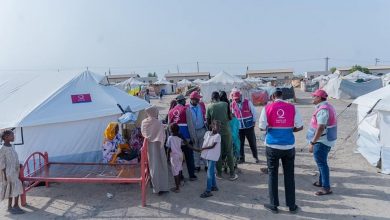
In response to this reality, local solutions have emerged alongside official interventions. With support from diaspora communities and humanitarian organizations, community initiatives have helped operate solar-powered wells and provide water to some neighborhoods. However, their impact remains limited to the areas they cover, while more distant communities bear the additional cost of transportation.
At the official level, the state is addressing urgent bottlenecks by opening channels to draw water from the Nile to pumping stations, as occurred at the Salha station, repairing transmission lines, and deploying tankers to distribute water free of charge in the worst-affected areas.
These interventions have helped restore Beit Al-Mal Station to around 60 percent of its capacity, stabilize Al-Manara Station and its lines in Karari, repair the main line supplying Bahri Station to Haj Yousif, Hilla Koko and Al-Qadisiyah, and partially restore Al-Shajara Station.
But these results remain far smaller than the scale of the crisis. They restore parts of a damaged system, while the network continues to be burdened by war-related destruction, shortages of energy and fuel, inadequate maintenance, and the loss of skilled personnel.
From Thirst to Epidemics
The water crisis does not end with the price of a barrel. As access to clean water declines, hygiene and sanitation also deteriorate. Residents are forced to use less safe sources, turning water shortages in a war-ravaged city into a public health crisis.
In March 2026, the World Health Organization announced the end of a cholera outbreak that began in Sudan in July 2024, after the country recorded approximately 124,418 cases and 3,573 deaths. In Khartoum, the spread of the disease was linked to shortages of safe water, damage to water sources and energy infrastructure, and the collapse of sanitation and hygiene services.
As the rainy season begins, rainfall is not merely a season awaited by Khartoum’s residents. It is another test for an exhausted water and health system. Damage to drainage networks, the accumulation of waste, and the use of unsafe water sources could increase the risk of disease outbreaks.
When the Nile Becomes Distant…
What is happening in Khartoum is not an isolated case, but the clearest expression of a crisis extending across Sudan. UNICEF indicates that the war has damaged water and energy infrastructure in 13 states, while 17.3 million Sudanese lack basic drinking-water services and around 24 million do not have adequate sanitation services.
At the official level, the state has provided fuel for Nile water stations and drilled ten high-yield wells in Omdurman’s Ombada locality. Maintenance teams continue to repair damaged pipelines and facilities and restore them to service.
Yet the scale of need makes these efforts insufficient to rebuild a water network serving a city the size of Khartoum. Wells, tankers, generators, fuel and solar power provide lifelines, but they cannot by themselves resolve the structural damage that has affected the entire supply system from the source to the household tap.
The initial paradox now re-emerges: a city located at the confluence of two Niles, surrounded by water, while accessing that water inside homes has become a daily struggle. The abundance of water in the river is one thing; the city’s ability to extract, treat and pump it safely through a functioning network is another.
The price of a single barrel perhaps captures the entire story: one family waits for a well, another buys water, while a third calculates how much money it has left before paying for it. Between these daily realities, the distance between the Nile and the home continues to grow—not in kilometers, but in the damage inflicted on water stations, networks and energy infrastructure.
In a city struggling to emerge from war, the question of water comes before many others. Khartoum may reopen a market, repair a road, and welcome residents back to their homes, but the return of life will not be complete until water returns to the pipelines.
Perhaps the question by which the city will ultimately test its future is not simply whether it can provide water, but whether it can restore water as a public service.
Can Khartoum make water a public right once again—not a commodity that only those who can afford it can buy, while others are left searching for it?