War-Time Chaos in Darfur Fuels the Expansion of Drug Production and Trafficking
Report – Mashawir
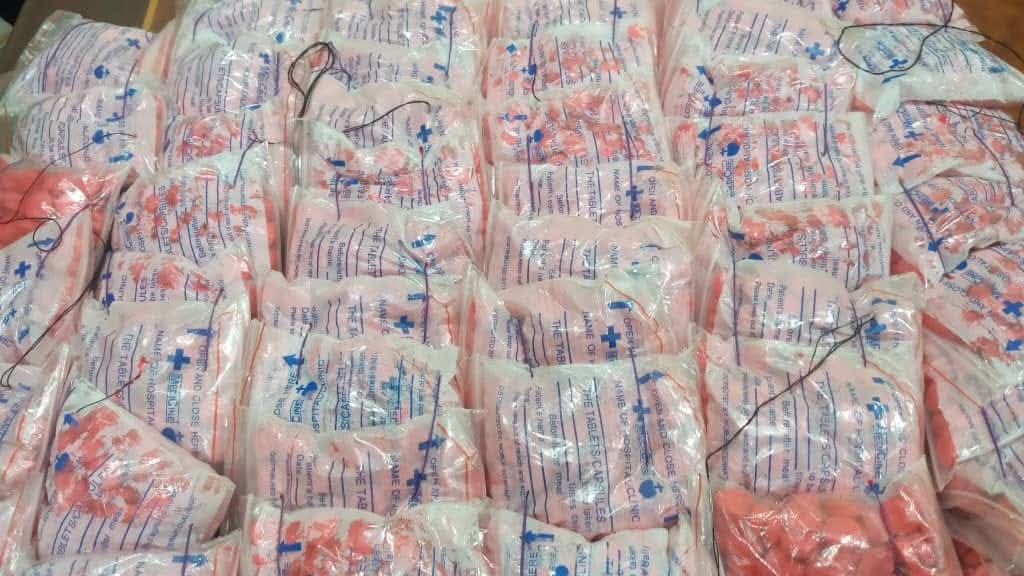
Drug production and trafficking in Darfur have evolved from a marginal activity into a parallel economy and an alternative source of financing for the war in Sudan. The growing threat is being driven by organized networks exploiting the wartime environment to expand their activities in production areas and subsequently smuggle drugs to several cities across the country, as well as through the desert to Libya, Chad, and the Central African Republic.
The cultivation of cannabis, locally known as “bango,” has expanded significantly and has become one of the fastest-growing activities in the region.
Dealers and traffickers have benefited from a degree of protection stemming from the lack of enforcement and the security chaos, particularly following the Rapid Support Forces’ (RSF) control of the five Darfur states. Some drug traffickers reportedly joined the controlling forces and continued their activities under armed protection, resulting in an unprecedented expansion of the drug trade.
Collapse of the Oversight System
Local media reports have documented that Nyala, El Daein, Zalingei, and other areas have become open arenas for large-scale drug use and distribution, with some activities reportedly taking place in the middle of markets, highlighting the collapse of the oversight system.
According to local sources, the areas under cultivation in rural areas have expanded alarmingly, with the quantities grown reportedly reaching as much as 50 tonnes at times, feeding drug trafficking and trade as part of a war economy that the RSF is accused of relying on to finance its military operations.
The Radom locality in southwestern South Darfur is known for cannabis cultivation due to several key factors, including difficult terrain that provides a safe haven away from authorities and porous borders that facilitate the movement of financiers and traffickers across neighboring countries.
Abuse of Influence
Hafez Al-Sawi, an economic specialist, said that “the Rapid Support Forces exploited their influence in Darfur and became active in drug trafficking and trade, benefiting from the wartime environment and the state’s limited capabilities.”
He said drug revenues are used to finance military operations and purchase light and heavy weapons, as well as to pay fighters and recruit new members, particularly among young people. “The most dangerous aspect of this money is that it contributes to fueling the conflict and prolonging the war,” he said.
Al-Sawi added that Sudan’s Ministry of Interior used to deploy joint forces annually, in coordination with the 16th Infantry Division, to destroy cannabis farms during the harvest season in Radom locality. However, these campaigns stopped after the outbreak of the war, contributing to the widespread expansion of drug trafficking and trade.
He explained that before the outbreak of the armed conflict, drug cultivation areas in South Darfur covered more than 34,000 square kilometers, while the Radom area alone reportedly produced between 80 and 90 percent of the cannabis consumed locally.
Trafficking and Financing
Human rights activist Noaman Hashem similarly pointed out that drug trafficking and trade in Darfur had previously been largely confined to farmers and traders, but expanded significantly after the RSF took control of the five states.
He said synthetic drugs, including dangerous substances such as Captagon and “ice” (crystal methamphetamine), had also entered the market, with trafficking routes extending through the desert to Libya and the Central African Republic.
Hashem added that Sudan’s history with armed rebel movements, some of which have been accused of relying heavily on external support and the production, trafficking, and trade of drugs to finance their activities, had long contributed to accusations of involvement in spreading drugs. He described the emergence of drug production, trafficking, and criminal networks operating under armed protection as a particularly dangerous development.
Hashem noted that the breakdown of official law-enforcement systems in the region had contributed to the expansion of drug trafficking and trade, bringing it into the sphere of RSF financing, whether through levies imposed on farmers or through transportation and distribution networks operating along domestic and international routes.
He said these networks benefit from gaps along the porous borders with Chad and the Central African Republic, where arms trafficking intersects with drug smuggling and mutual interests.
Full Protection
A community leader from North Darfur, who requested anonymity for security reasons, said that the involvement of some drug dealers with the RSF after the outbreak of the war, along with the participation of some members of the security forces in cannabis cultivation and trade, had provided the activity with extensive protection.
He said the region had consequently become a place for the production, promotion, and open sale of drugs, including among soldiers themselves.
The community leader also alleged that RSF field commanders were involved in the cultivation and trade of cannabis, while financing other farmers in exchange for sharing the proceeds and facilitating the transportation of the drugs to distribution areas, generating substantial profits.
He warned that some parts of the region could become transit points for cannabis shipments, as certain cities have emerged as important commercial centers for drugs, alongside their widespread availability in some markets.
Spread and Growing Concerns
According to a study conducted by Nasr al-Din Yousif, a specialist in psychosocial support initiatives for people who use drugs, drug use has become increasingly prevalent among young people in North Darfur.
The study examined samples from the localities of Tina, Kabkabiya, and Saraf Omra, which were identified as areas experiencing significant drug-trade activity.
The study indicated that Tina, located on the Sudanese-Chadian border, had become an important transit point for manufactured drugs entering from Chad before being smuggled into different parts of Sudan by organized networks.
According to Yousif, the study also revealed a widespread and worrying increase in the use of Captagon, which has become one of the most prominent manufactured drugs circulating among some young people.
The study warned that synthetic drugs can have severe psychological and physical effects and, in some cases, may lead to potentially fatal complications.