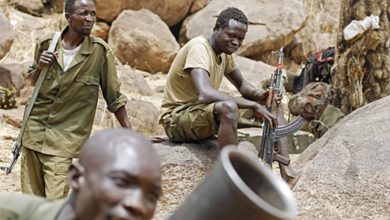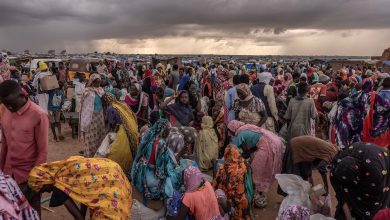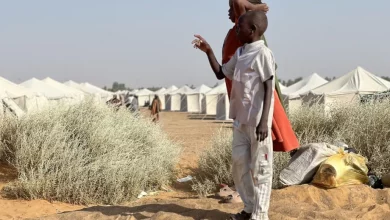

Since the outbreak of the fierce war between the Sudanese army and the Rapid Support Forces (RSF) three years ago, neither side has adhered to international laws of war. Journalists have become targets — facing arrest, torture, and even killing — while most media institutions have been deliberately destroyed or shut down. As a result, many journalists fled conflict zones in search of safety, creating a major media vacuum.
This vacuum has been filled by ordinary citizens who remained in their homes and communities, continuously sharing photos, videos, and updates from the frontlines, documenting military operations, violations, and other developments. These citizens have effectively become the primary source of information, relied upon by news agencies, TV channels, and online media outlets.
How far has citizen journalism (new media) succeeded in filling the gap left by traditional journalism?
And can it replace it or become more influential among audiences?
The “Deep Circle”
Khalid Fathi, a member of the Sudanese Journalists’ Syndicate, said that “social media platforms have indeed become highly important in tracking all kinds of news, not only in Sudan but across the world. Experts describe them as the ‘deep circle’ — capable of uncovering, tracking, and documenting facts quickly and thoroughly. This is a natural evolution of the media landscape. If we view social media as part of new media rather than a replacement for traditional outlets, then it’s undoubtedly a natural development born within the modern media world.”
He explained that “in the past, journalists were the sole source of information — people waited for newspapers, watched TV, or listened to the radio to know the news. But with the rise of technology, social media, and digital content, ordinary citizens now take part in journalism directly through smartphones, a phenomenon known as ‘citizen journalism.’”
Fathi added that citizen journalism expanded in Sudan because of the collapse of traditional media institutions across many regions since the war erupted. “The warring parties showed no interest in allowing journalists to cover events daily. Instead, journalists became legitimate targets — facing expulsion, detention, and harassment — which made field reporting dangerous and nearly impossible.”
However, he stressed that documenting events by phone cannot replace traditional journalism, saying:
> “Mobile phones can provide quick, instant documentation, but traditional journalism ensures verification and completeness. Even in the U.S., journalists complain about deepfakes and misinformation spread through citizen journalism. That’s why fact-checking every piece of information or video remains essential — whether it’s real or fabricated, recent or recycled.”
The Importance of Verification
Fathi continued that “traditional journalism remains vital because of its accuracy, investigative depth, and adherence to ethical and legal standards, which citizen-based reporting often lacks. Despite its speed and reach, phone-based journalism can be unreliable and lacks professionalism.”
He concluded that “traditional journalism is still the most professional form because it offers deeper context, multiple perspectives, and analytical insight. While citizen-generated videos — such as those documenting violence in conflict zones like Al-Jazira State — serve as important eyewitness evidence, they cannot replace regulated media reports that are subject to ethical and legal oversight.”
According to Fathi, “people’s trust in traditional media has declined due to economic, political, and security pressures, which are absent in new media. However, citizen journalism, despite its speed and accessibility, still suffers from lack of accuracy, verification, and editorial skill. Thus, traditional media remains a strong competitor that adds context and reliability to the broader picture.”
Documenting War Crimes
Nazik Mohamed, an expert in digital media, said that “new media has redefined the entire concept of journalism and has become an undeniable alternative in documenting current events. We saw this clearly during Sudan’s December 2019 Revolution, where citizen media played a decisive role in exposing violence and human rights abuses, even contributing to the fall of former President Omar al-Bashir.”
She added that during the current war, new media has been crucial in covering developments on the ground and beyond, especially amid the absence of traditional local media.
> “Citizen journalism today is more important in relaying real-time events than traditional outlets, which were often under institutional control. It broke that monopoly — now it’s the citizen who writes, reports, and documents events directly, especially in war zones,” she said.
Nazik emphasized that technology has given voice to ordinary citizens, turning them from passive consumers into active participants and content creators.
She concluded that “without new media and citizen journalists, many atrocities and violations during the war would not have been documented. Their images have shown the world the grim realities of the conflict, increasing international pressure to stop the war and amplifying global solidarity with the victims. In the long run, their work will also serve as crucial evidence for justice and accountability efforts.”