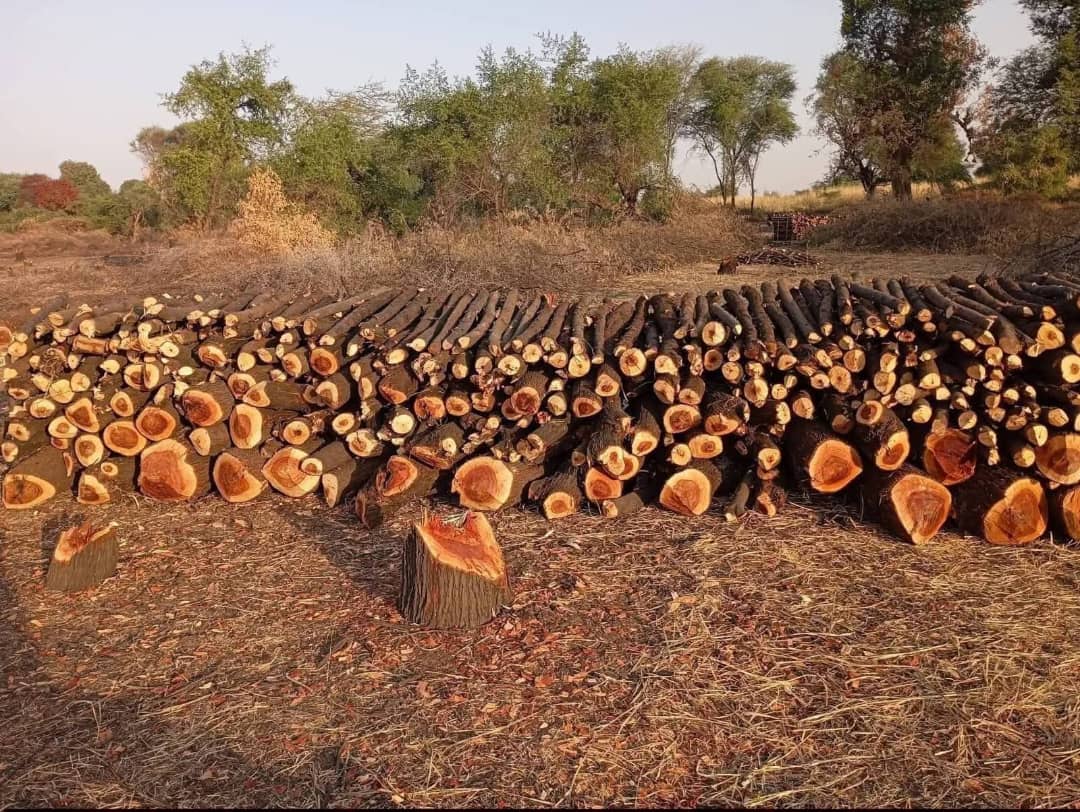
For more than a century, the Sunut Forest, located in the heart of Khartoum, has been considered the city’s environmental line of defense against pollution, heat, and urban congestion. However, the ongoing war between Sudan Armed Forces (SAF) and Rapid Support Forces (RSF) for over 33 months has transformed it into a barren wasteland facing desertification and climate imbalance. Shocking scenes widely circulated on social media by environmental activists revealed the massive destruction caused by the aggressive logging of trees.
The Sunut Forest is one of the oldest and largest nature reserves in Khartoum. It was incorporated into the national system of nature reserves in 1939 and protected under orders from the British Governor at the time due to its ecological importance. Its role was not limited to the environment; in 1946, it hosted the establishment of the Forestry Technicians School, graduating Sudan’s first generation of forestry experts and serving as the nucleus for reforestation projects nationwide. Thus, the forest was not merely a green space, but a living scientific institution.
Official Directives
Meanwhile, Sudanese Prime Minister Kamel Idris assessed the extent of the encroachment on the forest during the war. He stated that the forest is a historical sanctuary and a home for all Sudanese people, particularly residents of Khartoum State, as it serves as the “lung” of the capital. Idris directed local administrations and the Ministry of Agriculture to take necessary measures to stop the illegal logging, prosecute offenders through legal channels, and begin immediate restoration to return the forest to a state better than before, ensuring its appeal for tourism.
> Read More
Sudanese Doctors “Trapped” Between Death and Duty.
Environmental Catastrophe
Environmental researcher Jalal Yassin explained that “Sunut Forest is facing widespread destruction due to aggressive logging and woodcutting caused by the ongoing war. This has contributed to an environmental disaster manifested in desertification, soil degradation, pollution, and climate change, accelerating the collapse of an ecosystem that protects Khartoum.”
Yassin added: “This forest gained exceptional importance as it spans approximately 1,500 hectares (one hectare equals 10,000 square meters) and possesses a superior ability to adapt to harsh climatic conditions. Furthermore, it represents the first line of environmental defense in preventing pollution, absorbing toxins and gases, mitigating high temperatures, and acting as a resort for the residents of Khartoum.”
The researcher noted that the encroachment has left the forest “exposed and naked,” warning of the dangerous repercussions for Sudan’s forests due to the current war, the loss of tree cover, and the flourishing charcoal trade. He called for the legal prosecution of aggressors and a comprehensive rehabilitation plan.
A Heavy Loss
Forestry activist Mohamed Al-Filabi stated that “Sunut Forest occupies a unique geographical location at the confluence of the Blue and White Niles in the Mogran area, giving Khartoum a distinct landscape. However, the armed conflict has subjected it to the worst forms of encroachment, turning its green spaces into parched land and stripping it of its global value.”
Al-Filabi continued: “Since British rule, decisions were made to protect Sunut Forest due to its ecological, scientific, and tourism value. Until recently, it was protected by wildlife laws. The destruction of the infrastructure of the sectors specialized in its protection has facilitated random encroachment and its ultimate loss.”
He further noted that the war caused an environmental disaster following the disappearance of the Green Belt south of Khartoum. He highlighted that Sunut Forest was a vital destination for transcontinental migratory birds, hosting flocks annually from Europe, Africa, and Asia. Species such as geese, terns, ibises, and most famously, herons, as well as rare birds, reptiles, and insects, used the forest as a safe haven. “Currently,” Al-Filabi noted, “Sunut Forest has been leveled to the ground, and its ecosystem has completely collapsed.”
War Chaos
In a related context, agricultural specialist Marwa Bashir believes the destruction is a “true tragedy born from the chaos of war.” She noted that the forest contained vegetation highly resistant to the seasonal floods that submerge the area every autumn.
Bashir added: “By losing this forest, Sudanese universities specializing in agriculture and forestry have lost a field-training site that housed rare strains of Acacia (Sunut) trees. Economically, these trees are a source of Gum Arabic, used in many global industries.” From a health perspective, she warned that the forest acted as a “natural health shield” by improving air quality, reducing temperatures, and supporting the mental health and resilience of Khartoum against climate crises.