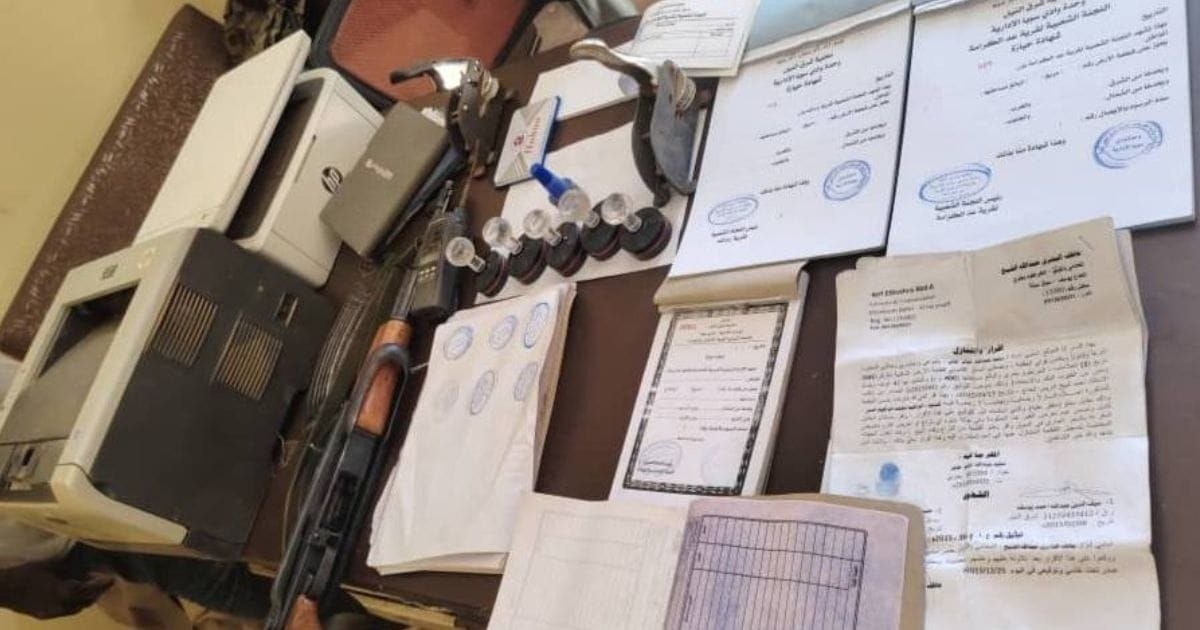
Sudanese people living away from home are facing a new nightmare, as fears grow that the claws of “land mafia” networks may have reached their houses. These groups have sold dozens of properties using forged documents, posing a serious threat to many residential neighborhoods in the Sudanese capital, Khartoum.
On top of the pain and hardship of displacement, Sudanese citizens who have been away for years—whether displaced internally or as refugees—are overwhelmed by anxiety and fear. Anyone planning to return now worries they may discover they no longer own the home they fled in the early months of the war. Some are bracing for long and complex legal battles to prove ownership again, while others have been fortunate enough to detect fraud at early stages before transactions were completed.
A Frightening Reality
The ongoing war in Sudan, now approaching its fourth year, has created a chaotic and alarming situation regarding national land records—especially after the destruction and loss of archives in several states, particularly in Khartoum. This has opened the door for organized criminal networks to seize land through forgery, fraud, and deception.
These “mafias” include brokers, lawyers, and others specializing in falsifying land records, taking advantage of the fog of war, the absence of property owners, and the damage caused to land registries in various offices across Khartoum State. Meanwhile, authorities have begun taking urgent legal measures to curb these activities, though concerns among residents remain high.
Other States
Fraud and illegal land acquisition are not limited to Khartoum State or private properties such as homes and shops. Reports have also emerged from other central states, including cases involving public lands and open spaces. Land registration authorities have issued serious warnings about the spread of forged powers of attorney and ownership certificates used for illegal sales.
Human rights activist Ihab Al-Amin explained that widespread fears exist among residents about losing their homes and businesses, especially as fraudsters exploit vacant properties belonging to migrants and displaced persons by forging legal authorizations to sell them.
Loopholes and Fragility
Al-Amin pointed out that there are significant weaknesses in the administrative and legal system that the “land mafia” exploits in Khartoum State. These weaknesses have worsened due to the war and its security, economic, and humanitarian consequences, along with the overall decline of state institutions.
Among the most prominent issues are the fragility of the property registration system and weak digitization, with heavy reliance still placed on paper-based transactions. This has created an environment that facilitates manipulation of records and the forgery of ownership documents.
The Danger of Powers of Attorney
The activist also highlighted that the system of selling land through powers of attorney issued by owners is one of the most dangerous tools being misused. Forged powers of attorney have become the most common method in illegal property sales, especially in the absence of strict identity verification systems such as biometric data.
He added that the destruction or loss of archives in some land offices—especially after fires—makes it difficult to verify original ownership and makes forgery easier than proving legitimate claims. The slow and complex judicial process further benefits criminals, giving them time to resell properties or alter their legal status.
Authorities Take Action
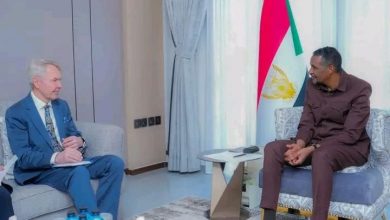
Following a rise in land-related crimes and increasing complaints from citizens, the Governor of Khartoum State, Ahmed Othman Hamza, conducted field visits to the Ministry of Urban Planning and the Land Violations Prosecution Office. He stressed the urgent need to close legal loopholes exploited by these networks and to act decisively against them.
He emphasized that the current stage leaves no room for leniency toward corruption, noting that the government has established strict mechanisms to review ownership files and verify official documents to prevent illegal sales and protect the rights of forcibly displaced citizens.
The acting Minister of Urban Planning, Wijdan Ibrahim Mustafa, announced that the ministry is currently documenting violations that occurred during the war, in preparation for nullifying fraudulent contracts and referring those responsible to the courts. Preventive measures are also being implemented to protect both digital and paper land records from tampering.
Suspension of Sales
Sudan’s General Land Registrar has issued a decision prohibiting the sale or transfer of ownership of lands whose records were reconstructed after being damaged during the war. This suspension will remain in effect for six months from the date of record restoration.
The head of the Land Violations Prosecution, Imad Abdelrahman, noted a sharp increase in land forgery cases, including instances where a property was sold using a forged power of attorney in the name of a person who had died 20 years earlier. He stressed the need for coordination between land authorities, civil registry offices, and the bar association, as well as the adoption of national ID numbers as a primary requirement in property transactions.
Exploiting Chaos
Criminal lawyer and legal advisor Al-Samawal Ibrahim Al-Disouki explained that Sudan’s land law historically categorizes land into three main types: registered land (under the 1925 Land Registration Act), unregistered land (customary holdings and state land), and others.
He noted that “land mafia” networks emerged during the war as organized groups exploiting legal and security chaos to seize and resell properties using illegal documents, taking advantage of institutional collapse, mass displacement, and corruption.
Consequences and Solutions
According to Al-Disouki, if the land crisis is not resolved after the war, it could lead to massive legal and political consequences, including decades-long disputes that may hinder reconstruction and investment, as investors require clear ownership rights.
He proposed several solutions, including:
Establishing specialized land courts
Rebuilding and digitizing land registries
Creating reconciliation committees combining legal and customary approaches
Temporarily freezing property transactions
Introducing transitional justice laws for land disputes
Commodity or Service?
Human rights lawyer Al-Muizz Hadra argued that the roots of the “land mafia” phenomenon date back to the 1989 Islamist takeover and the era of former president Omar al-Bashir, when land was transformed from a public service into a commodity.
He explained that this shift led to speculative accumulation of land, inflows of foreign money, and soaring land prices, laying the foundation for today’s crisis.
Corruption and Money Laundering
Hadra added that treating land as a commodity opened the door for illicit funds to enter the Sudanese economy, contributing to large-scale money laundering. He stressed that addressing the crisis requires tackling root causes, not just its symptoms.
He also pointed to widespread corruption within civil service institutions related to land administration, particularly after they became a source of rapid wealth.
Legal Advice؛
Legal experts confirmed that recovering property is legally possible, but it is complex and time-consuming, especially under the conditions of war..
They recommend that affected individuals:
Prove original ownership using any available evidence (even copies or utility bills)
Present witnesses from neighbors or local communities
Request court orders to prevent further sale or transfer of the property
Ultimately, the land mafia crisis in Sudan is not just a real estate issue—it is a major legal, political, and social challenge that could shape the country’s future for decades if not addressed properly.