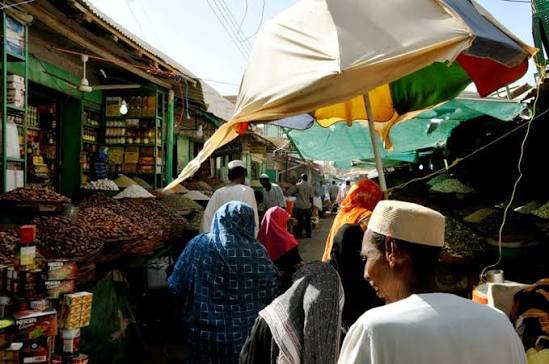
Commercial activity in Souq Al-Thawra in the city of Omdurman has noticeably declined compared to its peak during the years of war, as displaced residents have gradually returned to their original areas in Omdurman, Souq Libya, and other neighborhoods. They have left behind a market that once served as a vital commercial lifeline for hundreds of families who had sought safety in the area.
Neighborhood markets in Omdurman include, in addition to Souq Al-Thawra, Sabreen, Al-21, Halayeb, and Al-Jarafa, among others.
A report by Al Jazeera Net observed this shift through a field visit to the market. Vendors’ voices still fill the as they call out prices for tomatoes, peppers, and mangoes—now significantly higher and varying by quality—reflecting a sharp rise compared to prices before recent waves of inflation.
Trader Musa Mukhtar Nasser, originally from Old Omdurman (Hai Al-Arab), explained that the market has transformed from a commercial hub serving thousands of displaced people from neighborhoods into a small local market catering only to nearby areas such as Al-Thawra 59, 21, and 60.
He added that he moved to Al-Thawra six months after clashes erupted in Omdurman, when his neighborhood became unsafe. There, he joined Souq Al-Ma’ayish and worked in fruit trading.
Similarly, several traders agreed that the war period witnessed exceptional economic activity due to the concentration of displaced people in the area. Commercial movement was at its peak, with shoppers coming from all directions.