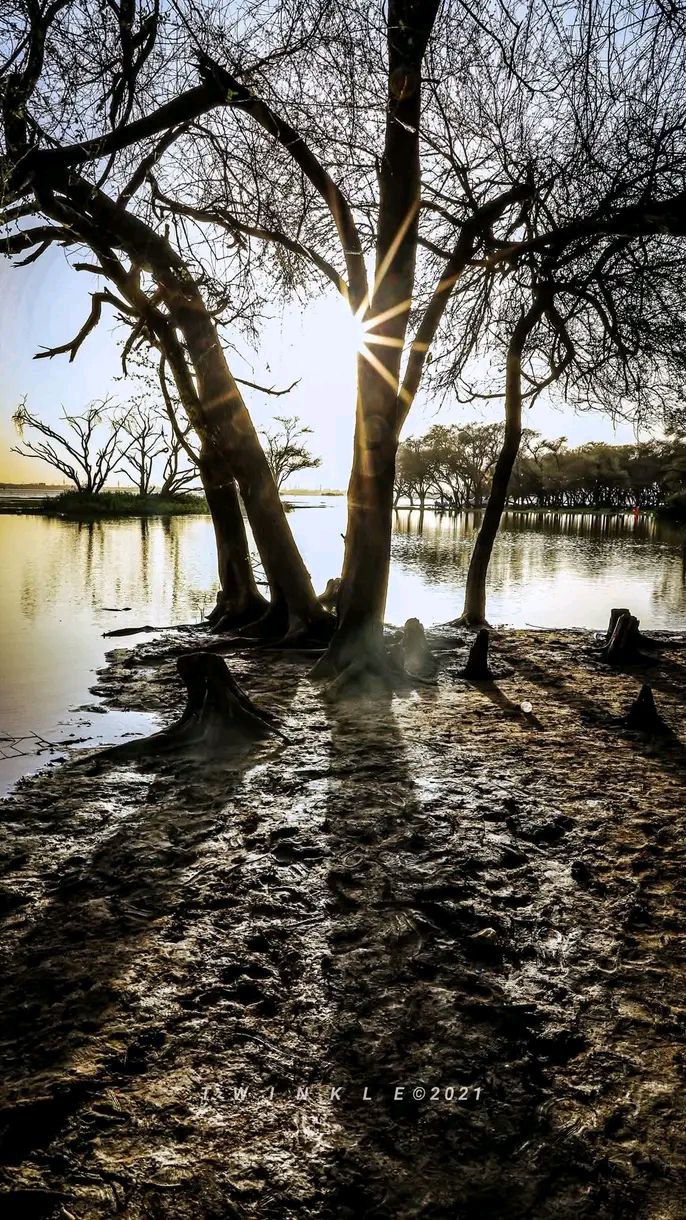
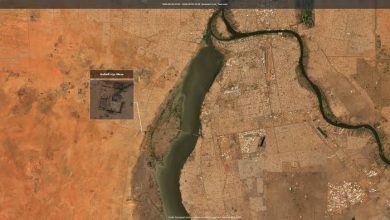
The Sunnt Forest, one of the oldest green spaces in the Sudanese capital, Khartoum, faces the threat of extinction. Trees are being felled and harvested for firewood without regard for their environmental, scientific, or cultural significance. As a vital source of biodiversity, its destruction threatens both climate stability and public health.
The forest holds a unique status due to its high-value tree species, which possess a superior ability to adapt to various climates. As an ancient urban forest protected by wildlife laws, it occupies a rare geographical location at the confluence of the White and Blue Niles in the Al-Mugran area. Its breathtaking greenery and natural scenery have earned it international recognition under UNESCO standards.
Police Crackdowns
Exploiting the authorities’ preoccupation with the ongoing war, some residents of Khartoum State and armed groups have begun the indiscriminate felling of trees both green and dry to use as cooking fuel amidst the cooking gas crisis. Additionally, wood is being collected for sale in markets, fueled by a lucrative trade in vegetable charcoal.
In response, the General Department of Central Criminal Investigation, via the Environmental Protection Department, launched a major campaign to protect the Sunnt Forest from these “negative activities,” which include arson, vandalism, and over-logging.
The Sudanese Police Media Office stated: “Some have deliberately cut and transported timber for illegal trade, which constitutes a violation of both local and international laws.” The campaign resulted in the arrest of 41 suspects and the seizure of two trucks, two horse-drawn carts, and 30 axes.
Brigadier General Sami Al-Siddiq Daf’allah, Director of Central Criminal Investigation, emphasized that efforts to combat these crimes are ongoing. He noted that regular patrols aim to protect the forest not just as a nature reserve, but as an integrated ecosystem essential for climate balance and a key national landmark.
An Integrated Vision
The Sunnt Forest has been a protected reserve since 1939, when the British Governor-General prohibited any interference with it due to its environmental and touristic value.
Abdulazim Mirghani, former Director General of the National Forests Corporation, described the forest as the “urban lung” of the capital and a pillar of climate balance. He argued that the forest is a repository of Khartoum’s environmental and cultural memory and could serve as an “open environmental school” if properly invested in.
> “What is required today is not just law enforcement through raids,” Mirghani noted. “We must activate an integrated vision to rehabilitate the forest through partnerships between technical, security, and planning authorities, alongside local communities, so it does not remain a permanent victim of marginalization and neglect.”
Threats and Risks
Environmental and urban development specialist Altaj Abdeen warned of “major environmental imbalances” awaiting Khartoum if the forest continues to deteriorate. He noted that the loss of the forest would mean losing a critical waypoint for migratory birds that instinctively use this route via the Red Sea or the Nile. Abdeen appealed to international organizations to intervene with a dedicated global program for the forest’s restoration.
Wildlife research specialist Al-Raih Babiker added that the forest provides sanctuary to over 930 species of rare migratory birds from Asia, Europe, and other parts of Africa. Furthermore, the forest acts as a carbon sink, absorbing gases from factories and vehicle exhausts in Khartoum. Systematic encroachment, he warned, risks a future environmental disaster.
Babiker also highlighted the forest’s educational importance. The “Forest Experts School” was established there in 1946, training the first generation of Sudanese foresters who went on to plant forests across the country’s diverse landscapes.
Biodiversity
Part of the Nilotic ecosystem of Khartoum State, the Sunnt Forest contains rare strains of Acacia and other trees, including a reference botanical garden. International bodies like BirdLife International and local research centers closely monitor the massive numbers of migratory and resident birds that frequent the area.
The Sunnt tree has been known for thousands of years by names such as Talh, Garad, and Um Ghila. It grows primarily in the tropical regions of Africa, Asia, and Australia, encompassing nearly 1,300 species. Its benefits are vast: it is used for tanning leather, animal feed, cosmetics, and dyes, while its wood is highly valued for decoration and ornamentation.