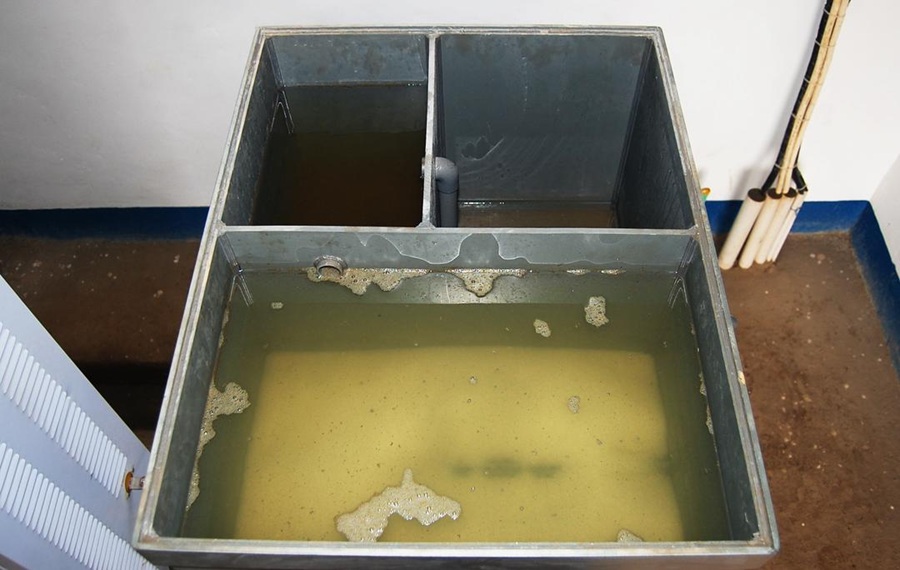
The effects of the war have touched every aspect of Sudanese life, reaching the point of compromising the institutions that protect human health and the environment. The only environmental laboratory in the capital, Khartoum, has been subjected to destruction and sabotage, in addition to the looting and robbery of equipment, devices, and various operating tools. Nothing remains of the headquarters except collapsed ceilings, burnt tools, and scattered documents.
As a result of these conditions, the only laboratory in Khartoum State has gone out of service, and its vital services in soil and water testing, air pollution measurement, radiation monitoring, and fine chemistry labs have ceased. This raises fears of escalating environmental and health risks in the absence of scientific oversight.
Destruction and Sabotage
The Director of the Environmental Laboratory at the Higher Council for Environment and Natural Resources in Sudan, Umm al-Khair Mukhtar Abdullah, stated that the only environmental laboratory in Sudan—which provides soil and water testing, air pollution measurement, and radiation services—is completely out of service after being targeted by the Rapid Support Forces. The cost of its reconstruction is estimated at approximately 500,000 dollars.
She added that the laboratory’s headquarters in Khartoum was subjected to extensive destruction and arson, as well as the sabotage of devices, glassware, and furniture, in addition to the looting of what remained.
Abdullah stressed the importance of accelerating the return of the laboratory to service, especially since it represents a significant cognitive and technical value that contributes to overcoming many environmental obstacles and problems. She called on local and international organizations and specialized agencies to assist in its reconstruction.
Technical Reference
In the same context, environmental affairs researcher Mujtaba al-Tahir pointed out that the environmental laboratory served as a technical reference in Sudan before the war for all the country’s states, as well as mining companies. It worked on measuring air pollution and radiation and testing soil and water, in addition to other technical specialties.
He noted that the laboratory is considered the first specialized facility in the environmental field in Sudan and includes several departments, including a fine chemistry lab, air pollution, and radiation. Some states had begun implementing the experience to establish similar laboratories before the outbreak of the armed conflict.
Al-Tahir mentioned that the environmental laboratory provided important services, such as analyzing water from stations and treated sewage, measuring the water of the White Nile, as well as the water produced by some factories as bottled water.
Risks and Crises
In the same vein, Jawahir al-Fadil, a specialist in chemistry and the environmental waste department, indicated that the environmental laboratory being out of service at this time represents a major disaster, especially with citizens returning to their homes and the beginning of reconstruction operations. There is an urgent need to implement an environmental survey project in the three cities of the capital (Bahri, Omdurman, and Khartoum) to understand the environmental situation and develop effective solutions for the resulting impacts. Consequently, the stoppage of the only laboratory in Sudan threatens the lives of millions, particularly in the absence of labs to perform accurate measurements to determine the concentration and quality of chemical pollution in the air, soil, water sources, food, and residential areas near battle sites.
She pointed out that the decomposition of large numbers of corpses in Khartoum State, as well as the effects of major fires on soil and water, are among the risks threatening public health. These require the presence of an environmental laboratory to take measurements and determine the type and concentration of pollution across environmental elements (air, water, and soil).
Al-Fadil stressed the necessity of seeking help from a qualified laboratory outside Sudan and cooperating with the United Nations Environment Programme to provide mobile laboratories on vehicles equipped with solar power. She also emphasized the importance of having qualified technical and administrative staff to ensure the collection of accurate data to help formulate effective treatments for environmental impacts in Khartoum.
Comprehensive Survey
In a related context, environmental and pollution specialist Adel Jabara explained that the three cities of the capital require a comprehensive environmental survey and precise laboratory measurements, especially after both parties to the war used internationally prohibited weapons within neighborhoods. Furthermore, the Nile River and water channels have been contaminated by the dumping of decomposing corpses into the water.
Jabara noted that the stoppage of the country’s only environmental laboratory contributes to the worsening environmental catastrophe in Khartoum State. Therefore, the Sudanese government must move quickly to bring in laboratories from abroad and partner with the United Nations Environment Programme to conduct comprehensive surveys to assess the environmental situation.
The environmental specialist stressed the need to evaluate the current situation in all residential, industrial, and agricultural sectors and to develop short- and long-term plans to address environmental impacts, utilizing Sudan’s international entitlements in this regard, as all the destruction in the capital is linked to the environment.
He continued, stating that after the central government returned to Khartoum, there was a large influx of citizens returning to their homes, necessitating urgent arrangements regarding waste removal and environmental surveys that cannot endure delay.
Health Threats
In a related matter, toxicology consultant Hossam Babiker believes that the most dangerous aspect of the fires at Sudan’s main oil refinery in the Al-Jaili area of Khartoum—caused by shelling and the emission of harmful gases—is their future impact on people’s lives. This includes the possibility of genetic mutations appearing in humans or animals, threatening birth defects or infertility, as chemical compound particles cause long-term damage to the liver, kidneys, and nervous system.
He added that the primary challenge is to conduct environmental surveys in the densely populated Al-Jaili area to determine the environmental effects on citizens, agricultural projects, and water sources to avoid an environmental and epidemiological disaster.
Babiker explained that children and other groups, such as pregnant women and smokers, are usually more vulnerable to the risks of environmental pollution and toxic substances. Sulfur dioxide can combine with water vapor and fall on forests as acid rain, which can accumulate within the food chain, resulting in serious diseases leading to death.
Severe Damage
On a related note, environmental affairs researcher Yusuf Bashir indicated that the risk of pollution is particularly growing in densely populated areas that witness extensive agricultural activities in Khartoum State. Furthermore, citizens rely on vegetables and fruits for their food. The effects of pollution will also reflect on the economy, especially since areas like Tuti, Al-Jaili, and North Omdurman supply the capital’s markets with various types of vegetables and fruits such as bananas, oranges, guavas, and mangoes.
He noted that the interaction of toxic gases such as carbon dioxide, sulfur dioxide, and nitrogen with water vapor are all causes that may lead to severe environmental damage. Additionally, waste and gases threaten human health and living organisms by releasing chemical and radioactive toxins into the air, water, and soil.
Bashir explained that Sudan is among the countries that do not possess the necessary mechanisms to treat such waste and debris, and it lacks the trained human resources capable of dealing with the technically complex aspects of the problem. Therefore, priority must be given to environmental surveys and technical inspections by a team from outside the country to assess the scale of damage and risks, especially after the only environmental laboratory in Sudan stopped functioning.