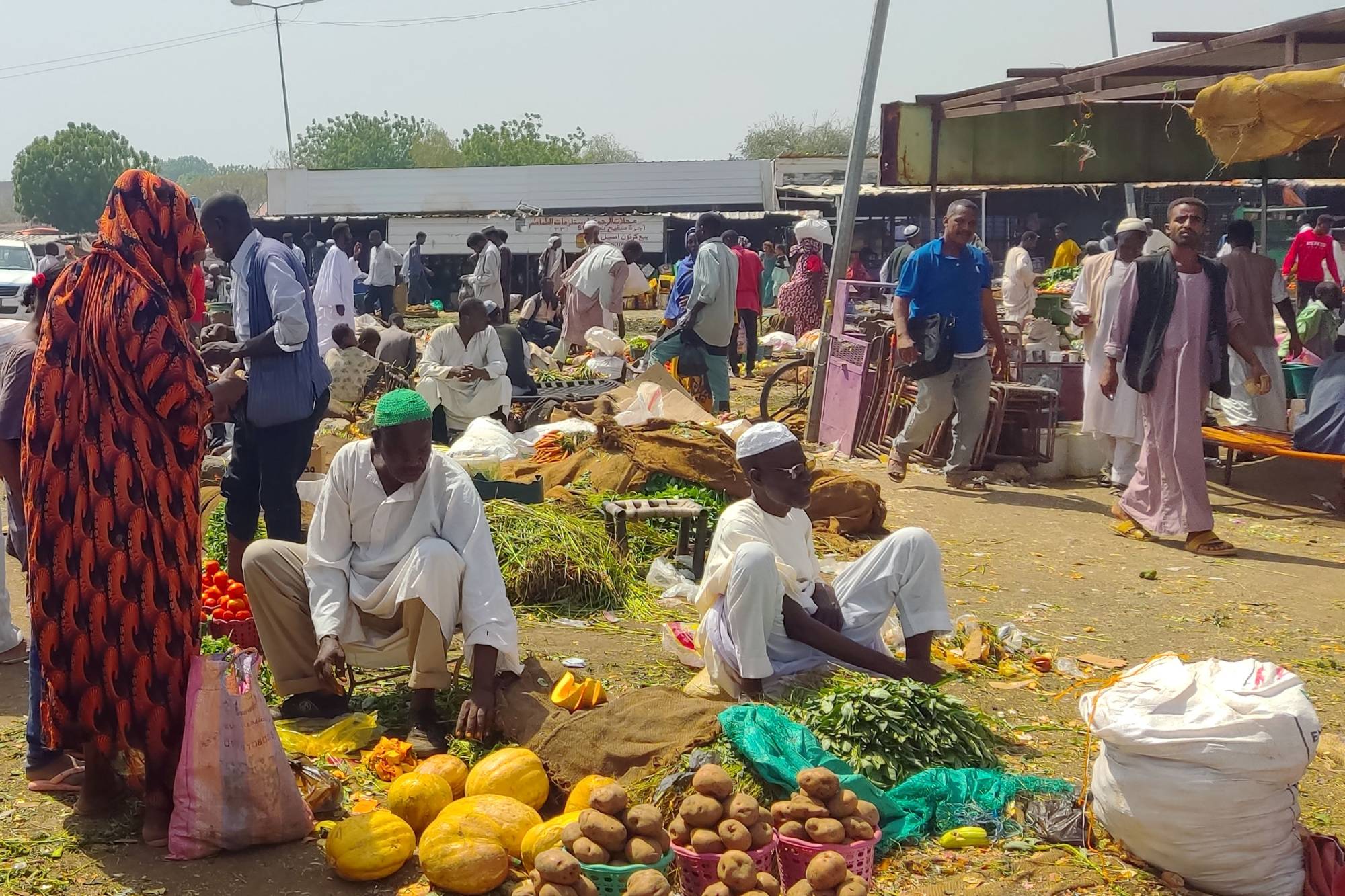
Sudan’s economy continues to groan under the weight of the ongoing war, as its severe losses and deep humanitarian consequences are compounded by the global oil crisis driven by tensions in the Strait of Hormuz and the Iran conflict.
The situation in Sudan has seen sharp increases in fuel prices, triggering a wave of extreme inflation that has affected all essential goods, including bread and transportation costs. Matters have been further worsened by the government’s decision to raise the customs exchange rate by 14%, pushing prices to record levels, disrupting markets and overall trade activity. The government faces accusations of failing to control the situation or contain the soaring cost of living, which is driving Sudanese citizens into increasingly harsh living conditions.
Record Price Surges
The crisis escalated as the price of diesel in Port Sudan jumped to 6,300 Sudanese pounds per liter (about 25,200 pounds per 4-gallon equivalent), roughly $6.5 on the parallel market—an increase of around 54% compared to previous prices. In some states, prices exceeded 7,000 pounds per liter.
Gasoline prices also rose sharply, ranging between 5,089 and 6,870 pounds per liter depending on the region. The price of a 50 kg sack of sugar reached around 175,000 pounds, while cement rose to 55,000 pounds. In addition, rising fuel and gas prices, combined with an electricity deficit estimated at 3,300 megawatts, pushed bread prices up to 2,000 pounds for eight pieces (about half a dollar on the parallel market).
Another Blow
Before citizens could recover from the shock of rising fuel prices, the government increased the customs dollar rate from 2,827 to 3,222 pounds—a 14% rise.
These increases dealt a heavy blow, causing widespread chaos in the pricing of basic goods and services, including bread. Commercial activity also slowed significantly, with some traders halting sales while awaiting further developments. Meanwhile, the parallel market exchange rate surged past 4,000 pounds per US dollar.
Accordingly, customs authorities immediately implemented the new tariff rate on all imported goods and shipments entering through ports, land crossings, and airports.
Earlier in April, Sudan’s Council of Ministers had announced a package of measures aimed at improving the trade balance and narrowing the widening deficit, which is projected to reach $3.9 billion this year, up from $3.6 billion last year.
Government Failure?
While the government has remained largely silent in the face of accusations of failing to address the rising cost of living, experts have placed full responsibility on it for the sharp and painful price increases affecting citizens’ livelihoods.
Observers argue that the crisis has exposed serious flaws in the government’s management of the strategic fuel sector, accusing it of inaction and failure to take measures that could have stabilized fuel prices, halted the depreciation of the national currency, and alleviated public suffering.
Meanwhile, the Minister of Energy, Engineer Al-Mu’tasim Ibrahim Ahmed, stated that priority will be given to rebuilding the oil and gas sector infrastructure damaged by the war.
He added that despite the extensive damage, the ministry is making significant efforts to secure the country’s fuel needs, especially after the shutdown of the Khartoum refinery and Sudan’s shift to full reliance on imports.
Importers’ Criticism
The National Chamber of Importers strongly criticized the increase in the customs exchange rate, describing it as a “catastrophic step” that will further weaken the national currency and increase pressure on citizens.
Its head, Al-Sadiq Jalal Al-Din, stated that Sudan’s economy is being managed through destructive rather than constructive policies, despite the country’s resource wealth. He attributed the depreciation of the Sudanese pound to poor economic management and the government’s inability to control exchange rates.
He added that the increase will raise the cost of goods and overall price levels, leading to higher inflation, further currency depreciation, and a decline in living standards. It will also expand the informal economy and increase smuggling and tax evasion.
He rejected repeated claims by the Minister of Finance that the customs dollar no longer exists, stating that it remains a key tool used globally to determine customs value and control inflation.
Citizens Bearing the Burden
Economic activist Ezzedine Al-Bushra warned against relying on citizens to bear the cost of economic solutions in the absence of real policies to stimulate production and development.
He emphasized that such short-term approaches will only lead to deeper economic and social collapse. He pointed to successful African experiences, such as Rwanda, which overcame similar challenges through serious policies that boosted production and achieved financial surpluses within a short time.
Mounting Hardships
He added that the economy cannot recover while citizens’ daily lives are turned into a “hell of burdens,” criticizing what he described as excessive government spending on officials’ privileges, including housing, luxury vehicles, and fuel.
Al-Bushra called on the government to reduce its expenditures, particularly on senior officials, while promoting exports, eliminating excessive fees, and providing real incentives to attract expatriate remittances through formal channels instead of discouraging them.