Sudanese people are entering this year’s Eid al-Adha as the war enters its fourth year, amid a harsh humanitarian and economic reality that has transformed the spirit of the holiday and stripped away many of the social traditions that had endured for decades.
In a country where Eid was once associated with family gatherings, visits, and communal barbecue feasts during the sacrifice celebrations, millions of Sudanese are now welcoming the holiday amid displacement, poverty, hunger, and fear. Priorities have shifted from buying sacrificial animals and children’s clothes to searching for food, medicine, and clean drinking water.
The Impact of War
During Eid al-Adha, Sudanese people traditionally dressed in bright white garments, exchanging visits and invitations with neighbors, friends, and relatives, while gathering in homes, neighborhoods, and open spaces to share grilled meat from sacrificial animals — one of the most cherished social rituals of the occasion — alongside distributing meat and strengthening family ties.
However, the war and economic collapse have severely weakened these traditions, as large numbers of families can no longer afford sacrificial animals or even basic necessities.
Refugees and internally displaced persons appear to be suffering the most during the holidays, after many lost their homes and sources of income and settled in camps and shelters lacking essential services. Meanwhile, residents who remained in towns and cities face an unforgiving economic reality that consumes their limited incomes.
Eid for the Displaced and Refugees
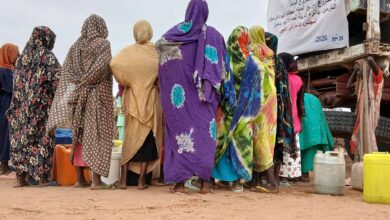
In displacement centers inside Sudan, Eid passes amid overcrowded tents, scorching temperatures, and shortages of food, water, and healthcare, while diseases such as cholera, malaria, and dengue fever continue to spread in war-affected areas.
Amouna Ismail, a displaced woman from North Darfur living in a shelter center in Al-Dabbah, told Asharq Al-Awsat:
“Children no longer ask about clothes or toys — they ask about food. Many of them do not even feel that it is Eid.”
In refugee camps across neighboring countries, conditions appear even more complicated, with many Sudanese relying almost entirely on humanitarian aid. A refugee in one of the camps in Uganda, identified as “M.N.”, told Asharq Al-Awsat that she has not felt the joy of Eid since becoming a refugee.
“But what can we do? We are waiting for the war to end so we can return home,” she said, adding, “I never used to buy sheep for sacrifice — I used to raise them in my own home.”
Umm Ahmed, displaced from Kordofan to Gedaref, said:
“In the past, Eid was a time of joy and connection. Now people feel ashamed because they cannot do anything for their children or even for their displaced neighbors.”
Harsh Living Conditions
Even outside areas of displacement and refuge, life remains difficult for many Sudanese who stayed in their towns and villages, amid soaring prices, shrinking incomes, and the collapse of essential services.
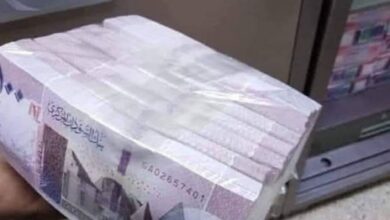
Hashim Mousa, a secondary school teacher, said his salary of 140,000 Sudanese pounds no longer equals the price of a single sack of sugar, which now exceeds 200,000 pounds.
He added that teachers have not received salaries or allowances, nor payments for supervising examinations, asking:
“How can a teacher bring joy to his children or buy clothes and food under these circumstances?”
Multiple Crises
Abdullah Mohamed Yousif, 52, said the war has drained families’ savings and weakened returns from farming and labor. He explained that his work as a tractor driver no longer provides enough income to cover living expenses or buy a sacrificial sheep this year.
Khalid Al-Tahami, a blacksmith, said repeated electricity outages have directly affected his work and income. At the same time, farming has become less profitable due to water shortages, rising fuel and seed costs, and seasonal crop pests, making the purchase of sacrificial animals extremely difficult this year.
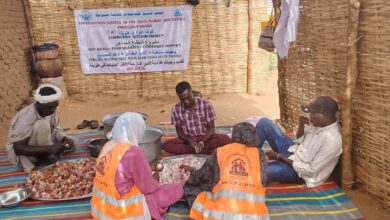
Dr. Salah Jalal, spokesperson for the “Sudanese Group for Refugee Advocacy,” told Asharq Al-Awsat that humanitarian organizations and relief initiatives have worked to provide sacrificial animals to Sudanese refugee camps in eastern Chad, particularly in Adré, Miji, and Abu Tenge camps, as well as refugee camps in South Sudan, Duwaili camp, and Kampala in Uganda.
He added that these initiatives aim to ease the suffering of families who have lost nearly everything because of the war, especially during holidays when refugees and displaced people experience profound feelings of isolation and loss.