During the war, many Sudanese artists have actively produced works calling for an end to the fighting and the rejection of armed conflict. Visual artists have also organized exhibitions reflecting the profound impact of the war on people’s lives, while conveying powerful messages advocating peace.
A number of community initiatives have also emerged, seeking to use the arts as a tool for dialogue and peacebuilding.
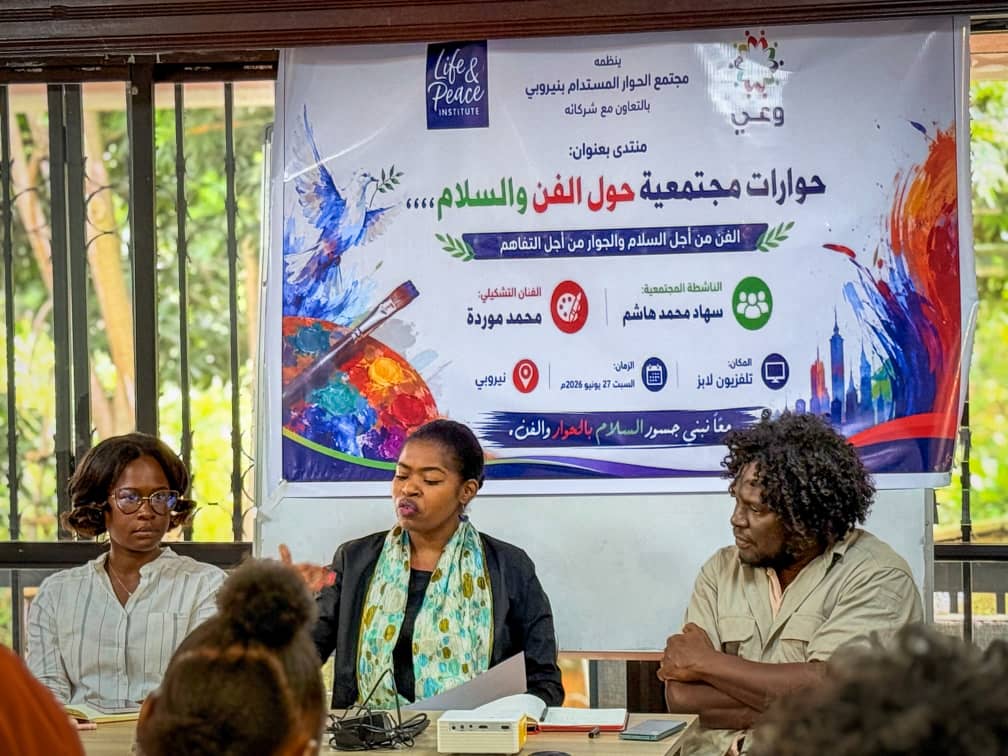
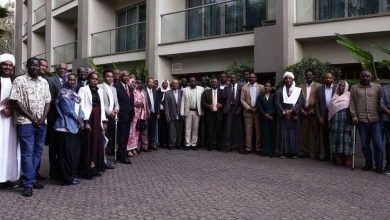
In this context, the third phase of the PeaceAction Sustainable Dialogue Program concluded in Nairobi, Kenya, with an event titled “Community Dialogues on Art and Peace.”
Art Exhibition
The event featured a visual arts exhibition, a discussion forum, presentations of selected highlights from the program’s sessions, and concluded with a screening of the film “Goodbye Julia,” followed by a discussion on identity, coexistence, and peace.
The Role of Art
The forum explored several key issues, including the role of art in confronting hate speech, the impact of war on Sudan’s artistic movement, the contribution of artists to addressing the consequences of conflict, and the ability of the arts to bridge divides between communities affected by war.
Participants also discussed priorities for peacebuilding, the importance of involving women and youth, the possibility of achieving peace in the absence of justice, and the role of artists and peacebuilders in reaching communities and promoting acceptance of others both within Sudan and among refugee communities.
Ignorance of the Other
Participants emphasized that ignorance of other cultures is one of the greatest obstacles to dialogue, calling for a deeper understanding of Sudan’s diversity as a foundation for peace rather than treating it as a source of conflict.
Speakers also referred to Rwanda’s experience following the genocide, where community dialogues created space for both victims and perpetrators to share their stories, highlighting it as an important example of supporting social healing and reconciliation.
The Message of Art
Visual artist Jamal Taha told Mashaweer that “Art is a message, and it requires investing in the artist first. A lack of awareness among artists is reflected in the messages they deliver to society.”
He also called for restoring recognition to Sudan’s traditional female praise singers (Hakkamat) and other folk women artists, whose influential roles in local communities have long been overlooked.
He added, “The essence of music and the arts is harmony, balance, and peace. Therefore, artists should support peace and amplify the voices of those who are oppressed, marginalized, and suffering from the devastation of armed conflict.”
Arts Break Down Barriers
Participants stressed that art speaks a universal language that transcends cultural differences. They noted that interacting with Sudanese artists in Nairobi had transformed many perceptions of visual arts and demonstrated their ability to stimulate meaningful discussions on social issues.
They also observed that repeated wars have weakened the shared national consciousness among Sudanese people, while the arts have the potential to help rebuild these common bonds.
Promoting a Culture of Peace
Musician and researcher in folk arts Mortada Mirghani told Mashaweer that “The arts play a vital role in reducing conflict and promoting a culture of peace because they have the ability to reach people emotionally and intellectually, creating spaces for dialogue and mutual understanding beyond the language of violence.”
He noted that artistic initiatives have become an important means of expressing the suffering of civilians, advocating for an end to the war, and helping restore the social fabric.
He added, “Among the most significant contributions of the arts to ending war is the promotion of a culture of peace through theatre, music, painting, and poetry. These forms of artistic expression spread the values of tolerance, coexistence, and the rejection of hatred by celebrating cultural diversity and encouraging acceptance of others.”