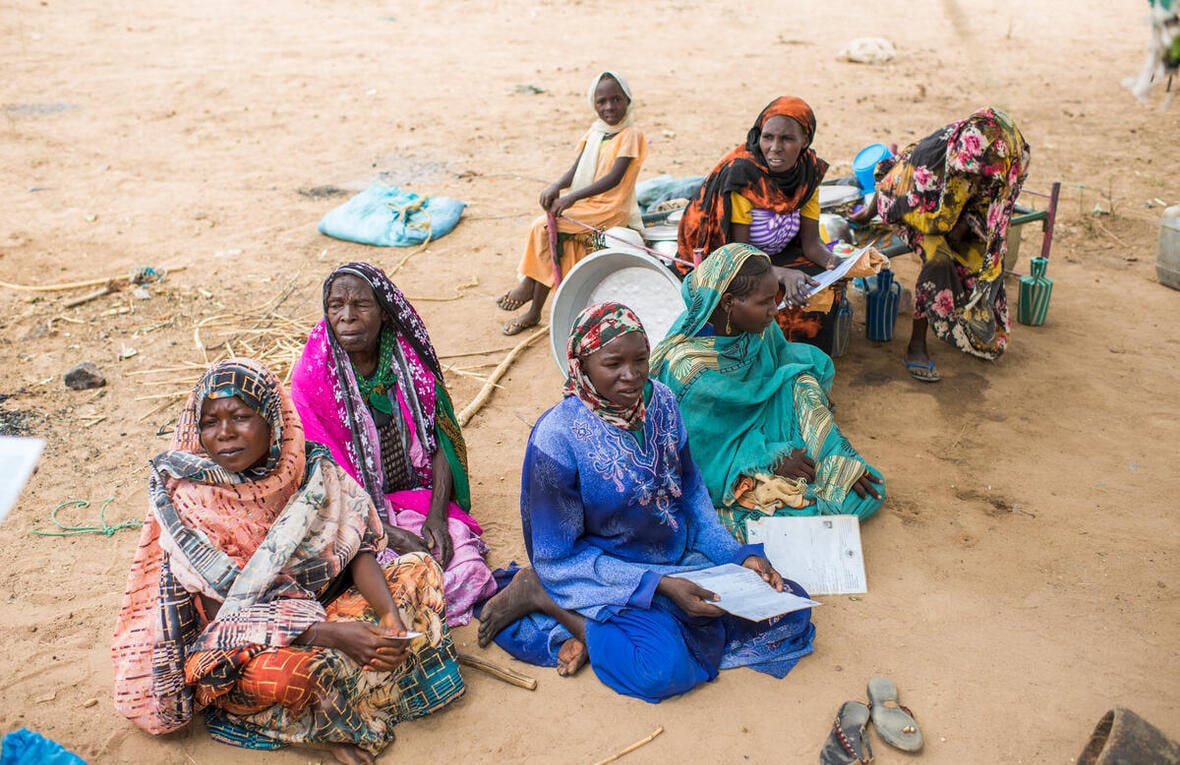
With each passing day, the health conditions of Sudanese women living in refugee camps across neighboring African countries continue to deteriorate. The shortage of primary and reproductive healthcare services—caused by declining humanitarian funding—has significantly reduced the assistance available to them. The crisis is further compounded by the near absence of adequate healthcare in the camps and the severe shortage of medicines and essential medical supplies.
Against this backdrop, maternal deaths have increased in refugee camps in Chad and Ethiopia, with many pregnant women and adolescent girls dying from infections, high blood pressure, and severe hemorrhaging due to the lack of timely medical care. Hundreds of women are also suffering from anemia during and after pregnancy.
Maternal Deaths
Speaking to Mashaweer, Souad Emad, a reproductive health specialist working in refugee camps in eastern Chad, said that funding cuts have forced humanitarian organizations to suspend clinic operations and close essential healthcare facilities serving Sudanese women who fled the war in Darfur.
She expressed concern that sexual and reproductive health services in several refugee camps could come to a complete halt because of inadequate funding.
“Dozens of refugee women are suffering immensely,” she said. “Several maternal deaths have already been recorded due to poor prenatal care and the lack of healthcare services for newborns, leading to a sharp increase in maternal and infant mortality.”
At the Médecins Sans Frontières (MSF) hospital in Metche, where 824 babies have been delivered this year, most in emergency cases, doctors have managed to save many lives. However, they remain deeply concerned about women who fail to reach the hospital in time.
A Harrowing Ordeal
Khadija Bakhit, who fled El Fasher and now lives in a refugee camp in eastern Chad, told Mashaweer that during her ninth month of pregnancy she urgently needed hospital care to give birth.
“I waited three hours for the ambulance to arrive,” she recalled. “All I remember is the unbearable pain. It was so severe that I lost consciousness.”
She said she feared losing her baby, but upon arriving at the hospital she was immediately taken to the operating room, where doctors performed an emergency cesarean section that saved both her life and the life of her son, Nabigh.
Bakhit added that many Sudanese refugee women live in isolated camps deep in the desert, where water and food are scarce, employment opportunities are nonexistent, and medical facilities are located dangerously far away.
Catastrophic Conditions
Similarly, Hayam Saeed, who lives in the Biyale Refugee Camp in Uganda, said that the health conditions of women and girls have deteriorated dramatically because of inadequate medical care and severe shortages in reproductive health services, particularly vitamins and nutritional supplements.
She explained to Mashaweer that refugee women are often forced to give birth under unsafe and unhygienic conditions because they cannot access healthcare or essential medicines.
Saeed warned that the healthcare crisis in refugee camps has reached catastrophic and unprecedented levels, exposing women and girls to enormous risks due to the acute shortage of medical personnel and life-saving medicines.
Malnutrition
Dr. Manahel Juma, a volunteer physician working in refugee camps in Uganda, said that dozens of pregnant and breastfeeding women are suffering from malnutrition, in addition to serious health complications during and after childbirth.
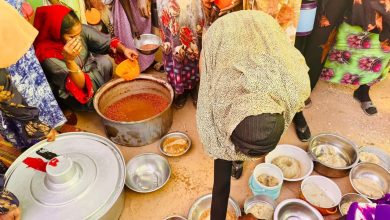
She explained that many mothers skip meals and go to bed hungry so their children can eat, leaving their developing babies deprived of essential nutrients and raising serious concerns about the health of newborns.
Speaking to Mashaweer, Dr. Juma stressed that the condition of pregnant women in the camps is extremely alarming because they lack sufficient food for themselves and their unborn children. She noted that pregnancy significantly increases nutritional requirements, making access to balanced and adequate meals essential. Without proper nutrition, she said, there has been a noticeable rise in miscarriages and maternal deaths among refugee women.