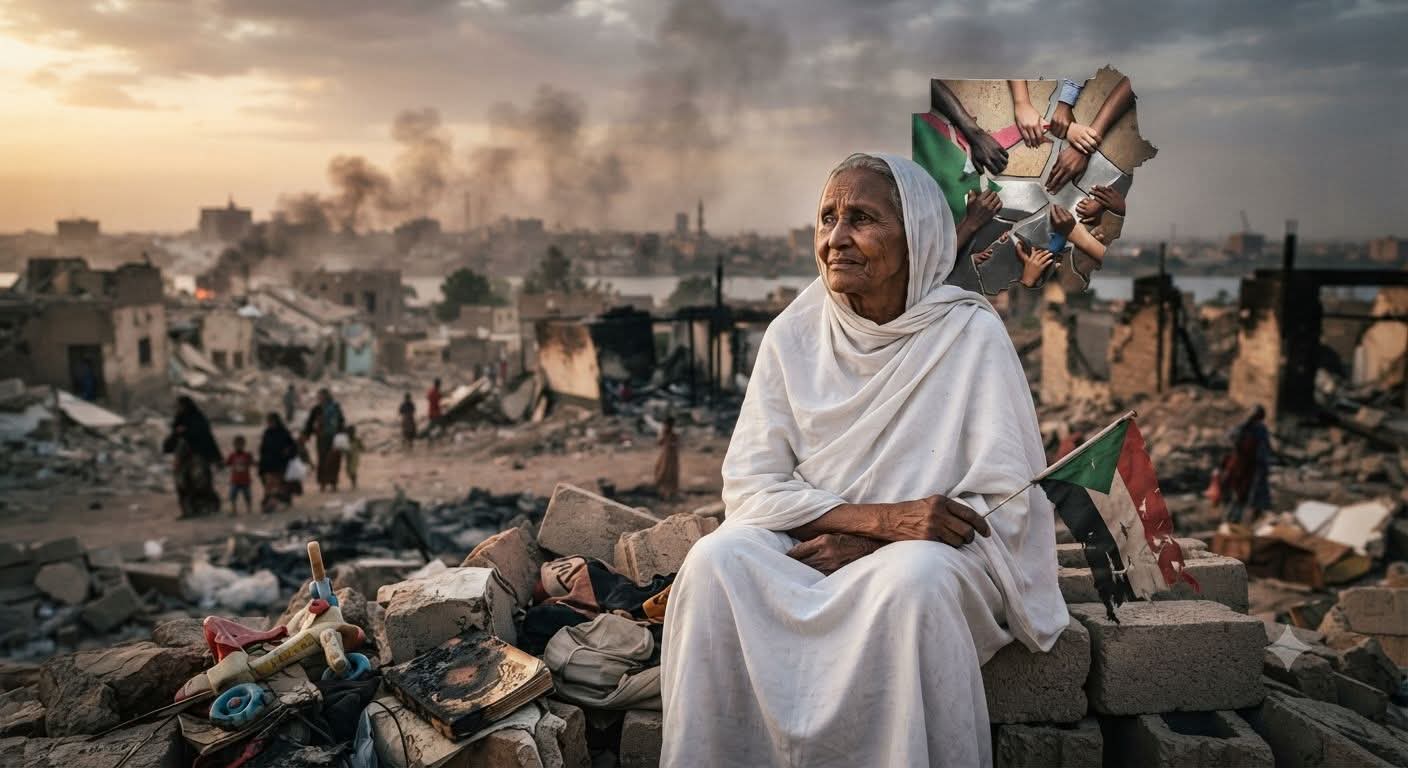
Displacement continues to spread across Sudan as fighting persists and multiple battlefronts expand, fuelling a humanitarian crisis in which the consequences of war are compounded by hunger, drought and declining aid. Millions of Sudanese are being forced to leave their homes in search of safety and food.
The International Organization for Migration (IOM) has recorded approximately 8.5 million internally displaced people in Sudan, according to its latest data, as highlighted in a report prepared by Azhar Ahmed for Al Jazeera. The report examines the geographical distribution of displaced people and the humanitarian implications of military developments.
Military operations are concentrated in the Kordofan region, western Darfur and Blue Nile State in southeastern Sudan. Meanwhile, the Sudanese army controls the capital, Khartoum, as well as the northern, central and eastern states, while the Rapid Support Forces (RSF) maintain extensive influence across Darfur and West Kordofan.
IOM data indicate that North Darfur, South Darfur and Khartoum are among the leading states of origin for displaced people. El Fasher tops the list of cities in terms of the number of displaced people, followed by Khartoum and then Nyala in South Darfur.
In addition to military operations, the country is grappling with the effects of drought, malnutrition and rising food prices. These factors are further undermining already fragile living conditions and forcing more people to move in search of food supplies and livelihoods.