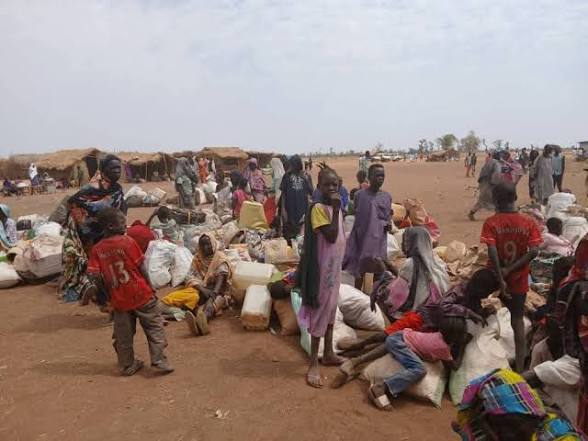
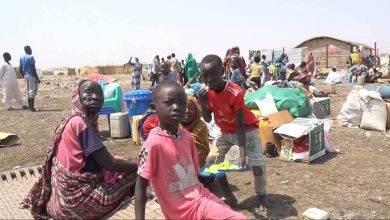
As the war in Sudan enters its fourth year, the humanitarian conditions facing residents of conflict zones and people displaced by the fighting have continued to deteriorate. Death is once again looming over them, this time through hunger and malnutrition. Children, older people and pregnant women have been particularly affected by acute food shortages and the suspension of humanitarian assistance.
The impact of cuts to food rations allocated to Sudan’s hardest-hit areas, caused by funding shortages, has significantly worsened the humanitarian crisis. The situation has evolved into what has been described as a “triple emergency”, combining catastrophic levels of displacement and hunger with the collapse of the healthcare system, according to reports by UN agencies and international organisations during the first quarter of this year.
Dire Conditions
In this context, Hamed Al-Sadiq, who lives in the city of Dilling in South Kordofan State, said that “the decision to cut food rations has contributed to rising levels of hunger in cities and areas across the region, which is facing multiple crises as a result of the ongoing war and the suffocating siege imposed by the Rapid Support Forces (RSF) and their ally, the Sudan People’s Liberation Movement (SPLM). Restrictions on the movement of goods and commodities have also made it difficult for supplies to reach markets.”
Al-Sadiq added that “famine in South Kordofan has worsened and become a reality, threatening to claim thousands of lives. The closure of land routes, deteriorating services and the unavailability of food commodities—which, when available, are prohibitively expensive—have forced residents to flee to El Obeid, the capital of North Kordofan State.”
He explained that “food stocks relied upon by volunteers to provide meals through community kitchens and free food centres have been completely exhausted, while the suspension of collective food initiatives has further aggravated the suffering.”
Mounting Pressure and Limited Capacity
Meanwhile, Ismail Al-Sayer, a member of the Kadugli Emergency Response Room, said that approximately 70 per cent of households were struggling to obtain food, while 85 per cent had low food-consumption scores. He also pointed to the lack of healthcare and the depletion of the financial savings of most families who had remained in the city since the outbreak of the armed conflict.
He noted that the number of people in need had increased following the arrival of displaced people from Al-Dibibat, Karmali, Al-Farshaya and Al-Sanjakaya. This had placed enormous pressure on the already scarce resources of community kitchens and takayas—charitable communal kitchens—leaving them overwhelmed and exhausting their remaining stocks.
Al-Sayer added: “On most days of the week, only one type of food is available alongside a meal of lentils or fava beans, even as demand continues to rise and displaced families increasingly depend on the services provided by takayas.”
Hunger and Disease
In a similar vein, humanitarian affairs specialist Montaser Abdelgadir warned that dwindling donor funding, coupled with the withdrawal of US assistance as a major source of financing following decisions by President Donald Trump, could further expand the area affected by famine in Sudan if the United Nations and other organisations failed to secure funding for their operations.
He noted that several areas had already reached famine conditions, adding that the situation had deteriorated to the point where people were eating tree leaves and animal fodder. Deaths caused by hunger and food shortages had also been reported in Darfur, Kordofan and Blue Nile states.
Abdelgadir urged the central government not to conceal the extreme suffering endured by Sudanese people across many parts of the country, including displaced people and civilians trapped amid fighting in active conflict zones.
He stressed the urgent need for action to save millions of people trapped by fighting in Kordofan and Blue Nile, many of whom are experiencing severe hunger alongside the spread of malnutrition-related diseases. Without the presence of community kitchens and charitable food centres in some areas, he said, entire families could have died of hunger.
Warnings and Risks
Meanwhile, the General Coordination of Displaced Persons and Refugees Camps in Darfur warned that the World Food Programme’s (WFP) reduction of assistance in Sudan, due to funding shortages, threatened the lives of hundreds of thousands of people who rely on it for their basic food needs.
In a statement, the coordination body explained that the cuts had come amid mounting pressure on food security caused by the war, displacement and the effects of drought on agricultural production. Civilians, particularly displaced people, were facing a severe deterioration in their livelihoods and growing risks of hunger and malnutrition, making aid reductions a direct threat to their lives.
The coordination body’s spokesperson, Adam Rijal, said: “Reducing assistance under these circumstances does not simply mean smaller quantities of aid. It could deprive displaced families of essential meals and force them to resort to severe coping strategies, such as withdrawing children from school, reducing the number and size of meals, or selling whatever possessions they have left. This threatens their ability to withstand the crisis and makes urgent international action necessary to prevent further humanitarian deterioration.”
The coordination body called on donor countries and international institutions to close the funding gap rapidly to ensure the continuation of food assistance and its delivery to those in need. It also urged an expansion of the humanitarian response, stronger nutrition and food-security programmes, and priority support for the hardest-hit areas.
Limited Impact
In a contrasting assessment, Salah Badawi, a former Humanitarian Aid Commissioner in West Kordofan State, dismissed the notion that Sudan was experiencing a food-supply crisis, citing the country’s vast and diverse natural resources.
He argued that cuts to food rations by international organisations would have only a very limited impact on the situation of Sudanese people, as disruptions to agriculture in conflict zones could be offset by cultivating unused land in safer areas to support food security.
Badawi explained that, contrary to what reports had indicated, Sudan continued to produce abundant food despite the ongoing war. Given the country’s agricultural potential, he said, there was no basis for declaring a famine because, in his view, famine did not exist on the ground.
“Assuming that Sudan is facing a food shortage, the problem lies in the high cost of food resulting from inflation and the erosion of the local currency’s value, which have left many households unable to afford the food they need. However, the country is not suffering from an overall shortage of food, and describing the situation in those terms is neither impartial nor accurate,” he added.
UN Assistance
Separately, the United Nations and its humanitarian partners announced their readiness to scale up life-saving assistance in the hardest-hit areas of Darfur and Kordofan over the next six months.
UN Secretary-General’s spokesperson Stéphane Dujarric said the response would target areas facing growing humanitarian needs as a result of the ongoing conflict. He warned, however, that severe funding shortages were limiting humanitarian organisations’ ability to respond to escalating needs.
The United Nations has called on donors to provide the resources required to support and expand relief operations. It has also urged both parties to the conflict in Sudan to allow humanitarian assistance to reach those in need.
Alarming Levels
According to the World Food Programme, the combined effects of deteriorating living conditions, prolonged electricity outages, fuel shortages and declining domestic production caused by the paralysis of the agricultural sector have driven food prices to record levels and deepened the hunger crisis.
Official reports indicate that poverty in Sudan has risen to 73 per cent, compared with just 21 per cent before the war. This means that approximately 24 million people are now living below the poverty line.
Multidimensional poverty surveys have also shown that the crisis has penetrated deep into urban areas, where the poverty rate has reached approximately 69.4 per cent. The situation is even more severe in rural areas and displacement camps, where the rate has approached 99 per cent.
The Integrated Food Security Phase Classification (IPC) warns that more than 19.5 million people, representing approximately 40 per cent of Sudan’s population, are facing acute food insecurity.
The 2026 Global Hunger Index ranks Sudan among the countries experiencing alarming levels of hunger amid the continuing war and worsening humanitarian crisis. However, insufficient data are available to calculate a definitive hunger score for the country.
According to the index’s data, the prevalence of stunting among children under five stands at 35.4 per cent, while 18.1 per cent of children suffer from wasting as a result of acute malnutrition. The under-five mortality rate stands at 6.2 per cent.