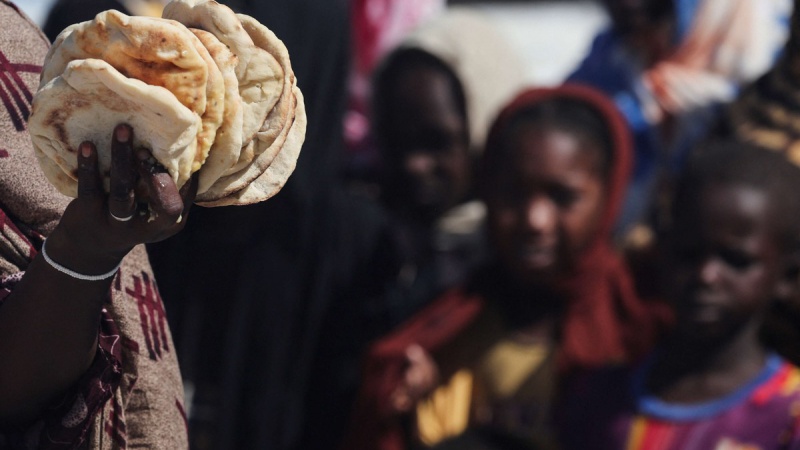
Sudanese woman Sawsan Mahmoud, living in the capital, Khartoum, where most bakeries have closed due to rising wheat prices and fuel shortages, says she now has to set aside the entire combined monthly salaries of herself and her husband just to buy bread.
Mahmoud, 44, a mother of three, says: “The situation has become unbearable. We have reduced the amount of bread we consume and now eat it only once a day.” She added: “We have to set aside 900,000 Sudanese pounds ($88) every month to buy it. That is almost the combined total of my salary and my husband’s salary.”
Multiple Crises
The price of a loaf of bread in the Sudanese capital doubled from 250 to 500 Sudanese pounds (from $0.25 to $0.50) over the past week, marking an unprecedented increase. Many Sudanese families can no longer afford it, amid growing international warnings about the possibility of famine spreading across the country, where 20 million people are experiencing severe food insecurity.
Meanwhile, Abeer Mohamed said after purchasing bread from one of the few bakeries still operating in Khartoum: “In the past, we used to eat bread with every meal of the day. Now, we can no longer afford to do that.”
Sudan imports most of its wheat requirements, making domestic prices highly vulnerable to fluctuations in the local currency.
Last month, the Sudanese pound lost 25 percent of its value against the US dollar, marking a record decline. The dollar peaked at more than 10,500 Sudanese pounds before stabilizing at 10,200 pounds on Wednesday, compared with just 500 pounds before the war.
Flour Shortages
Inside a bakery owned by Mohamed Al-Fateh in Khartoum, workers mix flour with water and yeast to prepare a thick dough. They divide it into round portions, which are placed in the oven using long wooden boards. Within minutes, the dough is transformed into traditional bread, a staple of Sudanese meals.
Al-Fateh confirmed that “many bakeries have closed because flour is unavailable in the market.” He added: “You can wait for an entire day or even two at a flour distribution centre, only to return empty-handed.”
In Al-Azhari neighbourhood, south of the capital, Mutawakkil Ahmed Babiker is struggling to keep his bakery operational after flour prices doubled, in addition to electricity cuts that have forced him to purchase fuel for the generator.
Babiker said: “Most likely, I will have to close the bakery. We sell a loaf of bread for 500 pounds, which is less than its actual production cost, but I cannot increase the price given people’s circumstances.”
Electricity Crisis
Khartoum and parts of eastern Sudan are experiencing widespread power outages following drone attacks targeting electricity stations at the end of last month, forcing them out of service.
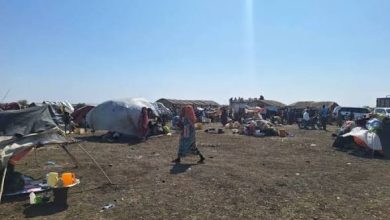
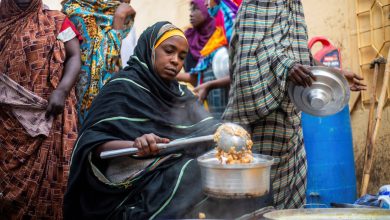
Across Khartoum, Sudanese people have once again begun queuing outside community kitchens (Takyas), waiting for free meals, after many of these facilities ceased operations following the army’s takeover of the capital and the removal of the Rapid Support Forces (RSF) in March 2025.
The Omdurman-based Ombada Emergency Response Room, which coordinates the work of community kitchens in the area, warned that “the circle of need is expanding to include thousands of families and displaced people.” It also cautioned about “shortages of food supplies and soaring prices, making access to even one meal a day a dream.”
Poverty rates in Sudan have reached 80 percent, according to data from the Central Bureau of Statistics. Meanwhile, the government has announced plans to reduce inflation to below 60 percent by the end of this year, after it reached 99 percent in 2025.
Fuel Shortages
Outside Khartoum, a large proportion of wheat supplies arrives in the form of humanitarian aid. However, fuel shortages and rising prices, coupled with road closures caused by ongoing fighting, are preventing aid from reaching those in need.
The war, which has continued since April 2023, has divided the country into areas of control. The army controls Khartoum and cities across central and eastern Sudan, while the RSF controls the entire Darfur region in the west and parts of the south.
More than 200,000 people in South Kordofan and North Darfur are experiencing famine, according to reports supported by the United Nations, which have also warned that famine could spread to eight cities by 2027.