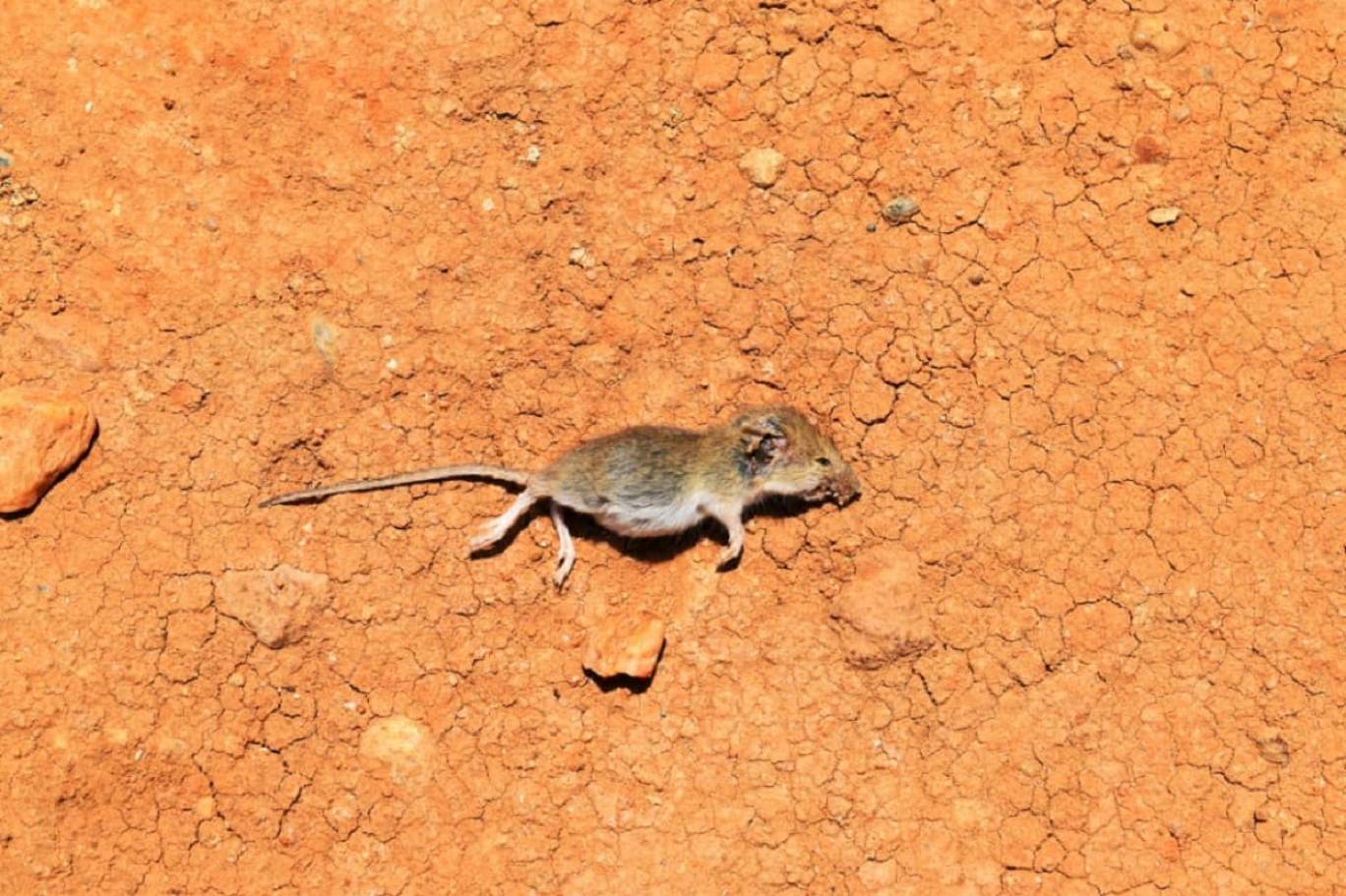
Dead Rats and Fish Threaten Environmental and Water Pollution Hazards in Sudan
Mashawir - Report - Noah Adam Hudo
A special kind of fear has crept into the hearts of Sudanese people in Gezira State, south of Khartoum, as well as in the Wadi Halfa area, especially following the spread of the phenomenon of large numbers of rats and fish dying. Residents fear that mysterious reasons behind their death could be linked to a catastrophic epidemic with serious consequences threatening public health.
Between hypotheses of climate change, the effects of the ongoing war, and environmental degradation, this development emerges as a potential indicator of an environmental and health crisis that requires pause and analysis.
Ecological Imbalance
In this context, Professor of Environmental Science at Sudanese universities, Ahmed Abdelrahman, told the (Mashawir) platform: “What is happening is a clear indicator of an imbalance in the ecological balance. The areas are witnessing a significant increase in the number of rodents, followed by their sudden collapse due to environmental pressure and lack of resources or food.”
He added: “This phenomenon is usually linked to major disturbances in the ecosystem, whether natural or human-induced.”
Multiple Effects
For his part, natural resource management expert Mohamed El-Taher believes that “the war has played a pivotal role in exacerbating the situation, by stopping pest control campaigns and the collapse of environmental services, which created an ideal environment for rat reproduction. Consequently, the scarcity of food led to mass death.”
He noted in his statement to (Mashawir) that “the widespread population displacement has significantly contributed to the neglect of agricultural lands, leading to an additional imbalance in the ecological balance.”
Pollution Hazards
Regarding the causes of fish death, water science researcher Sara Hassan explained to (Mashawir): “Fish death is often linked to oxygen deficiency or water pollution, which can result from rising temperatures or the deterioration of water resource management.”
She warned that “the continuation of these indicators could threaten local food sources, and also indirectly, the remnants of war left on land, after rainfall, much of it was carried into seasonal streams and from there into the Nile. This could negatively affect aquatic life, polluting both water and food simultaneously.”
Climate Change
Meanwhile, weather and climate science expert Ibrahim Youssef pointed out that “climate change puts pressure on ecosystems, but when it coincides with armed conflicts, the results become more severe and dangerous because the processes of environmental, agricultural, forest, and pasture degradation play a role in accelerating the climate change cycle. This happens when armed conflicts break out, and people abandon agriculture, livestock, and forests, which are greatly destroyed.”
He stated in his interview with (Mashawir) that “the clearest example of this is the destruction of the Sunut Forest, which is considered the first natural reserve in Khartoum State.”