Sudan has lost vast areas of virgin forests during the three years of war between the Sudanese army and the Rapid Support Forces (RSF), amid extensive destruction affecting trees in the capital, Khartoum, and several cities across the country due to widespread illegal logging that intensified as the armed conflict dragged on. This came in addition to the cooking gas crisis following its disappearance from distribution outlets and the shutdown of the main oil refinery in the Al-Jaili area north of Bahri City, which had supplied 50 percent of local gas production for domestic consumption.
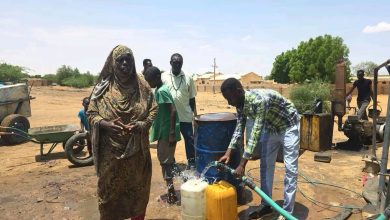
The suffering affected all residents without exception, forcing many citizens to return to primitive firewood collection and driving them to cut down forest trees across Sudan’s different regions without distinguishing between dry or green trees for use as cooking fuel and meal preparation. In addition, many people began collecting and selling timber in local markets, while the profitable charcoal trade flourished, prompting traders to increase production in a way that threatened forest cover and heightened environmental risks.
Fundamental Pillars
Sudan is considered one of the richest countries in Africa and the world in terms of natural resources, including forests, water resources, and minerals. For decades, these resources have formed the basis of life and an important contributor to the national economy and gross domestic product.
Among these natural resources, forests stand out as one of the fundamental pillars relied upon by Sudan and its people because of their immense environmental and economic value, a diversity rarely found in many African and Arab countries, thanks to Sudan’s strategic geographical location within the rainfall belt and along the Nile rivers.
Consequences of War
The repercussions of war have cast a heavy shadow over this vital resource, as forests have suffered extensive damage due to administrative neglect, excessive logging, the suspension of maintenance and technical monitoring activities, and their exploitation as a direct source for securing daily livelihoods amid the economic and humanitarian deterioration caused by the conflict.
In this context, forestry expert Sheikh Saad Mustafa told Mashawir that British colonial authorities began establishing forestry administrations in Dongola, Sennar, and Wad Madani as early as 1903 to serve colonial interests linked to the use of acacia wood as fuel for river steamers operating between Egypt and Sudan.
He added that the later expansion of railway construction depended heavily on forest products, particularly in the manufacturing of railway sleepers used in infrastructure projects.
He also pointed out that the colonial administration conducted extensive surveys in gum arabic production areas and established specialized administrations for the gum arabic belt because of its economic importance as a major source of foreign currency. He further explained that the Forestry School in Al-Mogran was the first educational institution specialized in this field, established in 1925 to train personnel and enhance the capacities of workers and specialists in improving forest management and strengthening its economic contribution at both local and international levels.
Major Development
Mustafa explained that the forestry sector later witnessed significant institutional and legislative development, as the National Forestry Corporation Law was approved following extensive studies and consultations involving specialized scientific and research institutions, including the Forestry Research Institute, the Faculty of Forestry and Range Sciences, the Faculty of Forestry at the University of Khartoum, the Agricultural Research Corporation, and the National Council for Natural Resources. The aim was to establish scientific foundations for protecting and sustainably managing forest resources.
He noted that these efforts led to the implementation of several internationally supported projects, such as the Gum Arabic Belt Rehabilitation Project, the Forest Resources Development Project, the Fuelwood Development Project, and projects aimed at combating desertification and sand encroachment. These initiatives contributed to raising environmental awareness among local communities and strengthening the importance of biodiversity management and the preservation of land and vegetation cover.
He added that forests contributed foreign currency revenues to the state through gum arabic production, which is considered one of Sudan’s most important economic resources, in addition to timber exports and other forest products.
He pointed out that the war left severe impacts on reserved and protected forests, explaining that Al-Mogran Forest in Khartoum State was almost completely destroyed. Forests in Al Jazirah and Sennar were also heavily damaged, in addition to the widespread destruction affecting forests in Darfur and Kordofan states due to illegal logging and fires, as well as the suspension of gum arabic harvesting operations throughout the war period.
Reconstruction and Rehabilitation Plans
For his part, forestry affairs specialist Mustafa Al-Haj Osman told Mashawir that rehabilitating forests after the war in Sudan requires a comprehensive national plan based on scientific, institutional, and community cooperation.
He explained that the first step involves conducting accurate field surveys to assess the scale of damage to forests and rangelands and identify the most affected areas so that the relevant authorities can develop urgent emergency programs and long-term rehabilitation plans.
He added that it is necessary to reactivate institutions concerned with forests and the environment and provide them with technical and financial support so they can carry out their supervisory and executive roles, alongside strengthening laws that prevent illegal logging and encroachment on protected forests.
Osman stressed the importance of expanding reforestation projects and establishing green belts, especially in areas affected by intensive logging or fires, while encouraging the use of alternative energy sources such as solar power and improved cooking stoves to reduce dependence on firewood and charcoal.
He pointed out that the success of any rehabilitation plan is directly linked to involving local communities in forest protection and management, considering that local residents represent the first line of defense for natural resources, in addition to the need to integrate environmental considerations into post-war reconstruction and development programs.
Speaking about the future of Sudan’s forests after the war and whether there is a real possibility of restoring them to their natural state and repairing the damage they have suffered, the forestry specialist affirmed that the future will remain dependent on the extent of the state’s and society’s commitment to protecting natural resources during the post-war period.
He explained that the scale of damage inflicted on forests is extremely severe, especially in Khartoum, Al Jazirah, Sennar, Darfur, and Kordofan, due to illegal logging, fires, and increasing population pressure caused by displacement.
He noted that the recovery process will not be quick but will require years of continuous work in reforestation, natural resource protection, environmental awareness campaigns, and supporting local communities with economic alternatives that reduce their direct dependence on forests.
Environmental Impacts
Meanwhile, environmental expert and lecturer at the Department of Environmental Sciences at Omdurman Ahlia University, Khalid Al-Hassan, believes that the war in Sudan has placed enormous pressure on natural resources and forests due to deteriorating living conditions and the collapse of basic services.
He explained that electricity outages and the scarcity of cooking gas pushed citizens to rely increasingly on firewood and charcoal as alternative energy sources, causing the expansion of illegal tree-cutting operations, especially in the green belt surrounding Khartoum and in parts of Darfur and Kordofan states.
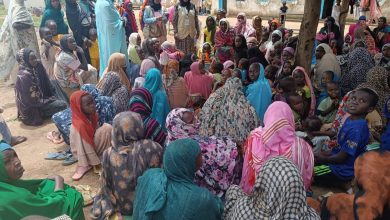
He added that mass displacement to relatively safer areas increased demand for water, firewood, and construction materials, placing tremendous pressure on local ecosystems. Economic deterioration and the loss of income sources also pushed some families into trading charcoal and firewood as a source of livelihood, further worsening forest depletion.
He also pointed out that military operations and fires caused by shelling and clashes destroyed vast areas of forests and rangelands, particularly in Al Jazirah and Sennar states.
He continued by saying that the deterioration of Sudan’s forests will have serious environmental consequences in both the short and long term, most notably accelerating desertification and the degradation of agricultural lands due to the loss of vegetation cover that protects soil from erosion and degradation.
He emphasized that environmentally fragile areas such as Darfur will be among the most affected, potentially threatening food security and increasing poverty and conflicts over natural resources.