A comprehensive Sudanese field study has found that 93.2% of Sudanese respondents support peace negotiations, a result that participants described as “statistical evidence disproving claims used to justify the continuation of the war in the name of the Sudanese people.”
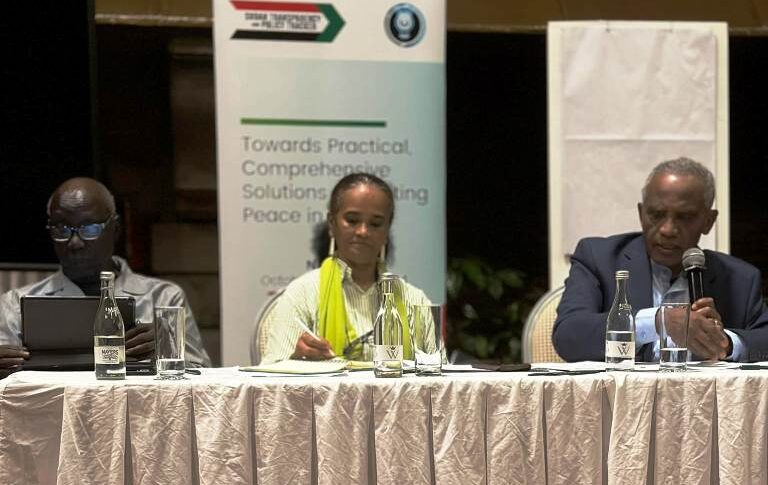
The Advocacy Group for Peace in Sudan (AGPS), coordinator of the Sudan Peace Appeal, said in a press statement that it presented the preliminary findings of the study during a workshop attended by researchers, journalists, civil society representatives, and public policy experts.
According to the group, the study was based on 1,668 online questionnaires, 30 in-depth qualitative interviews, and a stratified random sample covering all 18 Sudanese states, as well as Sudanese communities in Chad, Egypt, South Sudan, Uganda, the Gulf countries, and several other countries.
Speaking to Mashaweer, Issam Abbas, one of the study’s supervisors, said that the use of the Python programming language for data analysis, together with the stratified random sampling methodology, strengthened the reliability and scientific accuracy of the findings.
The results showed that 74.3% of respondents support an immediate ceasefire, while 88.3% of those who favor a political settlement said they would support any peace process.
Abbas added that Central Darfur State recorded the highest level of support for peace, at 94.7%.
He also noted that respondents identified competition over power and wealth as the leading cause of the conflict, followed by the legacy of the former regime, marginalization, and foreign interference. The study found that 80.9% of participants held the two military forces primarily responsible for the war, while 79.2% blamed the former regime and 73.7% blamed the armed movements.
In the same context, Jihad Hassan, a specialist in peacebuilding and social cohesion, told Mashaweer that confidence in peace agreements remains very low, with only 14.4% expressing trust in such agreements, compared with 9% who explicitly said they had no confidence in them.
He added that 90% of respondents called for accountability, while 8% preferred a hybrid justice mechanism combining national and international processes. The principal red lines identified for any future settlement included rejecting the partition of Sudan, opposing the existence of multiple armies, and ending military involvement in political affairs.
Hassan further noted that 77.9% of respondents identified social media as their primary source of information, while 93.4% believed that tribal and regional rhetoric poses a direct threat to citizenship and national cohesion.
Meanwhile, Dr. Asmaa Al-Naeem, Executive Director of the Advocacy Group for Peace in Sudan and a member of the Executive Office of the Sudan Peace Appeal, told Mashaweer that the findings presented so far represent only about 20% of the complete analysis.
She added that the study was designed to be expandable and continuously updated in line with developments on the ground.