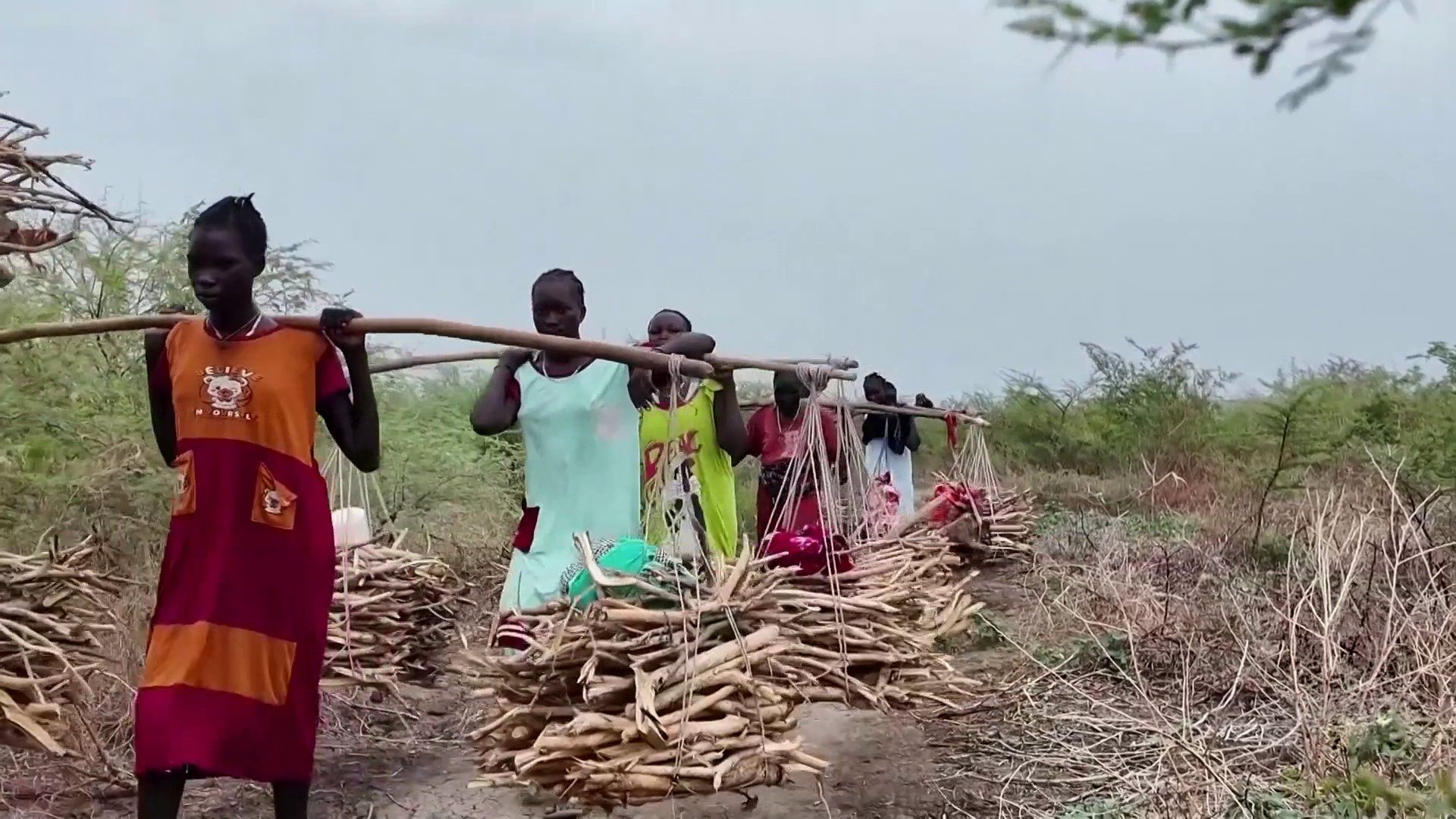
The daily hardships endured by dozens of displaced women in Damazin, the capital of Blue Nile State in southeastern Sudan, reflect the ongoing suffering faced by internally displaced families. Every day, women walk long distances in search of firewood to meet their families’ basic cooking needs.
According to a report by Al Jazeera correspondent Waddah Al-Tahir, women in the displacement camps also face severe water shortages. Under the scorching sun, they travel long distances to collect limited amounts of water, carrying both the water and firewood on their backs as they return to the camp.
Struggling to Earn a Living
At a small market established on the outskirts of the camp, one displaced woman sells whatever simple goods she can to earn a livelihood in what displaced resident Suad describes as the “Market of the Hungry.”
Suad described the tragic reality facing displaced women in the camp. After losing their husbands, many have become the sole providers for their families, responsible for meeting every household need despite having no reliable source of income, extremely limited resources, and a lack of even the most basic necessities of life.
In the same context, the camp supervisor appealed to humanitarian organizations to intervene by addressing these shortcomings and installing additional water points to ease the burden on displaced women, whose suffering has worsened due to the breakdown of several of the camp’s water tanks.
He explained that Karama Camp 6 hosts more than 129,000 displaced people, of whom 60 percent are women. Many depend on selling firewood for income, while others try to engage in small-scale activities to support their families.
Urgent Humanitarian Intervention Needed
According to the report, the humanitarian situation in the Blue Nile displacement camps requires urgent intervention from humanitarian organizations and government authorities to provide basic necessities, including clean water, food, and adequate shelter, particularly with the approaching rainy season, which could further worsen health conditions and deepen the daily suffering of women and children.
The report concludes that, despite these immense hardships, displaced women remain resilient and continue their daily struggle to ensure the survival of their families in the face of displacement and harsh living conditions.
The International Organization for Migration (IOM) announced in early April that 329 families were displaced from Qeisan in Blue Nile State due to worsening insecurity. According to civil society organizations and volunteers, more than 20,000 people displaced from Kurmuk and Qeisan are now living across Damazin, Rosaires, and Wad Al-Mahi.
The Sudan Doctors Network has called on national and international humanitarian organizations to urgently provide assistance to more than 10,000 displaced people—primarily women, children, and older persons—who fled from Qeisan to Rosaires. The network warned that they are living in extremely dire humanitarian conditions, facing acute shortages of food and medicine, as well as a lack of the most basic necessities of life.
Sudan continues to face a worsening public health crisis. United Nations reports indicate that approximately 30 million people require urgent health assistance, while humanitarian organizations continue to struggle with limited access to affected populations and severe funding shortages.