Khartoum Lives Amid the Ruins of Memories and Struggles to Rise Again
Mashawir – Agencies
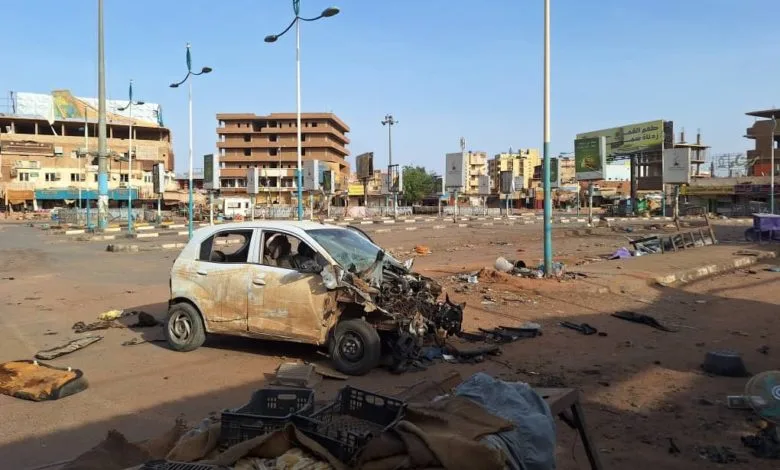
At a time when Sudan’s capital, Khartoum, is witnessing a state of relative calm and stability following the silencing of gunfire after the Sudanese army fully regained control from the Rapid Support Forces (RSF) last March, determined efforts are underway to piece the city back together. Once the country’s center of finance, population, government institutions, major hospitals, universities, and higher institutes, Khartoum is now striving to recover from devastation.
Since the outbreak of the war, Khartoum has turned into ruins filled with memories, as destruction has touched all aspects of life. Yet, residents of its three cities—Khartoum, Bahri, and Omdurman—are resisting the challenges by trying to resume normal activities, with limited efforts from authorities constrained by lack of resources. Despite dark streets, piles of debris, abandoned homes, and the spread of diseases and epidemics, hope persists for the capital’s revival.
The key question remains: Can Khartoum regain life after distancing itself from the frontlines of the conflict?
Familiar Scenes
Ahmed Abdel-Razek, a resident of the Al-Mujahideen neighborhood in southern Khartoum, says:
“Before the city turned into a battlefield, residents were used to familiar sights and sounds—planes taking off and landing at the airport, the hustle and bustle of the central market filled with morning and midday activity, and the loudspeakers of street vendors under the bridge of the central market. Even during the RSF’s control, the informal trade thrived.”
He adds, “Despite the harsh conditions, life is gradually returning. The main bus terminal has resumed trips to other cities, and we can once again hear the brokers shouting about departing buses. Unfortunately, cleanliness is gone—war debris, shells, and destroyed military vehicles are still scattered around.”
“Khartoum is trying to pull itself together despite the darkness covering most of its streets,” he continues, “with only a few homes lit by solar power, which is very costly since most people have become impoverished by war.”
“People are now equal in poverty,” he says. “Businesses have stopped, shops were looted, and savings stolen at gunpoint. Some residents have returned permanently after two years of displacement; others came back because their jobs required it, while some are only exploring the situation before bringing their families.”
Tangible Efforts
Hamed Al-Zubair, a shop owner on Street 60, says:
“Post-war Khartoum needs tremendous effort to rise again. The scale of destruction is immense, and rebuilding requires active participation from everyone, especially those who can afford it. For example, shop owners on Street 60—once one of the busiest commercial streets—have financed lighting the street using solar energy. This kind of initiative can gradually revive the city.”
He adds, “Since my early return after the army regained control, I’ve noticed that most residents who endured the war believe life will return once electricity, clean water, telecommunications, and internet are restored. Signs of hope are there—restaurants and cafés are reopening with new ideas, especially from returnees who came back from abroad.”
According to Al-Zubair, “The current state of Khartoum suggests that recovery is possible. There are visible cleanup efforts, debris removal, and reactivation of markets and public life. Streets are coming alive again, little by little.”
Regret and Hardship
Amira Abdel-Rahim, a government employee, says:
“My job forced me to return with my family, but I regret it deeply. Most of my family members have contracted dengue fever and malaria. The struggle to access healthcare is unimaginable due to overcrowded hospitals, lack of medicine, and the collapse of essential services.”
She continues, “Khartoum is facing a complex crisis. Basic infrastructure needs billions of dollars to recover, alongside rampant insecurity, lack of law enforcement, and soaring food prices. In my view, the city needs years to regain its former state—it’s unlivable at present.”
Amira concludes, “I will likely relocate my family abroad again, as I did when the war began. Life in the capital now depends entirely on one’s circumstances.”
Sacrifices of Return
Haitham Fath Al-Rahman, a resident of Al-Fitehab in Omdurman, says:
“Restoring normal life in Khartoum requires sacrifices. The destruction is vast, and everything essential to stability is lacking. The three cities are devastated at every level after enduring a brutal war.”
He adds, “People are struggling daily to secure even the minimum essentials. Many chose not to return to their damaged homes, renting places with basic services instead, as rehabilitation costs are overwhelming.”
Haitham points out that “both citizens and authorities are working daily to restore electricity and water services, and to combat mosquitoes and disease carriers. Although full recovery seems distant, these ongoing efforts are gradually easing the hardships.”
Gradual Revival
Ayoub Abdel-Latif, a community researcher, says:
“Most residents of Omdurman remained throughout the war despite the immense risks. They even hosted displaced people from Khartoum and Bahri. The fighting, however, left severe destruction across the city’s historic landmarks and neighborhoods, many still marked by the trenches dug by combatants.”
He continues, “Returning residents are shocked by the dire living and health conditions—a harsh reality threatening public life. Some have adapted, hoping for improvement, while others have fled once again after a short return.”
“Nevertheless,” he adds, “life is slowly returning. Construction and rebuilding are visible across the city, not just in government projects. Doctors have reopened clinics despite the collapse of the health system. Streets are busier, and many shops, especially in Omdurman Market, are operating again, though it suffered massive destruction. Traders are making huge efforts to restore it.”
Ayoub concludes, “Despite the ongoing challenges, poverty, scarcity of money, and limited job opportunities still plague residents. Most can only afford basic necessities, but the spirit of resilience remains.”