Sudan’s School Year… Exorbitant Fees and the Dangers of War Become One Battle
Mashawir – Agencies
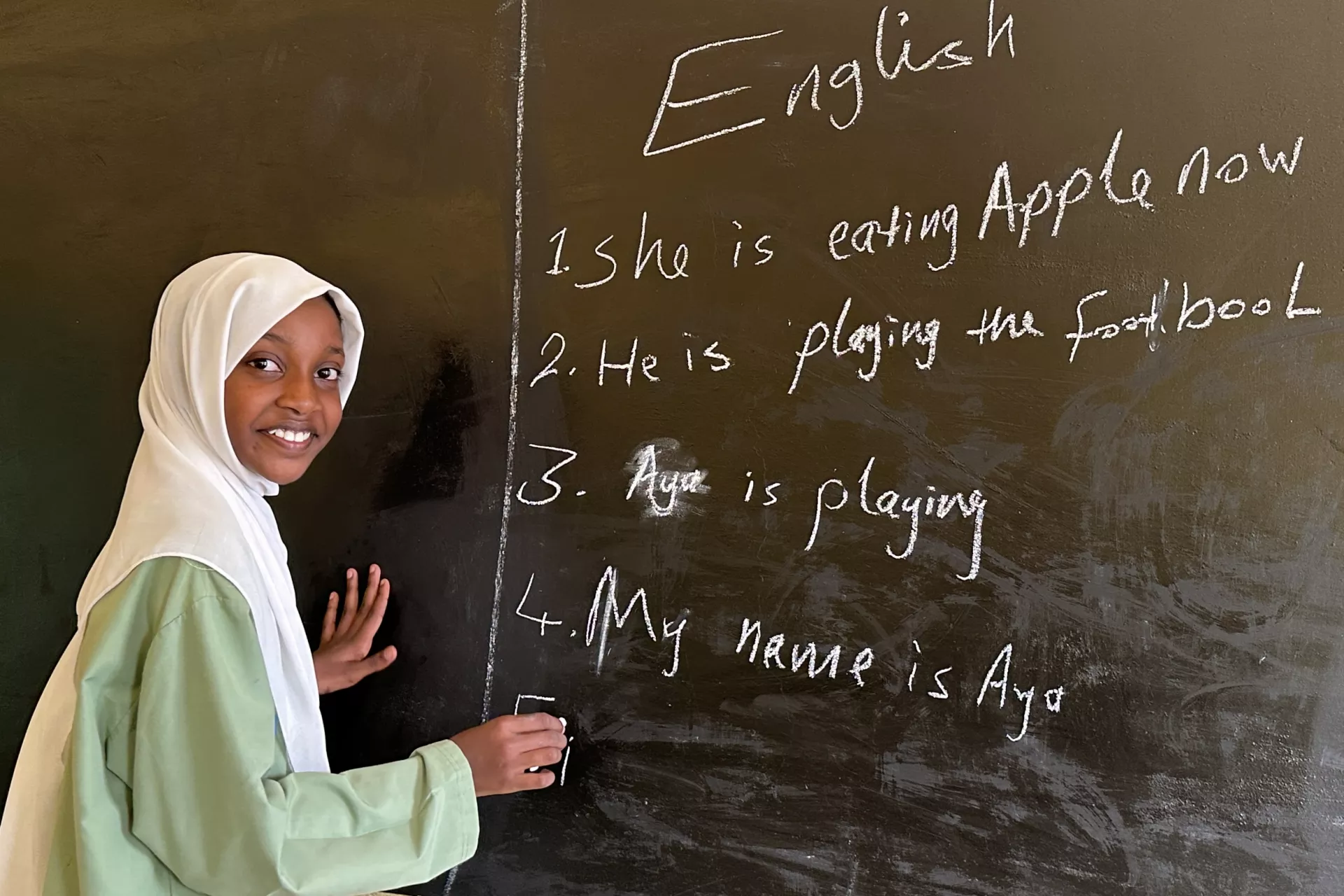
Twelve-year-old Sudanese student Moataz Ibrahim, who lives in the Al-Thawra district of Omdurman, has been unable to return to school despite his family’s recent settlement after a long period of displacement in Northern State, caused by the ongoing war between the army and the Rapid Support Forces (RSF), now in its 30th month.
His mother, Lamia Al-Tayeb, explains:
“My son left school because we simply cannot afford the fees, no matter how hard we tried. His father used to work as an administrative employee in a company before the war, but it shut down on the first day of fighting. Since then, we have had no income to cover our daily living expenses, let alone any educational commitments.”
She continues,
“What hurts me most is that my son insists every day on going back to school like the children he sees returning with stories about classes and activities. He comes home feeling defeated, and we are powerless.”
“The school we planned to enroll him in demanded 450,000 Sudanese pounds (about USD 748). When we asked for a reduction, they refused, saying the cost of sustaining the school year is high,” she added.
Al-Tayeb noted that this problem affects millions of children whose education has been disrupted by the war and the destruction of educational infrastructure. “It’s a catastrophe for an entire generation, and schooling is becoming a luxury available only to a few, especially in more stable states. This situation calls for urgent intervention from the government regarding fees, as each school imposes charges based on its own requirements.”
She added,
“There is also a major decline in students’ academic levels. Many can no longer write properly. Spelling mistakes and poor reading are extremely common, and comprehension levels have dropped significantly. After almost three years outside the classroom, they face the danger of permanent dropout.”
The student’s mother pointed out that Khartoum currently lacks basic living conditions: “Most areas suffer from shortages of electricity and clean drinking water, and neighborhoods are plagued by diseases. Schools have also been damaged and lack seating and textbooks.”
A Major Crisis
Despite the reopening of schools in Sudan, the education sector is facing a severe crisis. Millions of students remain out of classrooms due to unsafe and unhealthy learning environments, as well as financial barriers such as tuition fees, school maintenance costs, and rising transportation expenses. The economic collapse has left many families losing up to 60% of their income.
In states controlled by the army—such as Red Sea, River Nile, and Northern State—schools, especially private ones, now charge extremely high tuition:
1.2 million SDG (USD 2,000) for basic education
2 million SDG (USD 3,325) for secondary school
500,000 SDG (USD 830) for kindergarten per child
According to the latest statistics released in March 2025 by UNICEF, around 17 million Sudanese children have been out of school for more than two years due to war and instability—“a generation at risk,” as the organization described. It added that nearly 90% of school-aged children (about 19 million) lack access to formal education.
UNICEF emphasized that Sudan is experiencing the worst educational crisis in its modern history, and providing alternative learning and psychosocial support has become a matter of urgency to prevent the collapse of an entire generation’s future.
Corruption and Exploitation
According to a previous statement by the Sudanese Teachers Committee in Jabal Awliya and Karari, local education offices have issued directives requiring schools to collect fees labeled as “contributions,” amounting to 100,000 SDG (USD 166) for first-grade primary and middle school students. The committee stressed that this measure is illegal and opens the door to corruption and exploitation.
The committee argued that education resources must be funded by the state—not parents—and warned that such practices revive the methods of the former regime, which exploited weak oversight to extract money from citizens.
Spokesperson for the Sudanese Teachers Committee, Sami Al-Baqir, said the government has not only abandoned its responsibility to fund education but that education offices themselves now rely on collecting money from parents to operate—adding 500 SDG (USD 83) per student, often without official receipts.
Al-Baqir explained that this situation has led to alarming dropout rates, reflected in a significant decline in the number of enrolled students compared to pre-war levels.
A Heavy Burden
Mohamed Abdelrahman, a father of two primary school children in Red Sea State, stated:
“Whether private or public, school fees have skyrocketed. Before the crisis, my children were in private school. Now, after the war, the fees have doubled to outrageous amounts without any consideration for the suffering people are going through. We honestly do not know how to deal with this situation. What worries me most is that my children are used to private schools and will not accept attending public ones.”
He added,
“Sadly, these fees do not even include registration, transportation, or school uniforms. This becomes an unbearable burden, especially under current economic conditions.”
The father noted that these charges have no legal basis and worsen the suffering of communities across Sudan. “Such excessive amounts and the inability of most families to pay place the future of an entire generation at risk.”
Government Abdication
Retired teacher Othman Beqadi from White Nile State believes “there is chaos in the education sector because of the war, especially related to the exorbitant school fees imposed without consideration of families’ circumstances. The state cannot ignore the education crisis or abandon its responsibilities. A decline in education threatens the country itself. These frightening numbers could accelerate its collapse, making schooling accessible only to those who can afford it.”
He added,
“Before the war, public education in Sudan was free, or fees were symbolic and affordable. Governments used to support education. Now, the current situation is leading to massive school dropout rates due to exploitation under wartime conditions.”