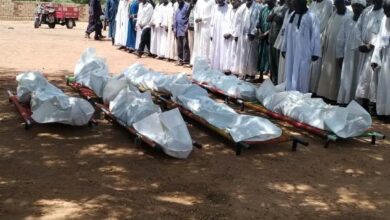
As fighting and intense clashes continue for nearly three years, Sudanese people are facing another, even deadlier war: malaria. Infection rates are rising alarmingly across the country, particularly in the capital Khartoum, turning the disease into one of the gravest threats to human life. This comes at a time when the deteriorated health infrastructure is unable to cope with the accelerating wave of epidemics and malaria cases, which now pose a widespread public health threat.
A Widespread Threat
Sudan’s Federal Minister of Health, Haitham Mohamed Ibrahim, confirmed that malaria has become a large-scale epidemic threat affecting a broad segment of the population. He noted that Sudan records more than three million malaria cases annually, with high mortality rates. The war has further exacerbated the health situation by destroying health infrastructure and triggering waves of displacement, making disease control increasingly difficult.
According to Ibrahim, Sudan has the highest malaria prevalence in the Eastern Mediterranean region, with over three million cases annually and elevated death rates, accounting for approximately 46% of all malaria cases in the region.
The World Health Organization (WHO) indicates that Sudan bears the heaviest malaria burden in the region, amid a shortage of basic health interventions to curb the spread of the disease, due to inadequate preventive measures, declining immunization campaigns, and difficulties accessing health facilities because of the ongoing armed conflict.
Widespread Transmission
Official statistics show that malaria has become widespread in all Sudanese states and is now the leading cause of death and hospital attendance. Nearly two Sudanese die every day from malaria, most of them children under five and pregnant women. Annual infections exceed three million cases, while the war has exhausted treatment centers and disabled 90% of their capacity.
Epidemic Threshold
During discussions by the Federal Emergency Operations Center at the Ministry of Health on the situation of displaced persons and service challenges, official reports revealed a surge in malaria cases, with most states surpassing the epidemic threshold. This coincides with continued displacement flows from Kordofan and Darfur. Health reports presented at recent meetings of the Higher Committee for Preparing the Public Environment for the Return of Citizens to Khartoum State showed a decline in dengue fever cases, but a noticeable increase in malaria infections within the state.
Overcrowded Hospitals
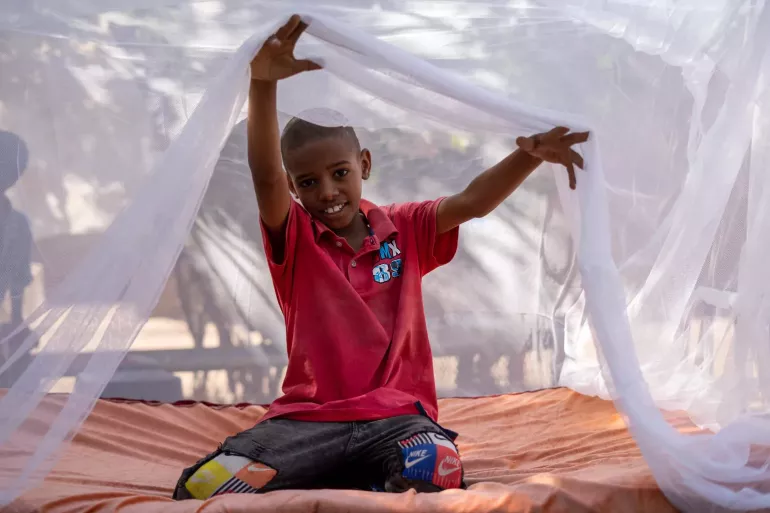
Tropical disease specialist Dr. Ahmed Nour al-Din points to several challenges related to malaria treatment, chief among them limited resources and insufficient treatment centers. As the outbreak expands and infections increase, operating hospitals are under severe pressure due to overcrowding, while small neighborhood health units lack the capacity to keep up. On the preventive front, insecticide-treated and untreated bed nets are insufficient to protect children and other vulnerable groups.
Nour al-Din adds that there is no shortage of malaria treatments and medications, including intravenous fluids and treatment protocols. However, prices have risen sharply as the war has expanded poverty levels, leaving many citizens unable to afford treatment.
Malignant Malaria
The specialist notes that two types of malaria are prevalent in Sudan: Plasmodium vivax and Plasmodium falciparum. The former is more widespread, while the latter—known locally as “malignant malaria”—is more dangerous. The difference lies in the parasite type and infection severity. Vivax malaria causes recurrent, intermittent fever with joint pain, nausea, and headaches, while falciparum malaria is more severe, with serious complications, as it infects red blood cells and multiplies rapidly, potentially causing blockage of small blood vessels. Its parasite can also remain dormant in the liver for extended periods.
A Household Disease
Nour al-Din explains that malaria has become almost a collective disease: when one family member is infected, transmission spreads rapidly among others sharing the same room or household, multiplying treatment costs.
Treatment costs per person typically range between 100,000 and 200,000 Sudanese pounds (around USD 38 at the parallel market rate), an amount beyond the means of many Sudanese families whose savings have been depleted and livelihoods destroyed by the war.
Preventive Measures
Despite signs of gradual recovery in Sudan’s health sector, malaria remains one of the most dangerous threats to public health, especially for children, pregnant women, and the elderly. This necessitates intensified efforts at vector control, preventive and precautionary measures, and the continuation of child immunization campaigns that have begun gradually in some of the most affected states.
A Persistent Concern
Epidemiologist and international organizations expert Babiker Al-Maqbool says malaria is an endemic disease posing a major health problem in Sudan and a constant concern for authorities, particularly the Ministry of Health. Combating malaria is costly and involves multiple stages, from vector control within communities and homes to treating cases in hospitals. As a result, the state has historically spent significant funds to reduce deaths, infections, and complications.
Does Vaccination Help?
In recent efforts to address the escalating malaria crisis, the Ministry of Health has successfully introduced a malaria vaccine for children, consisting of four doses targeting infants under one year of age.
Although the vaccine does not fully prevent malaria, it significantly reduces infections, deaths, severe cases, and hospital admissions—an excellent outcome for the most affected and highest-risk group: children.
Strategy and Conditions
According to Al-Maqbool, vaccination is a partial strategy targeting a limited segment of the population and must be combined with other control measures, particularly year-round use of insecticide-treated bed nets. Abandoning bed nets due to vaccination is ineffective, as vaccination complements—not replaces—vector control, bed nets, and comprehensive treatment.
He notes that the child vaccination project is long-term but will yield positive results in the coming years, especially since similar African countries with comparable conditions have reported positive outcomes, encouraging Sudan to request the vaccine. The request was approved by WHO, and the Global Fund also provided support, enabling Sudan to launch the vaccination program.
Al-Maqbool expressed hope that the experiment will succeed in Sudan, stressing the importance of adhering to the full four-dose schedule throughout the year. Any missed doses could reduce vaccine effectiveness, requiring strong coordination between families and health centers.
Global Warning
A joint report by WHO and several international humanitarian and health organizations warned that Sudan is facing one of the world’s most severe health crises, amid near-total collapse of the health system, widespread epidemics, and unprecedented deterioration in food security and malnutrition indicators, particularly among children and women.
The report noted simultaneous outbreaks of malaria, cholera, and dengue fever, along with the resurgence of vaccine-preventable diseases such as measles and polio, due to a sharp decline in immunization coverage to its lowest level in four decades.
Organizations highlighted that climatic conditions, mass displacement, and overcrowding have accelerated epidemic spread. Sudan reportedly has the world’s highest mortality rate linked to attacks on the health sector, which have included destruction of infrastructure, killing of health workers, patients, and their families—leading to workforce shortages and reduced access to care.
Threatened Support
The organizations warned that their support for Sudan’s health sector—through provision of essential medicines, surgical supplies, and fuel for fixed and mobile health facilities—is at risk of decline due to severe funding shortages, with only 36% of required funding secured. This places millions of lives in danger.
The statement issued an urgent appeal to the international community to keep Sudan high on the global humanitarian agenda, ensure sustainable funding, guarantee safe and unhindered humanitarian access, and protect health workers, emphasizing that peace remains the fundamental prerequisite for any real health recovery or rebuilding of the collapsed health system.
Official reports from international health organizations estimate that Sudan recorded more than 3.4 million malaria cases and over 8,000 deaths between 2024 and 2025. Actual figures may be higher due to weak health systems and incomplete data collection in conflict zones.
It is worth noting that war-related losses to Sudan’s health sector are estimated at around USD 11 billion in damaged equipment, medical devices, drug supplies, vandalism, and looting, with one-third of Sudan’s 700 hospitals no longer providing services.