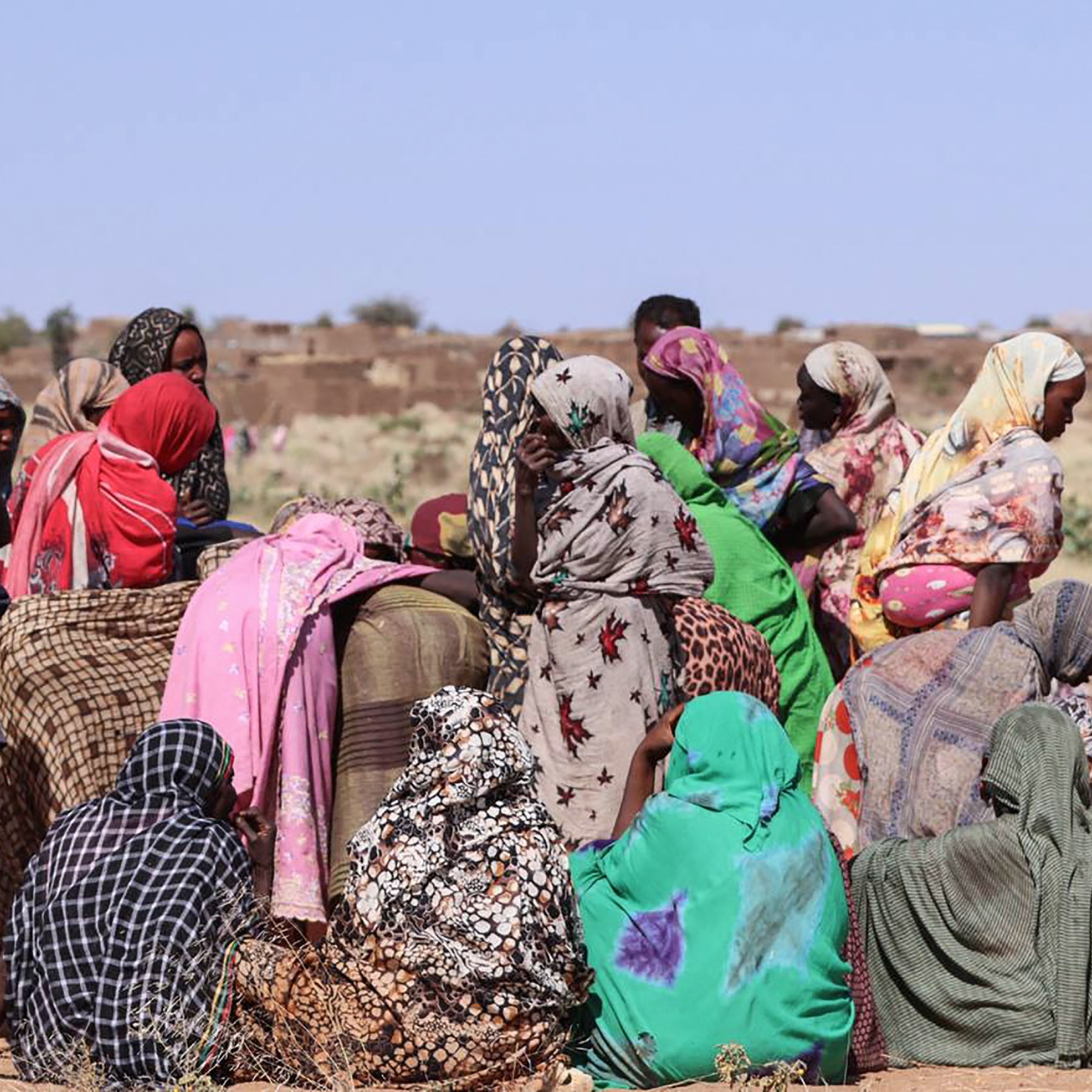
Sudanese women displaced by armed conflict continue to face harsh conditions in “safe” cities across several states, struggling daily to meet the basic needs of their families. Tens of women are now without providers, and life has become extremely challenging, forcing many to work just to survive amid the ongoing war.
Despite widespread exploitation, sexual harassment, and the absence of protective measures, many widowed women—particularly those displaced from Darfur and Kordofan—have managed to overcome the impacts of conflict. They sustain themselves through domestic work, selling tea and coffee, and other income-generating activities, carving out a fragile stability for their families.
*_Ongoing Exploitation_*
Nadia Al-Tayeb, who fled Abu Zabad in West Kordofan, told Mashawir, “My children lost their father, who died in a drone strike, leaving them without anyone to provide for their most basic needs. I faced enormous challenges and decided to work in any job that could help manage our daily life.”
She added, “After persistent effort, I found a job in a financially well-off family’s home in Omdurman, earning a decent salary. Yet I still face exploitation and long working hours, without protection, under the current war conditions.”
Al-Tayeb explained that many women working in households across Omdurman face similar hardships, often working long hours for wages that barely cover essential living costs, pushing them into cycles of debt and worry. She noted that living conditions in Khartoum have deteriorated further, with consumer goods prices rising more than fivefold following the collapse of the Sudanese pound against the dollar.
Harassment and Intimidation
Mariam Al-Fadl, displaced from Darfur, told Mashawir that she supports a family of four and has been working as a tea vendor in Gedaref, eastern Sudan, for the past year and a half after her husband died at the onset of the war. She struggles daily to provide for her children.
Al-Fadl said, “I never had the opportunity for formal education due to the rural nature of Darfur society, but now I am determined to provide my children with everything they need for school. Currently, my income barely covers both daily living and educational expenses.”
She added, “The most distressing challenge is the sexual harassment and intimidation we face in markets, particularly from truck drivers and armed group members at night. There is also no protection, and we cannot file police reports because we lack identification documents.”
Al-Fadl further noted that income has recently declined due to fewer customers amid the difficult economic situation, alongside rising transportation costs.
_Catastrophic Conditions_
A recent study conducted by Ahfad University for Women, in collaboration with local civil society organizations, highlighted the dire situation of tea vendors and domestic workers in Omdurman and Gedaref.
The study found that armed conflict has forced around 57% of women surveyed to become the primary providers for their families, with 83% responsible for supporting four or more dependents. It also revealed that 75% of tea vendors in Omdurman are displaced women from conflict zones, particularly South Kordofan.
While 66% of these women reported feeling relatively safe at their workplaces, 33% expressed deep concern due to the proliferation of weapons and the moral decline resulting from the war.
The study, using a mixed-methods approach, documented how the war has forced women into jobs with minimal security. Tea vendors face verbal harassment and bullying from customers at a rate of 55%, while domestic workers face a higher risk of physical and sexual abuse within households.
_Loss of Rights_
Human rights activist
Moataz Babiker told Mashawir that tea and coffee vendors, along with domestic workers, lack protection due to the consequences of armed conflict. Many are exploited by households, especially in financial agreements, as 95% of employment relies on verbal contracts due to lost identification documents, leaving workers vulnerable to denial of wages and rights.
Babiker highlighted the lack of trust among displaced women toward law enforcement and reporting mechanisms, often due to regional or tribal biases, forcing many to remain silent for fear of stigma or retaliation.
He added that displaced women from Kordofan and Darfur work 12–14 hours per day in households without formal contracts, largely due to limited knowledge of labor laws, leaving them exposed to exploitation and unsafe working conditions.