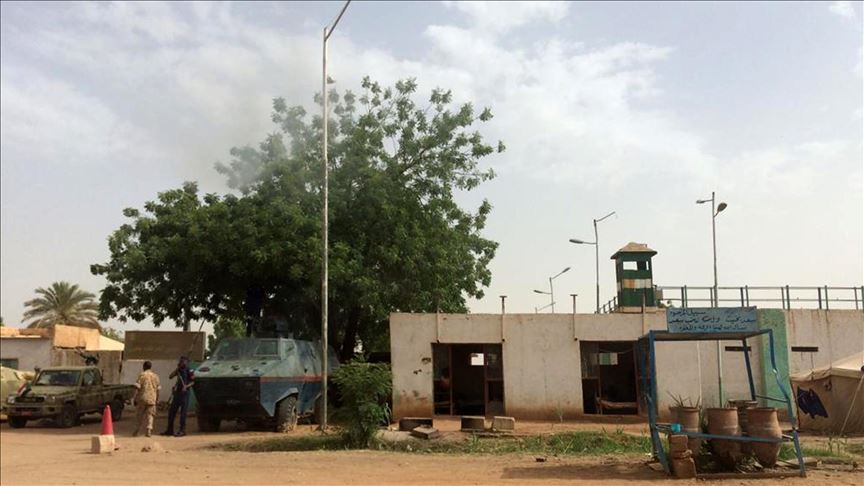
As the war in Sudan which first ignited in Khartoum, the capital enters its third week, the formal state infrastructure has collapsed. The capital has descended into a scene of total chaos and security breakdown. Coinciding with this, approximately 19,000 inmates fled Sudanese prisons and police detention centers, particularly in Khartoum State and other war-torn regions. In some instances, authorities were forced to release prisoners after it became impossible to protect them or provide basic life necessities.
Following Sudan Armed Forces (SAF) taking over of the capital from Rapid Support Forces (RSF) and the gradual return of normalcy, prisons have regained some functionality and announced their readiness to receive inmates once again. The police have called on escaped prisoners to turn themselves in immediately to complete their sentences. But will they return voluntarily? And how can they be forcibly returned after nearly three years on the run while the war continues?
Challenges and Dangers
The Sudanese police face immense hurdles in recapturing the high number of escapees. Compounding the issue is that the fugitives include convicted murderers on death row, repeat offenders of violent crimes and looting, and drug traffickers. Furthermore, high-ranking leaders of the former regime, who were on trial for the 1989 coup, are among those at large.
Recovery of Records
In a significant development, the police have managed to restore the database records of convicts and those awaiting trial across Sudan. Lieutenant General Al-Tahir Ali, Deputy Director General of the Sudanese Police, confirmed that restoring systems for civil registry, passports, traffic, central criminal investigation, and prison records is vital for preserving Sudanese identity after the war-induced sabotage of state institutions.
How They Escaped
By the end of the first month of the conflict, thousands fled capital prisons after the RSF stormed Khartoum’s largest facilities including Al-Huda, Soba, Kober, Al-Jarif, and the Omdurman Women’s Prison as well as Dabak Prison, freeing inmates at gunpoint.
Regarding the prominent figures of Omar al-Bashir’s regime and leaders of the National Congress Party (18 in total, including Bashir himself), they were released at the outbreak of war by a decision from the Deputy Chief Justice. This was done after they signed personal pledges to surrender to the authorities whenever requested, according to Lieutenant General Yasser Omar Abuzeid, Director of Sudan’s Prisons. While the army accused the RSF of intentionally emptying the prisons, the RSF denied the claim, alleging that individuals from the former regime dressed in RSF uniforms were the ones responsible.
Will the Prisoners Return?
While the fate of many remains uncertain, Police Spokesperson Brigadier General Fath Al-Rahman Al-Toum confirmed that some were arrested while attempting to flee Khartoum. Authorities have also activated extradition protocols with neighboring countries to retrieve those who fled abroad.
Status of Facilities: National and regional prisons are now ready to receive inmates.
Rehabilitation: Efforts are underway to repair facilities damaged by the war.
Combat Involvement: Some fugitives reportedly joined the RSF in combat, while others were killed in clashes.
Between Law and Politics
Criminal lawyer Abdul Rahim Abbas explains that returning tens of thousands of escapees is a complex issue where law, security, and politics intersect. He noted that without a database, any pursuit would be a waste of time, but praised the restoration of records as a major achievement that will allow specialized police to target “high-risk” convicts specifically those facing death or life sentences.
Classification and Categorization
Abbas suggests an immediate classification of the escapees:
1. High-Risk Convicts: Murderers, terrorists, and rapists (Top priority for immediate pursuit).
2. Low-Risk Convicts: Those with sentences of a few months or minor offenses (Possible leniency or mitigated legal mechanisms).
3. Political Detainees: Those held without trial (Require independent legal review).
Legal Tools
Abbas mentions “Conditional Amnesty” as a standard tool in these circumstances issuing a decree where sentences are reduced if the individual surrenders within a specific timeframe. He also noted that local community leaders (tribal chiefs, neighborhood committees) can play a role, as many escapees have returned to their home villages rather than hiding in cities.
Selective Campaigns and International Cooperation
The police may implement selective security campaigns targeting only the most dangerous fugitives. There may also be a legal need for temporary emergency courts to re-try those whose files were lost. Regionally, cooperation with Egypt, Chad, South Sudan, and Ethiopia via Interpol is being activated.
The Controversy of Former Regime Leaders
Lawyer Al-Muiz Hadra, a member of the prosecution team, expressed skepticism regarding the return of former regime symbols to prison. He claimed they are currently staying in “resorts” and moving freely.
> “The prisons have been prepared, but not for the former regime leaders. Instead, they are being used for civil activists and supporters of the December 2019 revolution under malicious charges of collaborating with the RSF,” Hadra stated.
Human rights activist Nizar Abdelmajid echoed these concerns, questioning the government’s “will or ability” to return Bashir and his associates to prison, noting that they are active politically and issuing public statements despite their whereabouts being known.
Prisons and Legal Cases
Aside from state prisons, there are six main prisons in the capital, Khartoum, including one dedicated to women in the city of Omdurman. The most famous of these is Kober Central Prison, which was built during the British colonial era in 1903.
A number of leaders from the former regime and the dissolved “National Congress Party”—including al-Bashir and his deputy, Ahmed Mohamed Haroun were inmates at Kober Prison. They were standing trial for the planning and execution of the June 30, 1989 coup. At the time, the Director of Prisons stated that there were 18 such prisoners and that al-Bashir and others were receiving medical treatment outside the prison.
Al-Bashir was convicted and sentenced to prison on charges of corruption and money laundering and was transferred to Kober Prison in Khartoum North. However, the outbreak of the war interrupted the trial proceedings for him and his aides in another case related to the planning and execution of his 1989 military coup against the democratically elected government led by the late Prime Minister Sadiq al-Mahdi.