The war and its resulting consequences have revived increasing challenges for Sudan. The state of chaos and security fluidity has led to a widespread outbreak of smuggling and human trafficking. Organized networks are active at border points, posing a major security threat that warns of the phenomenon’s expansion.
As the country remains preoccupied with the war between the Sudan Armed Forces (SAF) and the Rapid Support Forces (RSF) for over 33 months, authorities have been unable to maintain strict control over long borders and multiple outlets. This has allowed gangs to exploit current conditions to manage these activities, despite significant seizures by various security agencies.
Campaigns and Victims
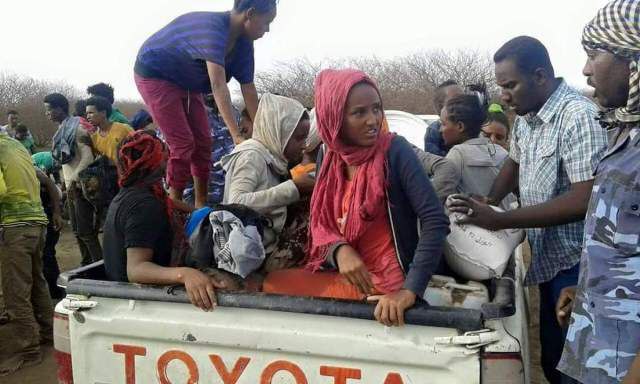
A joint team from the security services managed to intercept a human trafficking network in Kassala State, Eastern Sudan, rescuing more than 65 victims of various nationalities. They also seized 10 looted cars, motorcycles, and foreign liquors.
The Acting Governor of Kassala, Al-Sadiq Mohammed Al-Azraq, stated: “As part of its announced security campaigns against criminal gangs and outlaws, the joint force liberated more than 65 victims from the grip of human smuggling gangs. They were found bound with iron chains, some in critical health conditions.”
The Governor noted that the security forces seized 10 looted vehicles and motorcycles, vowing no leniency on security issues, which he described as a “red line.” He emphasized the importance of continuing these campaigns to drain the state of crime sources and called on citizens to cooperate by providing information.
Meanwhile, the commander of the 41st Infantry Brigade in Kassala, Brigadier General Ahmed Daoud, explained that “the operation to liberate foreign victims comes within the context of announced security plans and the war against crime and security threats.”
Intensive Activity
Former police officer and organized crime specialist, Abdalshakoor Hassan Ahmed, stated: “Smuggling and human trafficking operations have intensified recently due to the repercussions of the war and security fluidity. Most routes and gang activity points fall within the circle of clashes and gunfire. Combined, these factors have facilitated smuggling to Europe via main routes from Western Sudan to Libya, through Omdurman to Egypt, and via land and sea outlets on the Red Sea.”
The former official added, “Since the war broke out, gangs have been smuggling between 100 to 130 victims per day. They rent headquarters to house migrants in various areas for long periods in preparation for the next stage toward the Mediterranean. Ethiopians often prefer Italy, while the UK is the preferred destination for Sudanese.”
Ahmed explained that “blind spot migration” enters Sudan from Chad, Congo, and Mali through the west, passing through Kordofan to Libya. He noted that trafficking patterns have evolved into organ harvesting—which has claimed many young lives—and sex trafficking, especially given the desire of hundreds of girls to migrate via smuggling.
Security Fluidity
Hisham Mohieddin, a specialist in migration studies and anti-trafficking, said: “Security fluidity is deeply rooted in Sudan due to armed conflict and the diversion of security agencies from their primary duties. This has led to the absence of a vital part of the security apparatus and the emergence of criminal elements in cities and peripheral areas.”
He added that human trafficking is a major concern for the government as Sudan is a transit country. Activity flows from neighboring eastern countries, through the Western Desert to Libya, and then to the Libyan coast toward Europe.
Mohieddin noted that gangs have capitalized on the current situation to resume sending citizens of neighboring countries through Sudanese territory. He highlighted that the recent arrest of this network in Kassala reflects a development in monitoring and follow-up despite the war.
Institutional Collapse
The African Centre for Justice and Peace Studies (ACJPS) stated in a report: “With the outbreak of conflict in April 2023, human trafficking became more prevalent due to the lack of control and the collapse of judicial institutions in Sudan, particularly in Khartoum, Gezira, and Darfur.” This has allowed organized gangs to intensify activities, including child recruitment, exploitation of women, and cross-border smuggling.
The report noted that trafficking in Sudan is inseparable from the general context of state collapse. It is also affected by economic conditions, internal displacement, and ethnic discrimination. The failure of the international community to exert serious pressure to hold perpetrators accountable has created a fertile environment for organized crime, which has become a means for quick wealth or military and political purposes.
Lack of Oversight
Sudan, which has long suffered from internal conflicts, lacks strict border control. Unofficial roads and crossings contribute to the increase in smuggling.
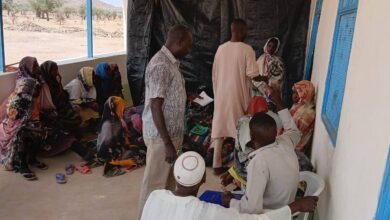
In early September, the UNHCR announced it had received 321 people from Ethiopia, Eritrea, and Somalia referred to them after security authorities in Kassala carried out a campaign against smuggling and human trafficking.
There are no accurate statistics for human trafficking victims in Sudan due to the blurring lines between migrant smuggling and various forms of trafficking. Given the high rates of internal displacement and the increasing number of refugees and irregular migrants from neighboring countries, a fixed count remains elusive.