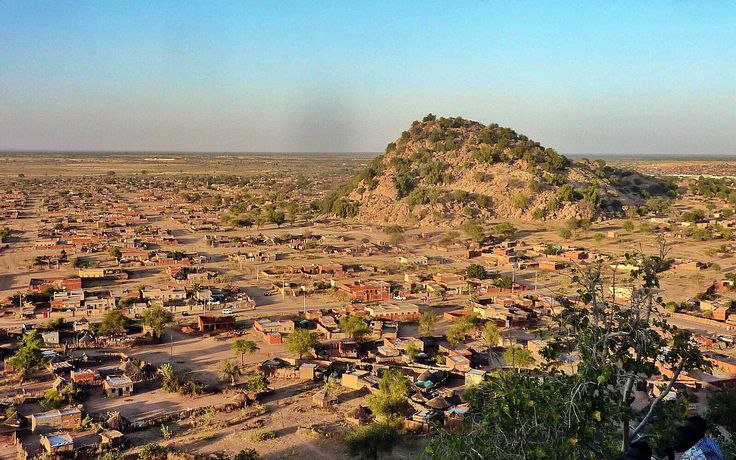
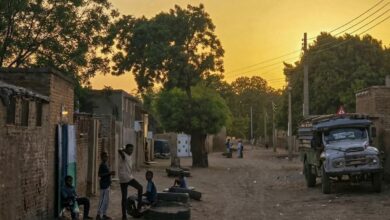
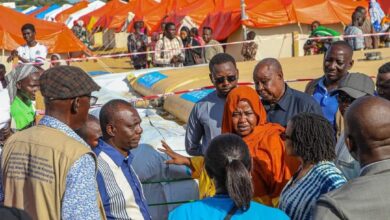
The Sudanese Armed Forces announced the breaking of the siege that had been stifling the Greater Kadugli area, allowing commercial trucks to enter and market prices to drop. However, many residents still find only one meal a day, while drone strikes on the city continue to escalate.
The French website Mediapart shared stories from Kadugli, the capital of South Kordofan State, beginning with Dr. Taha Abdel Rahman (36). Despite his wife being six months pregnant, he refuses to flee. “Most of the medical staff left at the start of the conflict,” he says. “It is my professional and moral duty to stay by the side of the people of my country and my region.”
In Kadugli, the war forced approximately 11,000 people to flee their homes between October 25, 2025, and January 15, 2026, according to the International Organization for Migration (IOM). Drone strikes—attributed to the Rapid Support Forces (RSF)—have multiplied since the army announced the breaking of the siege on February 3, according to the French site.
“Until now, attacks targeted military or government sites,” Taha Abdel Rahman explains. “But since the siege was lifted, drones have begun hitting residential neighborhoods, activists, community leaders, and government members.”
Although the arrival of commercial trucks has eased the crisis in a city where famine was declared last September, the fear of becoming the next victim has risen alongside the frequency of drone attacks.
Escalating Attacks
Hours after victory statements were issued by army supporters, drones struck a medical clinic, killing eight civilians, including three children. A week later, another strike injured 16 people. “Two women are in intensive care,” the doctor notes.
Dr. Taha concludes his interview with the site by saying, “The health situation is catastrophic; we haven’t received any shipments of medicine or equipment.” Meanwhile, families who sought refuge in the Nuba Mountains are also victims of shelling—this time attributed to the regular (government) forces.
Among the photos sent by the doctor: a young child with a bandaged arm leaning against the body of his wounded mother, and terrified women embracing one another for comfort under the buzz of drones.
Hala, an employee who lost her job when the fighting began, says: “It’s as if the siege was never lifted… we still have no money to buy food, and we don’t feel safe.” She adds that she still survives on just one meal a day.
Some residents who have not exhausted their savings welcome the daily drop in prices as markets restock. Faisal, an aid worker, explains: “Before the siege was lifted, a kilo of sugar was nearly 50,000 Sudanese pounds (approx. $15), and three kilos of sorghum were about 80,000 pounds ($25). Today, a kilo of sugar and three kilos of sorghum cost about 5,000 pounds (approx. $4.75).”
Far from Normalcy
Mathilde Vu, advocacy manager at the Norwegian Refugee Council, believes that “de-isolating the city is still only partial, but it represents a significant shift after months of suffocation. However, we are far from a return to normalcy. Food distributions alone will not be enough; the population must be protected so they can resume economic activities and farm their fields.”
The website noted that most international organizations withdrew from Kadugli due to supply shortages and a lack of security guarantees, pointing out that there is no sign of calm returning despite the announcement that the siege was broken.
Researcher Moses Chrispus Okello from the Institute for Security Studies says, “Even though the army succeeded in launching counter-attacks in Delami and Kadugli, the RSF is the one dictating the pace of operations and determining the intensity of the conflict, while the army remains in a reactive state.”
In this context, Kholood Khair laments: “Talks regarding the details of a truce are completely detached from the reality on the ground. Both sides will continue fighting to secure their positions before the rainy season in June, which hampers military movements.”