Amna Mahmoud, 52, is still on an arduous journey searching for medications for the kidney failure she was diagnosed with three years before the outbreak of the war between the Sudan Armed Forces (SAF) and the Rapid Support Forces (RSF). She used to collect her medications from subsidized pharmacies regularly and without strain. However, the sudden outbreak of war on the morning of that fateful day destroyed all aspects of life. Her suffering in obtaining healthcare and treatments began, and with the lack of medicine and necessary care, she resorted to using traditional medicines, especially Gum Arabic, to prevent her condition from worsening.
Amna’s story is not an exception but rather an extension of the suffering of thousands of patients inside Sudan whose lives are facing extinction due to the acute shortage of medicines, including painkillers such as Panadol and Aspirin, as well as antibiotics and medications for high blood pressure and diabetes.
War Medicines
As the war continues to rage between the two parties, the pharmaceutical manufacturing sector has been damaged, and production chains have been disrupted, contributing to losses exceeding one billion dollars. This is due to the destruction that affected about 85 percent of the pharmaceutical factories within Khartoum State, which were producing 80 varieties; some were subjected to sabotage while others stopped production due to lack of security.
Despite the resumption of production in six factories producing diabetes, blood pressure, and antibiotic medications, there is a decrease in both local and imported medical supplies.
Meanwhile, a report by the National Medicines and Poisons Board showed that the expanding scope of conflict in Sudan has led to a near-total paralysis of the pharmaceutical industries sector, which represents one of the vital pillars of self-sufficiency. At the same time, the National Medical Supplies Fund reported that the conflict caused the collapse of drug distribution and a decline in strategic reserves, even for basic medicines, to less than 20 percent of their normal level before the war broke out.
Heavy Losses
In this context, Khalid Wadaa, a member of the Chamber of Pharmaceutical Manufacturers, said, “Direct structural losses in the pharmaceutical sectors were estimated at more than 200 million dollars, while total losses, including the disruption of production chains, exceeded the one billion dollar mark.”
Wadaa added, “The losses of pharmaceutical factories included the theft of electrical cables and the destruction of parts of production lines, in addition to the migration of specialized technical staff, which represents a major challenge for a sector that relies on precise expertise that is difficult to replace.”
He continued, “The pharmaceutical industry is one of the most sensitive strategic industries due to its direct link to health and economic security. The sector includes more than 30 factories that were completely destroyed in the capital across its three cities—Khartoum, Bahri, and Omdurman—which created a medicine crisis throughout the months of the war.”
He explained that before the outbreak of the war, the pharmaceutical sector contributed to reducing dependence on imports and providing basic types of medication at affordable prices, supporting medical supplies and health insurance.
The spokesperson continued, “Production was resumed after the cessation of fighting in the capital, Khartoum, inside about six factories despite the damage they sustained. They produce blood pressure, diabetes, and antibiotic medications, which contributed to reducing the medicine crisis and the suffering of patients.”
The member of the Chamber of Pharmaceutical Manufacturers expected about 10 other factories to enter the production cycle by the end of next March after the completion of maintenance, rehabilitation, and technical standards, with expectations that the rest of the factories will return before the end of this year if the electricity supply and financing improve.
Economic Pillar
For his part, Moataz Habib, a worker in the pharmaceutical field, explained that “the pharmaceutical industries sector is an important pillar that provided medicine without interruption, as local factories produce about 30 percent of the country’s need for medicine, in addition to providing about 8,000 direct jobs and thousands of jobs in transport, printing, packaging, and others. Furthermore, it supports about 50,000 families, making it a major driver of pharmaceutical activity and the national economy.”
Habib pointed out that “one of the biggest challenges facing the return of some factories to work is the instability of the electrical current, which represents the biggest obstacle currently to restoring full operational capacity. Factories operate using diesel and solar energy, which has led to high operating costs and increased pressure on capital, especially after some of it was eroded during the war.”
He continued, “There is a need to provide raw materials and rehabilitate factories to what they were before the conflict, as well as finding radical solutions to the problem of electricity, financing, and the protection of pharmaceutical factories to get out of the dilemma of acute medicine shortages.”
The pharmaceutical worker noted that “the return of all factories and the stability of local production will contribute to medicinal abundance and the recovery of the health sector and patients, whose difficult conditions have been exacerbated by the scarcity of treatments.”
Appeals for Help
In light of the war, the health sector collapsed, and hospitals, health centers, and pharmacies went out of service, contributing to the deterioration of the humanitarian situation, which reached a critical stage. Citizens, especially patients, began sending appeals for help to volunteers and humanitarian activists to provide life-saving medicines at a time when diseases and epidemics such as cholera, dengue fever, and other diseases were claiming lives.
Humanitarian volunteer Ahmed Abdel-Rahman said, “The medicine crisis was a reason for many citizens to lose their lives, especially those with chronic diseases, as well as children, the elderly, and pregnant women. During the difficult war period, we received dozens of urgent requests to bring medicine, while we roamed the capital, Khartoum, on motorcycles to find them under targeting, shelling, and bullets, in addition to the lack of safe passages. The medicine catastrophe was great and exceeded the work of organizations and initiatives that were active to meet the needs of civilians, especially those trapped in fighting zones.”
Abdel-Rahman explained, “We are sometimes forced to collect donations to buy medicines that are no longer available except on the black market through smuggling routes, according to the priorities of the patients, while we face crazy prices in the absence of the state and regulation of medicine.”
The humanitarian volunteer pointed out that “among the volunteers are workers in the medical field, including pharmacists, whom we rely on in light of the collapse of the health system and the exit of hospitals, health centers, and pharmacies from service.”
An Arduous Search
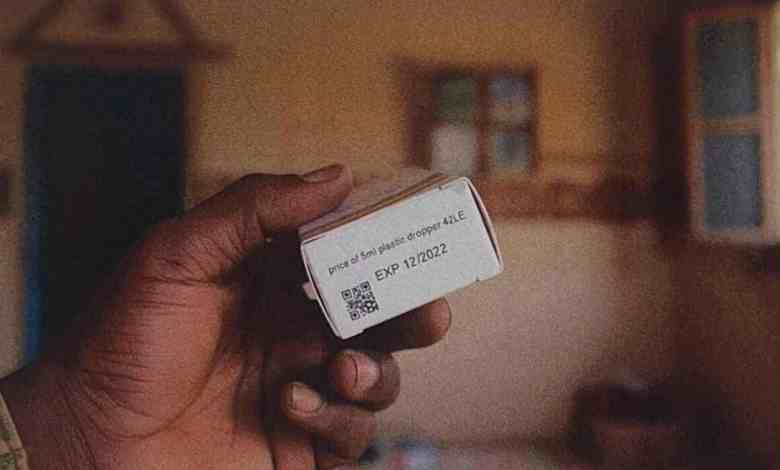
On a related note, pharmacist Abu Ubaida Abdel-Ghaffar said, “The medicine crisis still exists and is escalating within the states that witnessed active conflict in Khartoum, Al-Jazirah, Darfur, Kordofan, and the Blue Nile. Pharmaceutical supply shipments find it difficult to reach them in light of the looting and burning of medicine warehouses and pharmacies and the depletion of their stocks. This has caused patients to resort to dangerous alternative solutions by relying on smuggled, expired medicines or waiting for aid from organizations, which serve as a lifeline.”
Abdel-Ghaffar continued, “The pharmaceutical sector’s gap widened due to the closure of more than 2,800 registered pharmacies in the capital, with only about 50 pharmacies operating under difficult security conditions. Additionally, 41 pharmaceutical companies and more than 90 percent of factories have stopped.”
He pointed out that “before the war, we used to receive pharmaceutical supplies in a stable manner, including medications for kidney failure, cancer, and heart diseases of various kinds. But unfortunately, even to this time, pharmacies are empty, and patients are in a state of arduous and continuous search for treatments.”