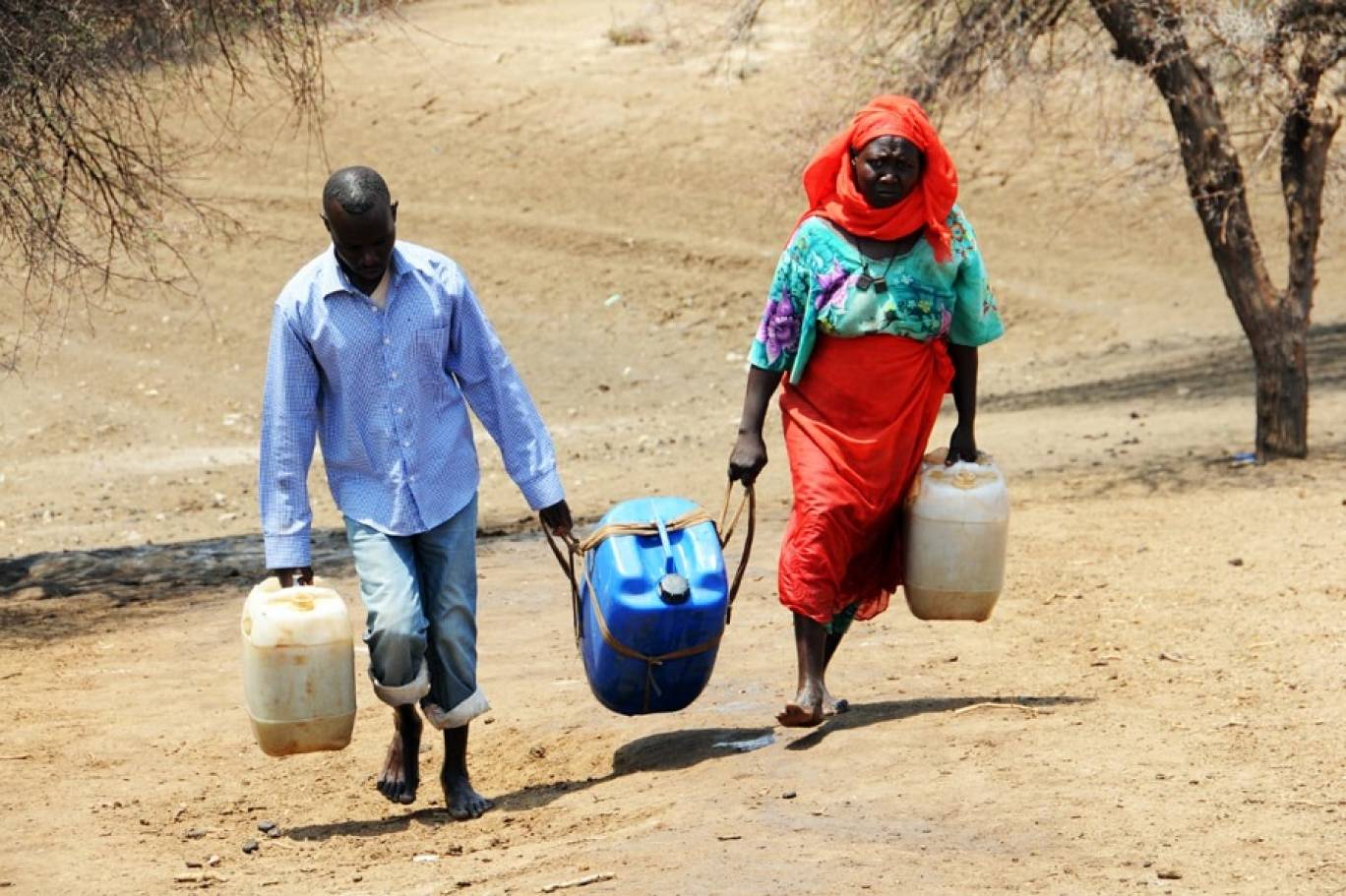
For the third consecutive year, thousands of displaced Sudanese people are welcoming the month of Ramadan in displacement centers across various cities and regions, far from their homes. This is especially true for those fleeing the hell of fighting and gross violations in Kordofan and Darfur. Thousands live amidst harsh humanitarian conditions, deprived of the Ramadan rituals and traditions they were accustomed to every year, in addition to the difficulty of securing food and essential supplies.
The displaced lament their situation as they live in centers that lack the most basic elements of a dignified life, holding onto hope for an improvement in their tragic circumstances and a return to their homes.
Suffering and Dispersion
Kaltoum al-Tahir, who was displaced from the city of Al-Dubaibat in South Kordofan State and lives in a displacement center east of El Obeid, tells the Mishawir platform that she misses the family gathering at one table during Ramadan, especially after the family was scattered across Sudanese cities and neighboring countries.
She adds, “The difference is vast between spending the holy month in our homes versus displacement centers. The reality is extremely difficult; we live in fear of the present and an unknown future.”
Al-Tahir continued, “I never imagined that one day I would spend Ramadan inside a displacement center under difficult humanitarian conditions and indescribable suffering, far from my family, whom the armed conflict has torn apart.”
Catastrophic Conditions
Amer Bashir, who was displaced from the city of El Nahud in West Kordofan State and lives in a displacement center in the city of Rabak in White Nile State, explained to Mishawir that the displaced rely primarily on what remains of their meager savings. They also depend on food baskets distributed by volunteers, philanthropists, and local residents, in addition to the Iftar meals organized by citizens living near the displacement centers.
The displaced Sudanese man noted that he feels lonely away from his family after their paths diverged following the expansion of the war into several Sudanese cities.
He pointed out that it is difficult for families to endure these catastrophic conditions, particularly with the scarcity of humanitarian aid, the halt of daily work, and the non-payment of salaries for more than two and a half years.
Below the Poverty Line
In the same context, Hatem Abbas, who fled from El Fasher and resides in a displacement camp in the Al-Dabbah area of the Northern State, said that the consumption of certain food items by the displaced increases in Ramadan, especially those related to traditional dishes like corn and millet. These items have seen a significant rise in prices at a time when most families’ savings have been exhausted.
He continued, “Many of the displaced are below the poverty line and cannot secure Ramadan requirements, which has exacerbated the suffering to an unbearable degree.”
Abbas lamented the situation of the displaced and their suffering, whether economic or health-related, amidst a lack of attention from concerned authorities, food shortages, and the loss of basic life requirements.
Regarding the Ramadan atmosphere, he points out that “there is a vast difference between a family welcoming the holy month in their home and another in displacement centers, but the displaced try to create hope and life by restoring some of the Ramadan atmosphere.”