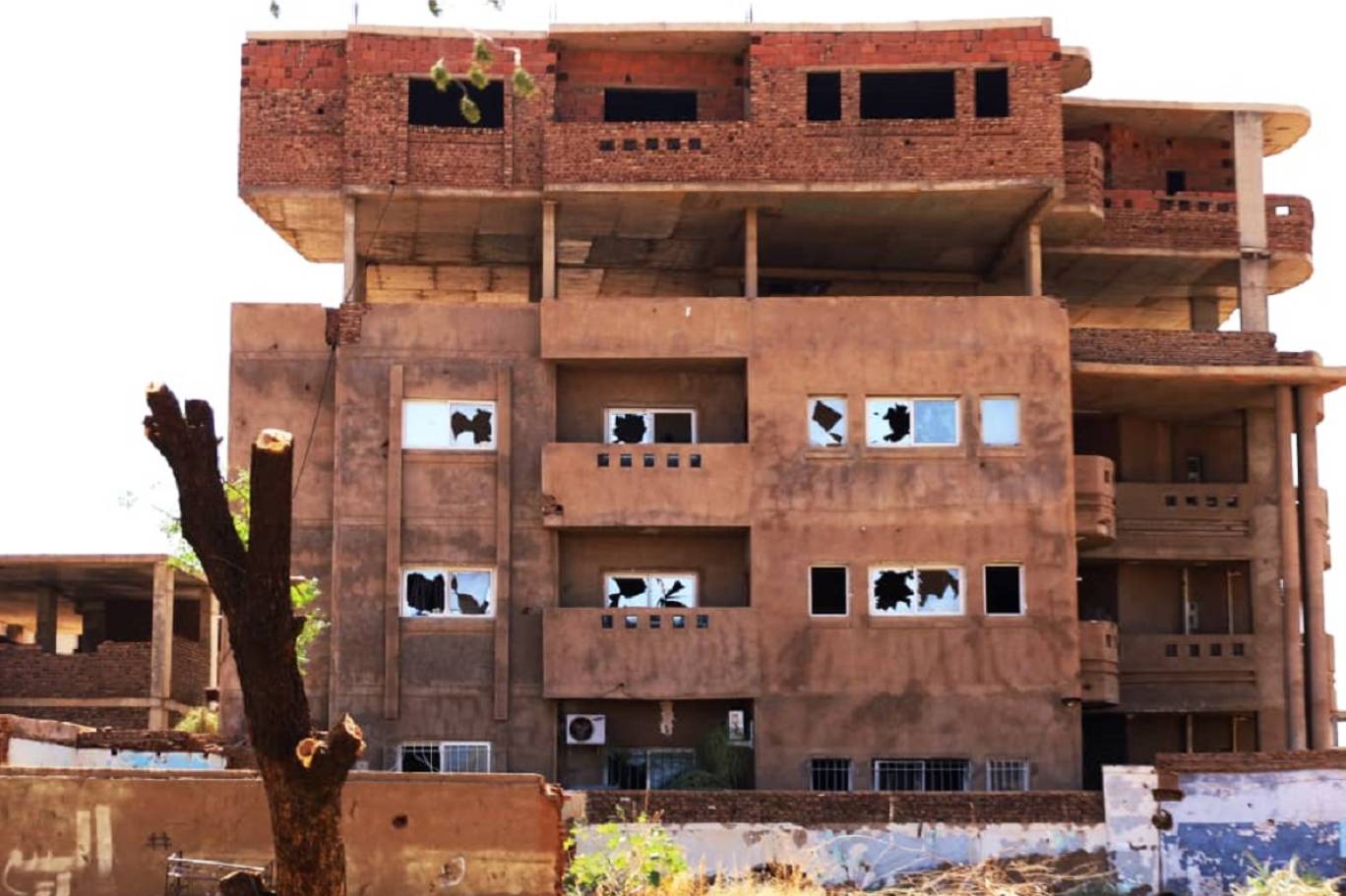
Sudanese families returning to their homes in the three cities of the capital—Khartoum, Bahri, and Omdurman—are facing increasing danger from war remnants and unexploded ordnance, particularly in houses that remain closed within densely populated neighborhoods. This is hindering the return to normal life, as stability has become dependent on removing these silent threats hidden beneath the rubble.
Sudan’s Mine Action Unit continues clearing explosive and non-explosive war remnants in urban areas of Khartoum and other states affected by active conflict. However, it faces complex challenges, most notably the severe impact of the war on the sector, which has slowed response efforts, in addition to the loss of vital equipment and declining funding.
Timed death zones
The “Bahri Human Rights Observatory” has warned of escalating risks threatening civilians—both those trapped and those returning—due to the spread of unexploded objects and war debris within residential neighborhoods. It described the situation as turning these areas into “ticking death zones,” amid a rise in incidents linked to such remnants.
The observatory reported discovering an unexploded landmine in the Al-Safia suburb of Bahri, causing panic among residents. In another tragic incident in Al-Samarab, an explosive device detonated after two children picked it up while playing, unaware of its danger—killing one and seriously injuring the other.
Following these incidents, the observatory called for urgent intervention by specialized demining teams to clear residential areas. It stressed that protecting civilians from unexploded weapons is an obligation under international humanitarian law. It also urged residents to educate children not to approach unfamiliar or metallic objects and to report them immediately, holding the warring parties fully responsible for these remnants and their humanitarian consequences.
International warnings
International estimates indicate the presence of approximately 38 million tons of war debris across Khartoum, covering an area of about 22,000 square kilometers. Data from the International Observatory for Conflict and Environment shows that every 57 square kilometers contains an average of around 100,000 tons of debris.
The United Nations has warned that nearly 14 million people in Sudan are at risk from explosive hazards, including civilians and humanitarian workers, with children being the most vulnerable group.
According to UN reports, the nature of urban warfare has made explosive contamination particularly alarming—especially in Khartoum—where unexploded ordnance is often mixed with rubble inside residential areas.
A major challenge
Sami Abshir, a resident of Shambat in Bahri, said:
“My sister told me she had decided to return home with her family after nearly three years of displacement in neighboring countries. Since her house is close to mine, she asked me to prepare it by clearing debris and overgrown vegetation. I gathered some young men from the neighborhood to help with the cleaning.”
He added:
“Since she left, I never thought to inspect the house, especially after a shell had partially damaged it. But when we started cleaning, we found a strange object hidden among the rubble. We realized it was unexploded ordnance and immediately stopped. We sealed the house and informed the authorities to prevent a possible catastrophe that could have wiped out an entire family.”
He noted that the incident caused widespread fear in the neighborhood and heightened concerns about other abandoned homes, as many owners remain displaced and stability depends on removing such hidden threats.
Slow response
Mine and explosives specialist Mohammed Abdelrahman explained that many unexploded objects can remain dormant for years before detonating with minimal disturbance, as seen in the Bari area in eastern Khartoum.
He stressed that clearing war remnants in Sudan requires long-term efforts due to the complexity of the urban environment and the random spread of munitions.
He added that the lack of funding and essential equipment remains a major challenge, and that the current response—despite the scale of the problem—is still insufficient. This has led to explosions in various parts of Khartoum, with growing concern about unexploded ordnance inside abandoned homes that could detonate upon contact.
Awareness campaigns
Khalid Hamdan, Director of the National Mine Action Center, said the biggest challenge is the spread of war remnants within residential neighborhoods rather than in remote areas, as was previously the case. This requires new teams and modern equipment, much of which was damaged or looted during the war.
He added:
“We were close to declaring Sudan mine-free by 2027, but the conflict has drastically changed the situation, with mines and war remnants now spreading across multiple states, including Khartoum.”
Hamdan noted that the center has so far destroyed around 150,000 unexploded ordnance items in Khartoum State alone. Despite this progress, major obstacles remain, including limited funding, outdated vehicles, and loss of equipment, all of which require urgent support to expand operations and save more lives.
He urged returning residents to exercise extreme caution when encountering unfamiliar objects, especially in abandoned homes, which represent one of the biggest challenges in clearing war remnants.
The center is also leading continuous awareness campaigns through media outlets, distributing posters, and providing hotline numbers to report suspicious objects. Currently, about 15 specialized teams are working in Khartoum to remove mines, alongside five teams dedicated to awareness, with additional teams operating in other states to secure urban areas and protect civilians from the hidden dangers of war.