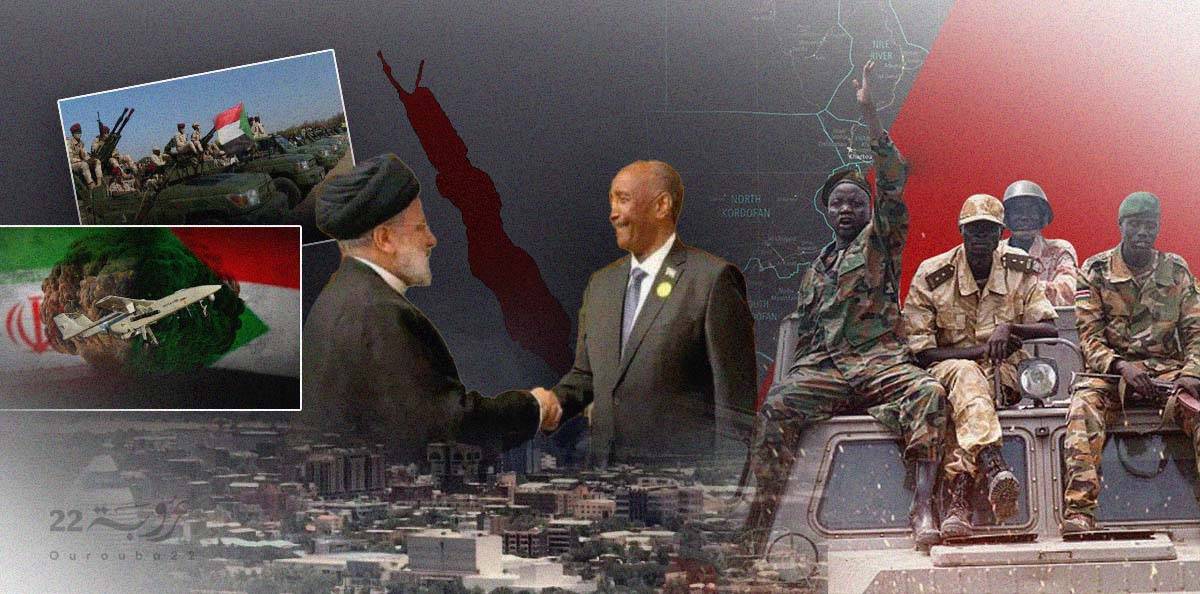
As the world’s attention shifts toward the American-Israeli war on Iran and its political and economic consequences, many Sudanese fear their crisis is being marginalized due to regional and international attention turning toward larger crises in the region.
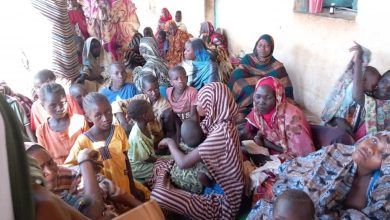
Among the wars that have moved out of the spotlight after the Iranian war rearranged priorities on the international stage is the ongoing conflict in Sudan, despite the fact that it is no less violent or humanly costly.
The Sudanese file has retreated to the background, or at least no longer carries the same urgency in the eyes of influential capitals. This has raised concerns among Sudanese actors and analysts, though they differ in interpreting the scale and nature of the matter. Some believe Sudan is now at the bottom of the priority list, while others believe the file has not been completely neglected, but rather handed over to regional actors while international powers are occupied with a broader regional war.
However, analytical readings agree that the war on Iran is not an issue distant from Sudan; rather, it is a direct factor in reshaping the political and regional environment in which the Sudanese war operates.
On the Sidelines
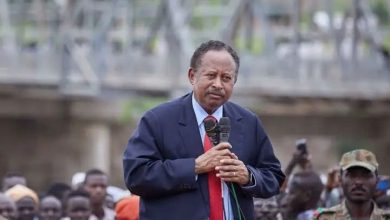
Yasser Arman, head of the Sudan People’s Liberation Movement-Revolutionary Current, believes that the Iranian war has repositioned the Sudanese war—which erupted between the army and the Rapid Support Forces on April 15, 2023—so that it is now at the bottom of the regional and international peace agenda.
He stated that the preoccupation of countries influential in the Sudan file with the new conflict prevents them from dedicating their energy to searching for a settlement for the Sudanese crisis.
This discourse reflects a growing feeling within Sudanese circles that the internal war, which already suffered from weak international pressure to end it, is now more vulnerable to being left on the sidelines while major powers are preoccupied with a crisis more dangerous to the security and economy of the region and the world.
Arman points to Sudan’s geopolitical situation, saying: “The recently erupted war is related to Sudan’s geopolitics, especially since it overlooks the Red Sea, making Sudan part of the region’s larger crises. The war will certainly rearrange regional and international systems, which raises serious questions about Sudan’s unity and sovereignty.”
He also notes the impact of energy issues and derivatives on Sudan, the warring parties, and neighboring countries, stating that new priorities raise questions about how this will affect the external logistical support received by the parties to the conflict.
Regional Actors
Political analyst Hatem Elias offers a relatively different reading, saying that the American-Israeli war on Iran did not come suddenly, but was preceded by many international indicators that paved the way for passing the Sudanese file to regional actors.
He told Al-Sharq Al-Awsat that the international preoccupation with the nature of the new conflict, its danger to global peace and security, and its potential economic repercussions is driving a redistribution of roles. This allows regional parties to continue some of what was started by the international “Quartet” mechanism, which includes the United States, Saudi Arabia, the UAE, and Egypt.
He supports his view with regional movements, such as the visit of the commander of the Rapid Support Forces, Mohamed Hamdan Dagalo (Hemedti), to the Ugandan capital, Kampala. He considers these types of movements an indication of the transfer of some political and logistical monitoring burdens to African parties until the primary actors return to the file.
Elias’s vision does not deny the retreat of the Sudanese file in the order of priorities, but he rejects describing what happened as a complete absence of interest. He suggests that the regional war did not drop the Sudanese file but moved it from the forefront into a circle of indirect handling via regional actors with less weight than the international powers currently busy with a larger crisis.
The Order of Priorities
Abdel Nasser Ali al-Faki, a professor of political sociology at Sudanese universities, links the Sudanese war and the regional war from a more complex perspective. He believes that since its outbreak, the Sudan war has been part of international interactions that over time formed clear regional and international axes.
Al-Faki told Al-Sharq Al-Awsat that the search for a solution to the Sudanese crisis was already low on the priority list even before the Middle East war. He added: “The expansion of the Iranian-American-Israeli war led to a decline in regional and international interaction with Sudan, alongside threats to waterways, especially the Strait of Hormuz and the Red Sea, because of the impact on the global economy and regional security.”
He added, “The expansion of the scope of the war reinforces the tendency of many countries to focus inward on national affairs, pushing them to concentrate on protecting their borders, interests, and waterways rather than consuming more effort on files like Sudan.”