The worsening humanitarian situation resulting from the war in Sudan, which has continued for nearly 35 months in South Kordofan State and the Nuba Mountains region, has placed the population on the brink of hunger. This follows the inability of thousands to practice agricultural activities and the removal of large areas from the production cycle. The security situation has contributed to the deterioration of the sector, and anxiety and fear have gripped citizens for fear of death.
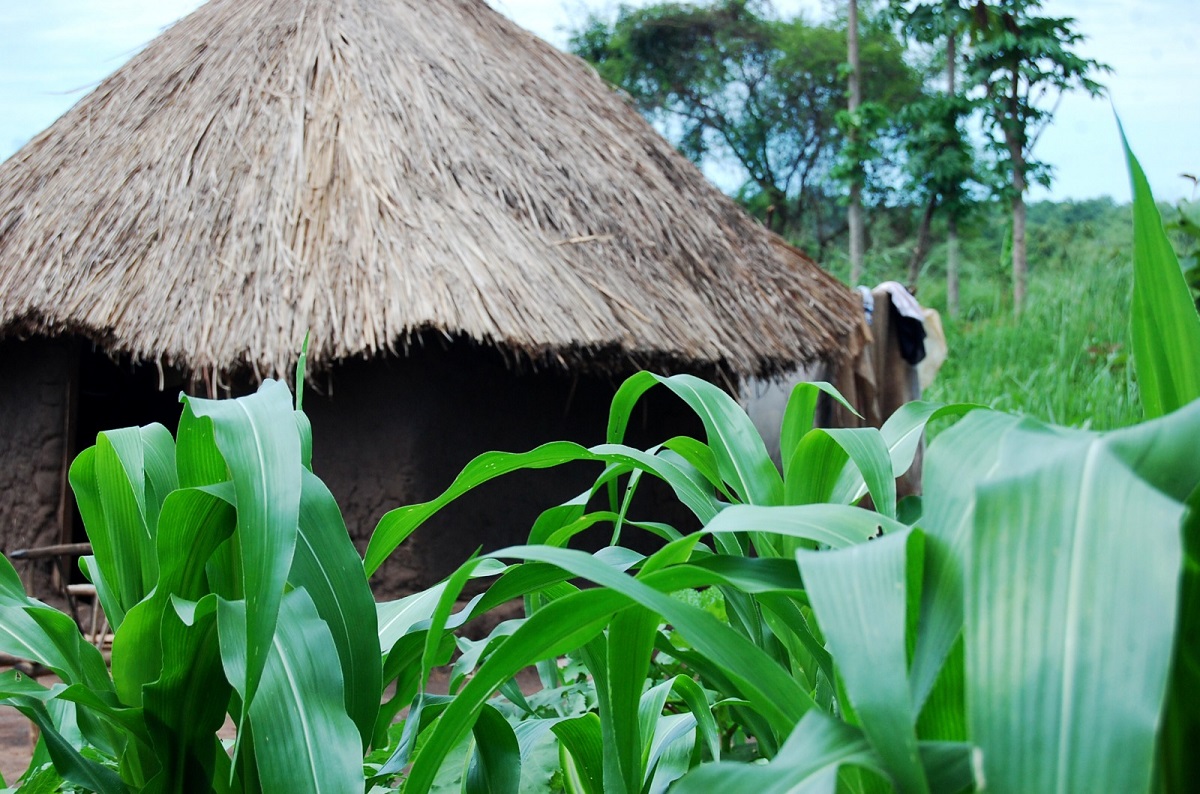
The residents of the region were left with no choice but to surrender to death by starvation or confront it with effective alternatives for survival. As a result of these conditions, thousands of locals were forced to resort to farming on mountaintops and small spaces around villages known as “Al-Jabrakah” to secure food and market remaining crops, particularly sorghum and some vegetables such as sweet potatoes, onions, okra, mallow, and purslane.
A Successful Experience
Yasser Abkar, a resident of the Al-Karkal area in South Kordofan State, says that “the war has cast catastrophic shadows on the agricultural sector in the region. Suffering exacerbated after the Kadugli-Dilling road was closed by the Sudan People’s Liberation Movement-North forces led by Abdelaziz al-Hilu, leading to a major fuel crisis, a reduction in agricultural land, and a lack of financing. Furthermore, nine localities have fallen out of the production cycle: Habila, Dilling, Dalami, Al-Quz, the Eastern Countryside, Kadugli, Um Dorein, Heiban, and Buram.”
The speaker added that “the scarcity of food consumer goods and the insane rise in prices of available ones pushed the region’s residents to seek alternatives by utilizing empty spaces inside homes and adjacent vacant plots of land to grow sorghum, millet, and some vegetables like watercress, sweet potatoes, onions, okra, mallow, and purslane, utilizing part of them as fodder for their remaining pets and livestock.”
Abkar continued, “I and some of my neighbors in the area began planting sorghum and fast-growing vegetables in large home spaces. The experiment succeeded significantly and achieved a high production rate, especially maize, watercress, Armenian cucumber, radish, and watermelon.”
Self-Sufficiency
In this context, Hussein Tieh, a resident of Kadugli, the capital of South Kordofan State, explained that “the presence of security problems concentrated in several areas, especially the north and west of the region, made citizens unable to go to their workplaces in distant agricultural projects, as roads remain unsafe. Additionally, there is an increase in armed robberies, as well as fuel shortages and high prices.”
He noted that “the majority of the population was forced to farm on mountaintops and high areas, especially Al-Jabal Al-Abyad, Al-Qayqar, Heiban, Jabal Al-Rika, and Jabal Kululu. Despite the decline in production compared to large agricultural areas, residents are able to provide food security for families.”
Tieh added, “After the success of the experience of farming in the highlands and achieving self-sufficiency, we began to provide neighbors in nearby districts with some of their vegetable needs. Later, the practice became more popular among many families facing conditions of scarcity and crushing high prices.”
Options and Alternatives
Furthermore, the food crisis resulting from road closures and the halt of goods and commodity supplies pushed the residents of Dilling, the second-largest city in South Kordofan State, to farm in small spaces behind houses called “Al-Jabrakah” to secure food and market the rest of the crops to buy their essential needs.
Kamal Ramadan, who lives in the Al-Radif area, considered that “the experience is among the solutions people resorted to under war conditions. it formed a good option that succeeded in securing essential needs for the remaining population, and some benefited from its returns by providing them to local markets, particularly sorghum, millet, and peanut crops, as well as all types of vegetables.”
The speaker pointed out that “the residents’ focus on growing vegetables was limited to types characterized by rapid growth and ripening, alongside their usefulness in such circumstances, such as okra, mallow, zucchini, watermelon, and cucumber. Most of these do not exceed two months between planting and harvesting.”
A Source of Food
In a related context, Majid Koko, an engineer at the Nuba Mountains Agricultural Corporation, explained that “terrace or contour farming is not a natural choice for the residents of South Kordofan State, but rather a mechanism people resort to during times of war and crises. Consequently, the ongoing armed conflict in the region for nearly 35 months has made it a necessity, not just an economic alternative.”
He pointed out that “mountainous areas are characterized by soil rich in minerals and natural water sources from rain and springs, providing an opportunity to grow diverse crops. Terraced farming also plays a major role in utilizing slopes, as it prevents soil erosion and increases productive areas.”
Koko continued, “Highland projects acquire great economic importance; they provide a source of food for the residents of those areas, help them settle in their environments instead of displacing to cities, and support environmental diversity by planting several crops suited to the mountain climate.”
Family Economy
In the same vein, agricultural engineer Badawi Al-Khair said, “With the worsening suffering of the residents of South Kordofan State and the Nuba Mountains region due to the war, people found their purpose in reviving the experience of farming behind houses and in empty spaces in neighborhoods to secure what wards off hunger and market the remaining crops and vegetables. They no longer have a choice but self-reliance and summoning their own ideas and exits.”
Al-Khair believes that “the idea of farming in highland areas and small spaces called ‘Al-Jabrakah’ supports the family economy, especially in light of the repercussions of the armed conflict that caused severe damage to the agricultural sector in South Kordofan and contributed to 60 percent of the state’s land leaving the production cycle.” He noted that the Nuba community teaches children farming early, starting with a small farm behind the house called “Al-Jabrakah,” which makes them carry responsibility and become contributors to providing food security for the family. They work alongside their mothers and thus train to work in large rural projects.