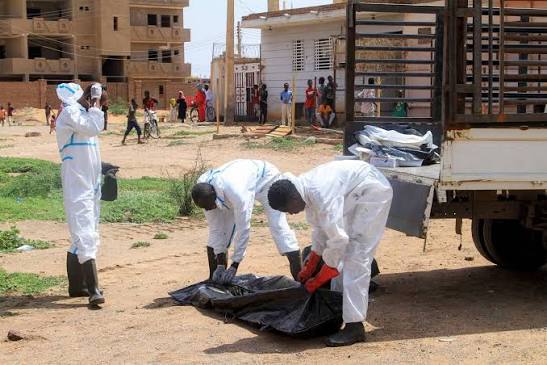
During May and early June, residents in several neighborhoods of Khartoum, including Mayo Goma and Al-Ashara, stood silently watching the exhumation of temporary graves that had been established during the early months of the war.
As forensic workers carefully lifted human remains in preparation for transferring them to official cemeteries, the scene evoked painful memories of the conflict that has transformed the Sudanese capital since the outbreak of war on April 15, 2023.
Large-Scale Operations
Local authorities in Khartoum State, in cooperation with forensic departments and local residents, continue to carry out large-scale operations to transfer the remains of war victims from emergency burial sites scattered throughout residential neighborhoods and public facilities to official cemeteries. The initiative aims to address one of the most complex humanitarian issues left behind by the conflict.
During the years of war, thousands of residents were forced to bury their loved ones in home courtyards, schools, and public squares after access to recognized cemeteries became impossible due to fighting, blocked roads, and the collapse of essential services.
These temporary graves became a common sight in many parts of the capital, reflecting the extraordinary circumstances imposed by the ongoing conflict.
Documenting the Dead
Officials say the current exhumation efforts go beyond simply relocating remains. The process also includes documenting the identities of the deceased, verifying available information, and registering their new burial locations to preserve families’ rights and maintain accurate official records of the victims.
Figures released by authorities reveal the existence of thousands of emergency graves across Khartoum, highlighting the scale of human losses caused by the war. Specialists view these burial sites as physical evidence of the suffering endured by civilians throughout the conflict.
For many families, the transfer of remains marks the end of years of uncertainty and distress.
Some victims were buried hastily without proper documentation, while information about others was lost amid the chaos of war. Relocating them to recognized cemeteries offers relatives an opportunity to identify burial locations and regain a measure of peace after years of waiting.
A Crucial Role
Forensic departments play a central role in these operations, overseeing the exhumation, examination, and documentation of remains in accordance with legal and public health procedures.
Experts emphasize that these efforts form an important part of documenting the consequences of war and may eventually serve as a foundation for future transitional justice initiatives or legal accountability processes.
At various work sites, local residents participate in excavation and transfer activities, reflecting the harsh experiences endured by Sudanese communities. Families who were forced to bury their loved ones under extraordinary circumstances are now helping move them to their final resting places as security conditions improve and some state institutions resume operations.
These efforts carry particular significance in Sudanese society, where burial practices and respect for the deceased hold deep cultural importance. Having graves located in known cemeteries enables families to visit their loved ones and preserves the social and family ties associated with mourning and remembrance.
Major Challenges
Despite the importance of the initiative, authorities face significant challenges, including the need to process thousands of burial sites spread across the capital and secure specialized technical and logistical resources. The approaching rainy season may also affect some temporary burial locations.
Observers believe that scenes of exhumation serve as a painful reminder of the immense human cost of war. At the same time, they symbolize the beginning of a new phase of recovery and reconstruction in the capital.
Rebuilding cities involves more than restoring roads, hospitals, and schools; it also requires addressing humanitarian wounds, documenting losses, and restoring dignity to victims.
As the transfer of remains continues across Khartoum’s neighborhoods, one reality remains clear: the effects of war do not end when the guns fall silent.
They persist in the memories of families, in the landscapes of cities shaped by conflict, and in the ongoing efforts to return victims to burial places that honor their human dignity.