Sudan is facing serious environmental challenges amid changing climate patterns and the continuation of the war, which has destroyed infrastructure and damaged the natural environment, including vegetation cover and soil degradation. These developments have affected natural resources and brought heavy rainfall to areas historically known for scarce precipitation.
At the same time, the country has experienced record-breaking temperatures, floods, and torrential rains that have swept away villages and farmlands, disrupting the cultivation of key cash crops and threatening food security. Recurring droughts and desertification in other regions have further increased risks to human health through the spread of diseases and epidemics.
The phenomenon of climate extremes has not only affected human populations but has also contributed to the depletion of fish stocks, livestock deaths, and the migration of rare bird species, highlighting the need for the state to treat environmental issues as a strategic priority.
These environmental challenges coincide with exceptionally complex circumstances, as the impacts of climate extremes overlap with the onset of the rainy season and the humanitarian and economic consequences of the ongoing conflict between the Sudanese Armed Forces and the Rapid Support Forces. This combination has significantly undermined Sudan’s resilience and adaptive capacity in the face of climate change.
Severe Losses
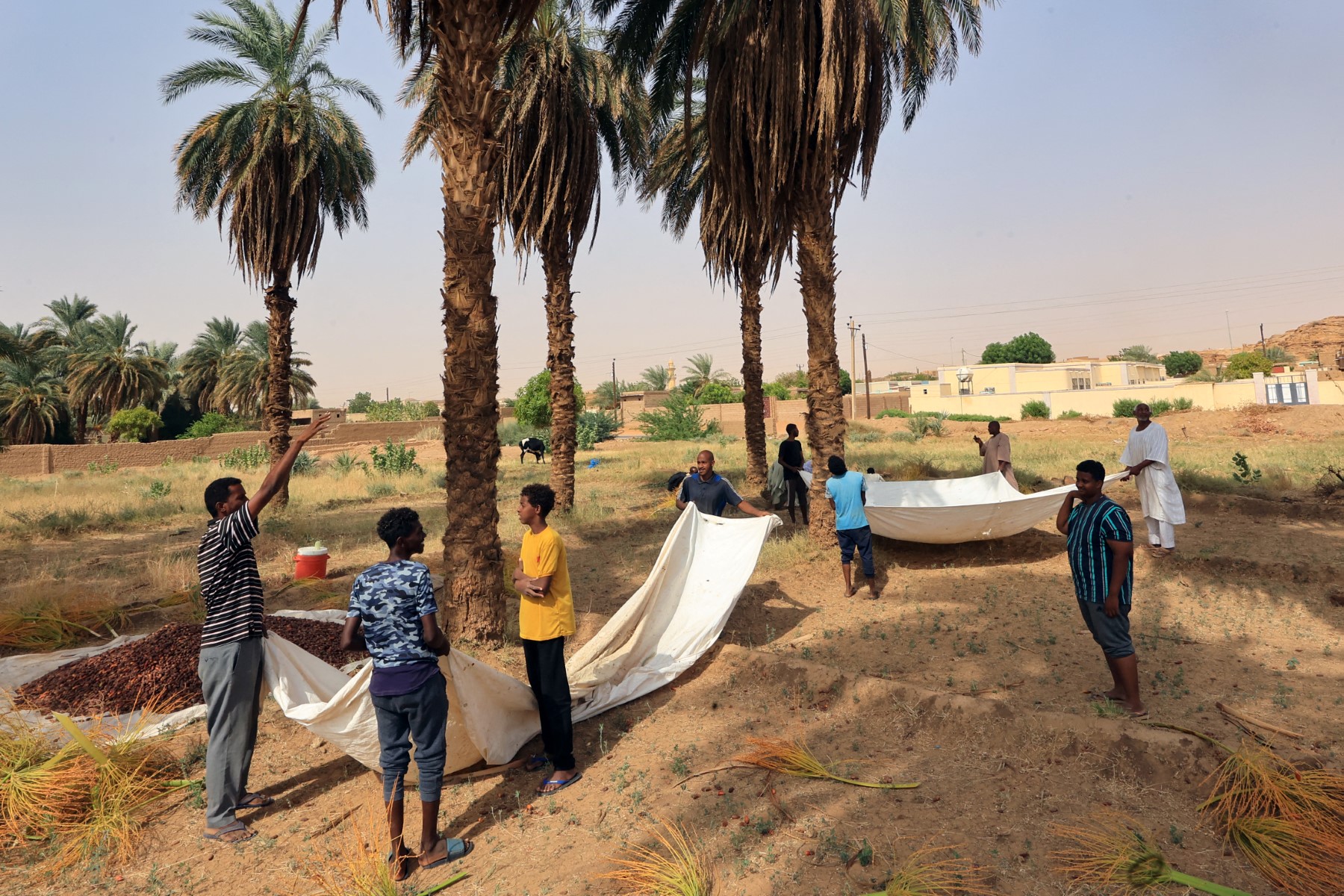
In this context, farmer Mustafa Al-Rayeh, a resident of the Northern State, said that changes in weather conditions have contributed to instability in the cultivation of several cash crops, including date palm trees, for which the Northern and River Nile states are renowned. He explained that heavy rainfall occurring close to harvest time has damaged what is considered the most important crop in these regions.
Al-Rayeh added that rainfall rates have increased in recent years, directly affecting date production and causing significant losses to fruits shortly before ripening. Even fruits that survive are often exposed to rot.
The Sudanese farmer noted that the northern regions were historically characterized by limited rainfall, which was beneficial to date palm trees because it mainly helped wash away harmful insects. However, the sudden climatic fluctuations have had major adverse effects on the trees, forcing farmers in the northern states to consider costly protective measures at a time when agriculture in Sudan is already facing severe challenges due to the war.
He warned that if rainfall continues at these elevated levels, farmers specializing in date palm cultivation may be forced to abandon their ancestral livelihood and seek alternative means of survival due to the crop’s declining economic value.
Climate Extremes and Vulnerability
Meteorological observer Mohamed Al-Sharif stated that Sudan is indeed experiencing climate extremes that are now closer to certainty than possibility, as evidenced by repeated floods, rising temperatures reaching record levels, drought conditions, delayed rainfall in some regions, increased rainfall in areas historically known for scarcity, and dust storms that have accelerated soil erosion and desertification.
Al-Sharif explained that recent scientific studies on climate change have documented rapid shifts in Sudan’s climate over recent decades. He said that what the country is experiencing today has surpassed normal climate variability and entered a phase of increasing climate extremes. International assessments have classified Sudan among the world’s most vulnerable countries to the impacts of climate change compared with conditions prevailing during the second half of the twentieth century.
He further noted that climate-related risks in Sudan intersect with existing economic and security challenges, making the effects of climate phenomena even more severe. Millions of people depend on rain-fed agriculture and traditional pastoralism, meaning that any change in rainfall patterns or temperatures has direct consequences for food security, income levels, and social stability.
Raising Awareness
Agricultural researcher and environmental advocate Marwa Bashir stated that Sudan’s high vulnerability to climate change is linked to multiple factors, including the degradation of agricultural lands and the reduction of cultivated areas due to the ongoing war. She added that the conflict has contributed to deforestation and the loss of tree cover, as many people have resorted to cutting wood for cooking fuel amid the absence of official oversight.
Bashir also pointed to soil contamination, overgrazing, increased risks of drought, and advancing desertification. Climate change, she said, has significantly affected soil moisture, leading to the expansion of arid lands.
She explained that shrinking cultivated areas inevitably affect food security through crop failures and reduced production, resulting in higher food prices, worsening hunger, and the risk of famine. This also increases reliance on imports, raises import costs, and places additional pressure on exchange rates.
She added that water scarcity, combined with temperatures reaching up to 50 degrees Celsius in some areas, is among the key factors hindering agricultural production and aggravating the national economy. According to current indicators, the coming years are expected to witness declining productivity of sorghum, millet, and gum arabic, particularly in the Kordofan region.
Bashir further stated that recurrent flooding has created favorable conditions for the spread of diseases through the proliferation of vectors such as malaria and dengue fever, as well as other epidemics. Floodwaters have destroyed farms and residential areas, forcing people to migrate to urban centers and increasing pressure on already deteriorating public services, while also affecting social and security stability.
She emphasized that the impacts of climate change extend beyond agriculture and human health to affect both surface and groundwater resources due to declining rainfall, rising temperatures, and increased evaporation rates. These impacts also reach ecosystems, nature reserves, and wildlife habitats because of the growing risks of erosion caused by dust storms. In addition, fish stocks have been affected by rising sea surface temperatures and salinity levels, alongside livestock deaths and the migration of rare bird species.
In conclusion, the agricultural researcher stressed the need to end the war, strengthen Sudan’s climate resilience, develop early warning systems for climate-related crises, and increase public awareness to enhance adaptation to climate change and ensure long-term stability in the face of environmental challenges.