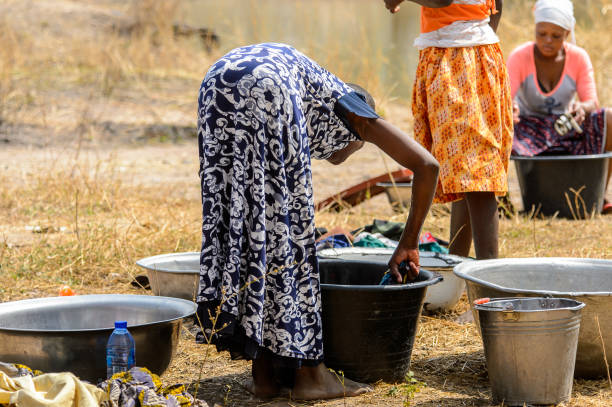
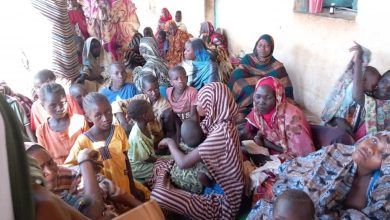
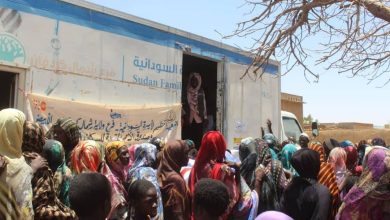
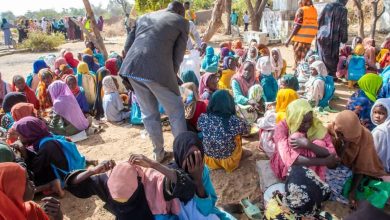
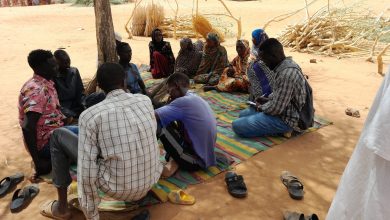
In narrow alleys, crowded public markets, and the homes of financially well-off families, Sudanese women displaced by armed conflict struggle daily under the scorching sun to provide food, medicine, and basic necessities for children and the elderly. Dozens of women have become sole providers for their families after losing their husbands, forcing them into difficult work under harsh wartime conditions.
Despite exploitation, sexual harassment, and the absence of protection, many widowed women — particularly those displaced from Darfur and Kordofan — have managed to resist the devastating consequences of war by working in domestic labor, selling tea and coffee, and engaging in small income-generating activities to sustain their daily lives.
Clear Exploitation
Maryam Hussein, displaced from Al-Foula in West Kordofan, told Mashawir:
“My children no longer have a breadwinner after my husband was killed in a drone strike. I found myself facing enormous challenges and had no choice but to work in any job that could help us survive.”
She added:
“After a long search, I found work in the home of a wealthy family in Omdurman with relatively good pay, but I suffer from exploitation and excessively long working hours without any protection amid the current war conditions.”
Hussein explained that many women working in homes across Omdurman endure severe exploitation, working long hours for wages that fail to meet even the minimum cost of living, trapping them in cycles of debt and hardship.
She further noted that living conditions in Khartoum State have become unbearable, with prices of basic goods increasing more than fivefold following the collapse of the Sudanese pound against the dollar.
Harassment and Abuse
Meanwhile, Samira Al-Basha, displaced from North Darfur, supports a family of four children. For nearly three years, she has relied on selling tea in Gedaref, eastern Sudan, after her husband died following the outbreak of war. She continues to struggle under extremely difficult circumstances to provide for her family.
Al-Basha told Mashawir:
“I never had the opportunity to receive an education because of the nature of rural society in Darfur. But now I am determined to ensure my children continue their studies. What I earn is just enough to cover living expenses and school costs.”
She continued:
“What hurts us most is the sexual harassment and abuse we face in the markets, especially from truck drivers and some armed group members during nighttime hours. There is also no protection, and we often cannot file complaints at police stations because we have lost our identification papers and official documents.”
The displaced Sudanese woman added:
“These days, our income is declining because of fewer customers due to the economic crisis, in addition to rising transportation costs.”
Lack of Safety
A recent study conducted by Ahfad University for Women in cooperation with local civil society organizations revealed the tragic reality facing tea sellers and domestic workers in Omdurman and Gedaref.
According to the study, the war has forced approximately 57 percent of surveyed women to become the primary providers for their families, while 83 percent are responsible for supporting four or more people.
The study also found that 75 percent of tea sellers in Omdurman are displaced women from conflict areas, particularly South Kordofan State.
Although 66 percent of respondents reported feeling relatively safe in their immediate workplaces, 33 percent expressed deep concern over the spread of weapons and the deterioration of social and moral norms resulting from the war.
Using a mixed research methodology, the study documented how the war has become a major driver pushing women into professions lacking even the most basic safety protections. Around 55 percent of tea sellers reported facing verbal harassment and bullying in public spaces from customers, while domestic workers face an even greater risk of physical and sexual violence inside homes.
Violated Rights
Lawyer and legal consultant Amer Al-Tahir told Mashawir that tea and coffee sellers, as well as domestic workers, lack legal protection due to the consequences of armed conflict and are increasingly vulnerable to harassment and exploitation by employers, particularly regarding wages and payment agreements.
He explained that around 95 percent of employment arrangements rely on verbal agreements because many displaced women have lost their identity documents and official papers, leaving them exposed to denial of wages and labor rights.
Al-Tahir also pointed to a growing lack of trust among displaced women toward law enforcement agencies and official reporting mechanisms, partly due to regional and tribal discrimination in some cases. This often forces women to remain silent out of fear of stigma or retaliation.
He added that displaced women from Kordofan and Darfur often work between 12 and 14 hours a day in households without formal contracts guaranteeing their rights, largely because they are unfamiliar with labor laws.