As the war in Sudan enters its fourth year, hunger levels among the population have continued to rise due to worsening food shortages caused by declining agricultural production across the country, in addition to the collapse of daily livelihoods for millions of families. Even senior employees in both the public and private sectors are no longer able to meet their most basic living needs after salaries lost more than 80 percent of their purchasing power.
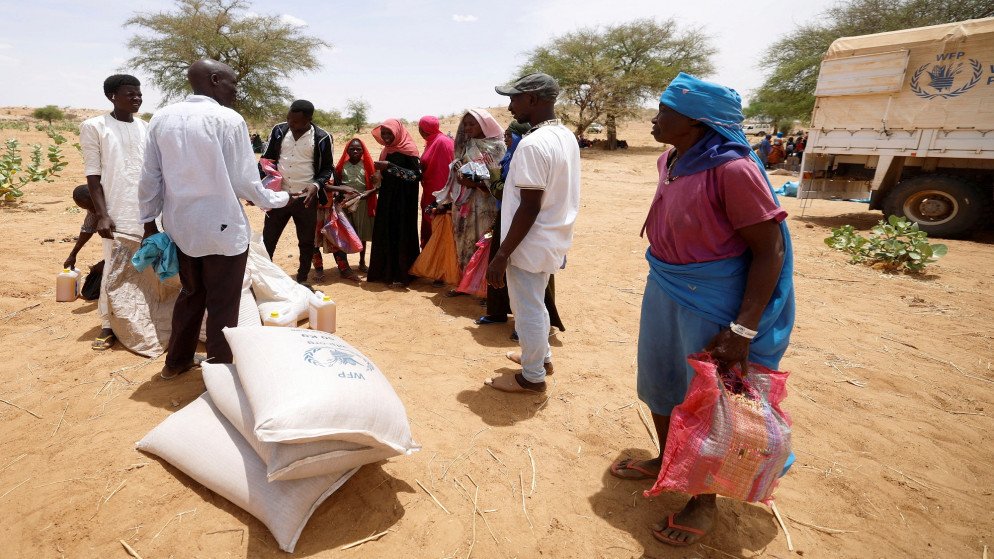
The conditions of residents in active conflict areas, particularly in Kordofan, Darfur, and Blue Nile, are witnessing alarming deterioration, with the specter of death by starvation haunting thousands. Chronic malnutrition is claiming hundreds of lives as food becomes unavailable, many survive on only one meal a day, financial savings are exhausted, and humanitarian aid fails to arrive.
As a result, dozens of families often spend entire days without any food, forcing them to resort to eating tree leaves and animal fodder just to stay alive.
Largest Hunger Crisis
Meanwhile, the World Food Programme described the situation in Sudan as “the largest humanitarian hunger crisis in the world,” noting that more than 19 million people out of a population of around 45 million are facing acute food insecurity amid the ongoing conflict and its economic and humanitarian consequences.
The programme added that “one in every four Sudanese lives in extreme poverty on less than two dollars a day.”
Poverty rates in Sudan have doubled since the outbreak of war three years ago, with nearly 70 percent of the population now living below the poverty line, according to the Resident Representative of the United Nations Development Programme in Sudan, Luca Renda.
Renda confirmed that poverty levels rise to nearly 75 percent in conflict-concentrated areas such as Darfur and Kordofan.
A UNDP report stated that average income levels in Sudan have fallen to figures not seen since 1992, while extreme poverty rates have surpassed those recorded during the 1980s.
According to the report, prepared in cooperation with the Institute for Security Studies, “the war could push Sudan’s economy back to levels seen in the 1960s,” with extreme poverty potentially exceeding 60 percent and affecting an additional 34 million people if the current conflict continues until 2030.
Complete Collapse
Food security expert Abdulrahman Al-Amin told Mashawir that “the current crisis is no longer merely a food shortage crisis, but rather a complete collapse of life systems across wide areas of Sudan.”
He added, “The war has pushed millions of people from production into dependency. Farmers have been displaced, agricultural projects have stopped, markets have been destroyed, and people have lost their jobs and sources of income. Obtaining one meal a day has therefore become a real challenge for thousands of families.”
Al-Amin warned that “the continuation of fighting means new areas could enter famine conditions in the coming period, especially with the disruption of the agricultural season and the absence of any real indicators of ending the war.”
Women and Children Suffer Most
Humanitarian researcher Alaa Mohamed Othman told Mashawir that “women and children are the most affected by the current crisis, especially inside displacement camps suffering from extremely harsh humanitarian conditions.”
She added, “Some families no longer own anything. People have lost homes, money, crops, and even the ability to move. Some camps do not receive humanitarian aid for months, and even charitable kitchens have become unable to meet needs because of funding shortages and overwhelming pressure.”
She continued, “Sudan lost an estimated $6.4 billion from its GDP in 2023 alone, while around seven million people fell into extreme poverty during the same year.”
Agricultural Disruption
Economic affairs specialist Adam Hamed Al-Leigaan told Mashawir that “the continuation of war has contributed to declining agricultural production and the suspension of livestock activities. Government economic policies have also increased poverty and unemployment rates, alongside major surges in the prices of goods and services, placing heavier burdens on low-income groups.”
He added that “the armed conflict in war zones has driven people into famine because of disrupted farming activities, in addition to the use of starvation as a weapon of war, including the deliberate destruction of farms and markets.”
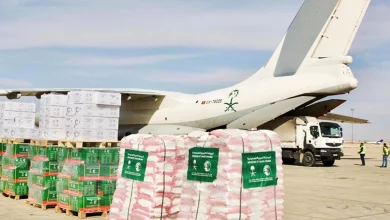
Al-Leigaan explained that “charitable kitchens relied upon by displaced people and shelter camp residents are increasingly unable to meet growing needs at a time when major cuts in donor funding are hindering relief agencies’ ability to respond to emergencies in Darfur and Kordofan.”
One Meal Only
In the same context, a report published by several non-governmental organizations revealed that “millions in Sudan survive on only one meal a day” as the country’s food crisis deepens and fears grow over its further spread.
The report, issued by Action Against Hunger, CARE International, the International Rescue Committee, Mercy Corps, and the Norwegian Refugee Council, stated that “in the two regions hardest hit by the conflict — North Darfur and South Kordofan — millions of families eat only one meal a day.”
The report added, “They often spend entire days without any food,” noting that many have resorted to eating tree leaves and animal fodder in order to survive.