With Egypt hosting more than nine million refugees and migrants, different traditions of celebrating Eid al-Adha have emerged across the country. Those whom the Egyptian government refers to as “guests of Egypt” — including Sudanese, Yemenis, Palestinians, and others — are keen to preserve the customs of their homelands through practices and traditions that strengthen family and social bonds, while also sharing similarities with long-established Egyptian Eid traditions.
Traditional dishes and various meat meals dominate most of the Eid celebrations. Many people living in Egypt seek a sense of familiarity, solidarity, and social connection amid difficult economic conditions and escalating regional tensions that affect them while away from their homelands.
For Sudanese communities in particular, social visits hold special importance during Eid al-Adha, especially in light of the ongoing war and displacement.
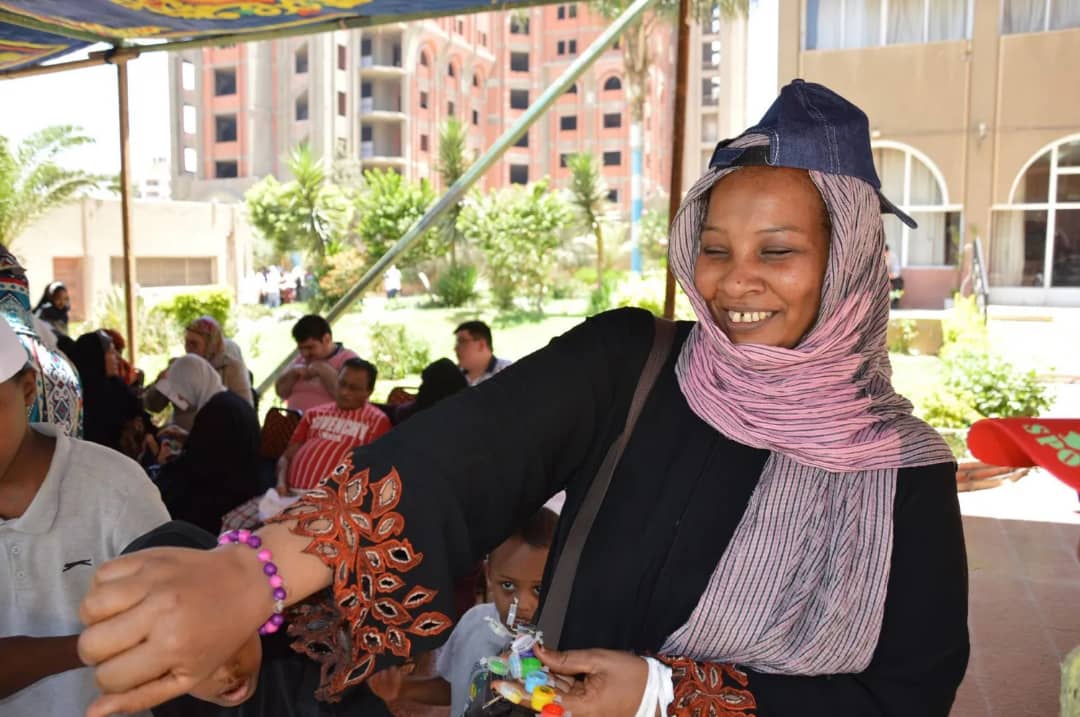
Sudanese resident Nusaiba Saeed said that Sudanese Eid celebrations in Egypt begin early, about a week before the Day of Arafah. Women prepare the traditional red henna used for adornment during special occasions, while families also begin making Sudanese sweets. On the eve of Eid, families start preparing ingredients for Eid meals.
Nusaiba, who lives in the Tersa area of Giza and has five children, explained that on the first day of Eid, some families buy a sacrificial animal, while others share one sacrifice because of the economic situation. Some instead buy meat directly, but Sudanese families remain committed to distributing as much meat as possible among fellow Sudanese households before beginning family visits.
She added that breakfast on the first day of Eid is usually eaten at a relative’s home and follows Sudanese traditions, including dishes made from tripe (“karsha”). Lunch is then held at another family home and features traditional foods such as aseeda, mullah, and liver dishes.