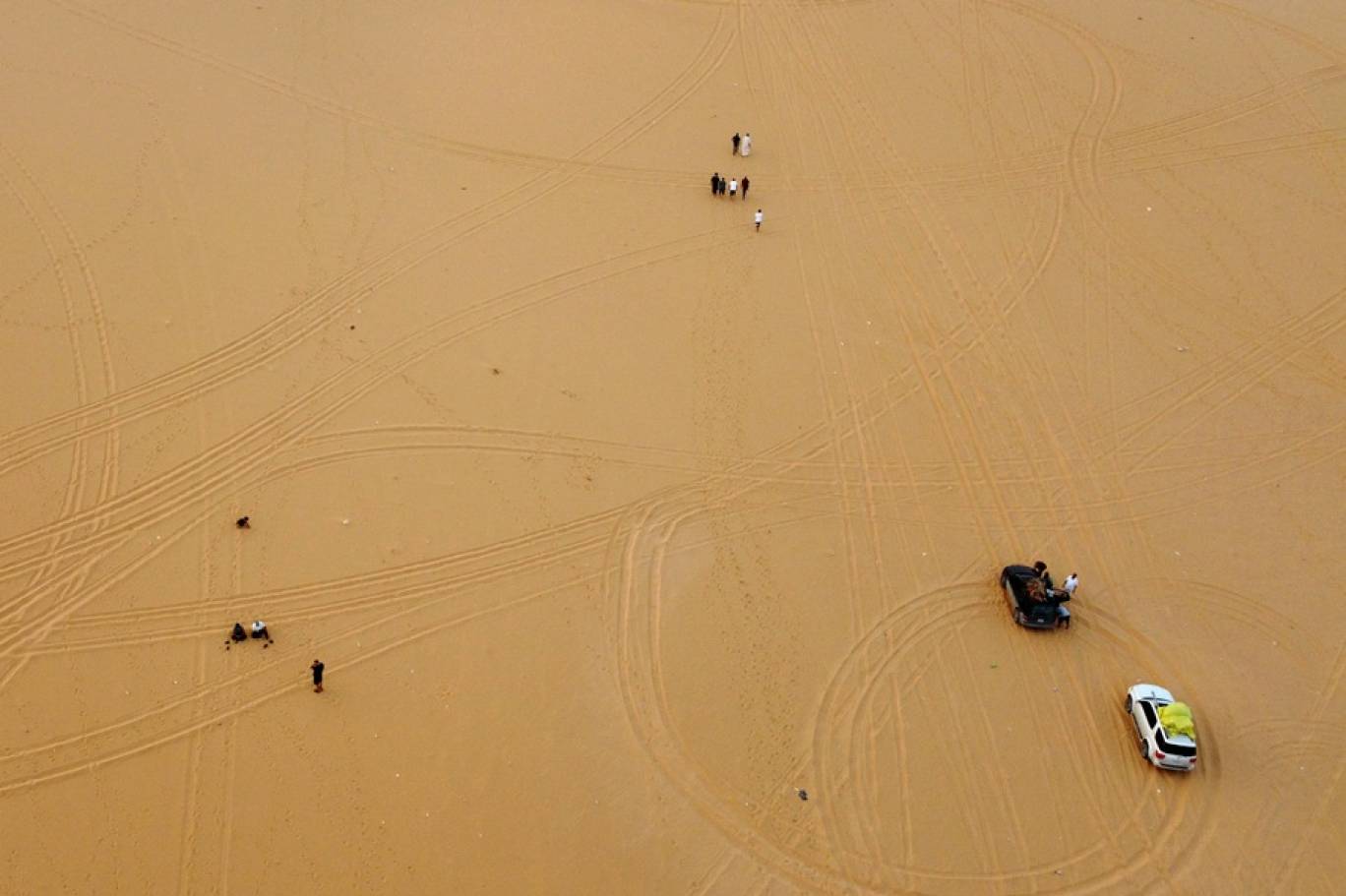
Since the outbreak of war between the Sudanese army and the Rapid Support Forces (RSF) in mid-April 2023, illegal migration has become a goal for many Sudanese, especially young people, in search of stability abroad. Tragically, this dangerous journey has turned the Libyan desert into an open grave for thousands fleeing the horrors of war, as they face death from thirst and hunger at the hands of smuggling gangs that exploit their suffering.
This ongoing humanitarian tragedy contains many painful details and realities. These desperate travelers take harsh desert routes stretching hundreds of kilometers, fleeing conflict zones inside Sudan in search of a safe haven.
However, they soon encounter death caused by dehydration, severe thirst, hunger, and heatstroke, especially after vehicles break down in remote areas where communication networks are unavailable. In separate incidents, Libyan authorities have found the bodies of entire families, some of whom left heartbreaking messages and final wishes asking for prayers before passing away.
As these tragic stories continue, Libyan authorities and local rescue teams regularly launch search patrols in open desert areas, helping save the lives of some displaced Sudanese, while others are found dead.
Libya is considered a major transit point for migrants heading to Europe because of its geographical location and vast land borders with six African countries, making it one of the most important routes for irregular migration.
A Painful Experience
Sudanese citizen Osama Jomaa, one of the survivors of death in the Libyan desert, said:
“My journey to Libya began from the Al-Sahafa district east of Khartoum after my family and I were subjected to violations by RSF militias at the beginning of the war. Three of my brothers were brutally killed before our eyes, and the remaining residents were threatened with death under accusations of cooperating with the Sudanese army. We had no choice but to leave our homes without any plan or destination.”
Jomaa added:
“We left everything behind and decided to flee with several residents of the neighborhood. With great difficulty, we found a truck station on the outskirts of Libya Market west of Omdurman, where hundreds of travelers heading to Libya gathered after paying 500,000 Sudanese pounds (120 dollars), before being transported to Darfur. After receiving support from one of my relatives living abroad, I managed to pay for the journey for my family of five, including my sick mother.”
He continued:
“In reality, the journey is full of enormous dangers. Although travelers carry large amounts of food, water, and some painkillers in preparation for emergencies, supplies quickly run out because of the long trip and extreme heat. As a result, I lost my youngest child after he became severely exhausted, and once we moved deeper into the desert, my mother also died of thirst while already suffering from illness.”
He pointed out that despite losing his child and mother, he and the rest of his family were fortunate that a Libyan rescue team found them after they had run out of food and water. They later returned to the Sudanese border and then to Khartoum.
“Based on my experience, this is a journey full of danger and tragedy, and I do not advise anyone to go through this painful experience,” he said.
Harsh Choices
Meanwhile, citizen Rahab Al-Amin, who reached Libya a year and a half after the outbreak of war in Khartoum, said:
“Our escape to Libya was caused by the hell of war in the capital, only for us to face an even harsher reality forced upon us. It was truly a journey of suffering and risk in every sense, considering the extortion we faced in addition to the deaths of loved ones. I lost both my mother and father because they could not endure the hardship of travel and thirst, while there were no means to save them.”
Al-Amin added:
“Our fear of death from bullets and random shelling in Omdurman turned into fear of death from thirst and unbearable heat in the middle of the desert. It is suffering beyond description, but the important thing is that we reached our second-to-last destination.”
She continued:
“After adapting to our new reality, we began planning to cross into Europe despite knowing the dangers involved. This is the consequence of war and the state of displacement and uncertainty Sudanese citizens are experiencing in search of safety and stability.”
She further explained:
“Yes, the risks are greater, especially with young children, but when I look at the terrible conditions in our country and its bleak future, I become determined to go through this experience in order to provide my children with a decent life, a safe society free from security and health threats, and a proper educational environment, no matter the cost.”
She noted that her family originally did not intend to migrate illegally and had planned to remain in Libya until conditions in Sudan improved, but the continuation of the war without any sign of an end forced them to consider migration despite its dangers and high costs.
Painful Scenes
For his part, Abdelaziz Jamaa, a truck driver transporting migrants from Khartoum to Libya through Darfur, explained that the journey from Omdurman to El Geneina, the capital of West Darfur State, normally takes about seven days, but often extends to nearly two weeks because of truck breakdowns and security conditions.
He said those fleeing Khartoum must travel between 900 and 1,000 kilometers to reach the Sudanese-Chadian border, which serves as the final crossing point before travelers continue through the Chadian city of Adré across the desert into Libyan territory.
Jamaa added:
“Because of the many dangers on the roads, I try to complete two round trips per month, carrying about 20 passengers per trip, especially as the number of travelers continues to increase despite rising ticket prices caused by intensified fighting and continuously increasing fuel prices.”
The truck driver also revealed heartbreaking scenes involving elderly people, children, women, and especially pregnant women dying during the journey before reaching the Sudanese-Chadian border due to exhaustion, hunger, thirst, or traffic accidents caused by speeding to avoid bandits.
He added that most trucks are worn out and frequently break down because of the rough roads and shortage of spare parts.