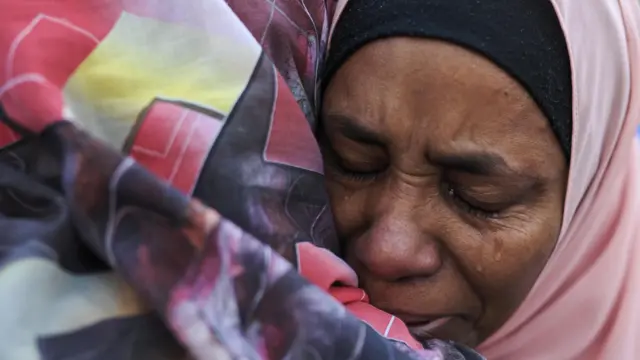
The war in Sudan has left deep and lasting scars on the bodies and lives of women and girls, with widespread reports of sexual violence, including forced pregnancy—one of the most severe and complex forms of abuse. Beyond the immediate violation, forced pregnancy carries long-term psychological, social, and health consequences, exposing survivors and their children to stigma, rejection, and inadequate legal protection in an environment where weak justice systems and impunity continue to fuel systematic abuses.
According to Amnesty International, the organization documented approximately 250 cases of women who were raped and became pregnant during the conflict in Darfur, particularly following the fall of El Fasher, the capital of North Darfur, last October. Amnesty stressed that these documented cases represent only a fraction of the thousands of assaults believed to have occurred across the region, as the testimonies were collected primarily from women and girls who had fled their homes. Sexual violence, the organization warned, continues to escalate alongside the ongoing conflict.
As the war drags on, forced pregnancy has become one of the enduring consequences faced by Sudanese women, whose suffering is compounded by severe psychological trauma, social stigma, and limited access to healthcare amid the country’s deteriorating political and humanitarian conditions.
Systematic Violence
Speaking from a displacement camp in West Darfur, displaced woman Maryam Ishaq said the war had subjected women and girls to systematic sexual violence.
“I was among those who were raped while collecting firewood with other displaced women near the camp,” she recalled. “We were surrounded by RSF soldiers. Some women managed to escape, while others, including me, were captured.”
She said the women were detained for several days in an abandoned building, where they were repeatedly raped.
“After about a month, I discovered that I was pregnant,” Ishaq said. “I don’t know how to deal with this unwanted pregnancy. I often think about ending it by any means possible just to escape the stigma that will follow me for the rest of my life, especially if I give birth.”
She added that many survivors continue to suffer because perpetrators are rarely held accountable, while pregnancies resulting from rape often lead to the birth of children who face rejection and discrimination within their communities.
Sexual Exploitation
Eighteen-year-old Marwa Abdeljalil said the economic collapse caused by the war pushed her into sexual exploitation after her father was killed in indiscriminate shelling.
“I was forced into exploitation just to provide food for my younger siblings,” she said. “I eventually became pregnant and gave birth to a daughter who now faces the same harsh reality—growing up without protection and without knowing her father.”
She stressed that her experience is not unique but reflects the reality faced by many women and girls, whether they are subjected to sexual violence or resort to survival sex under extreme economic hardship.
Humiliation and Social Destruction
Women’s rights activist Etemad Al-Rashid said forced pregnancy has become one of the defining features of the conflict, describing it as a tool used to humiliate victims, demonstrate dominance, and fracture communities.
She noted that local and international reports have documented widespread sexual violence, including rape, adding that forced pregnancy constitutes a crime against humanity under international law.
“The persistence of these crimes is largely driven by the absence of effective legal deterrence and the continued impunity enjoyed by perpetrators,” she said.
Al-Rashid also warned that many women remain trapped in prolonged psychological and social suffering because of the lack of legal and social protection. Some survivors, she said, have resorted to unsafe abortion methods due to fear of stigma and lack of confidence in the justice system.
She called for stronger legal protections, comprehensive support services, and public awareness campaigns to combat stigma and facilitate the reintegration of survivors into their communities.
Women Directly Targeted
Social worker Rania Abdelati said women have been directly targeted throughout the conflict, with thousands reportedly subjected to rape during displacement from towns and villages devastated by violence.
She added that sexual violence has also been reported inside displacement shelters and is increasingly linked to economic exploitation, with vulnerable women pressured into exchanging sex for survival.
According to Abdelati, many women became separated from their families during displacement, leaving them exposed to exploitation, early pregnancy, severe psychological trauma, sexually transmitted infections, and social rejection.
She also noted that the collapse of Sudan’s healthcare system has made access to medical, psychological, and reproductive health services extremely difficult, while shortages of contraceptives and delayed detection of pregnancies have further compounded survivors’ suffering.
Justice Still Out of Reach
Sudanese lawyer Yasser Zein Al-Abidin said Sudanese law criminalizes forced pregnancy during armed conflict under provisions relating to crimes against humanity and war crimes. However, he argued that these legal provisions remain largely unenforced.
“There have been virtually no meaningful prosecutions for rape or other crimes against humanity since the outbreak of the war,” he said. “Perpetrators frequently escape accountability and, in some cases, even receive pardons.”
He added that Sudan’s 1991 Criminal Code generally criminalizes abortion, with limited exceptions, including pregnancies resulting from rape if the pregnancy is less than 90 days. However, the collapse of judicial institutions during the conflict has made access to legal procedures almost impossible, forcing many women to seek unsafe and illegal abortions.