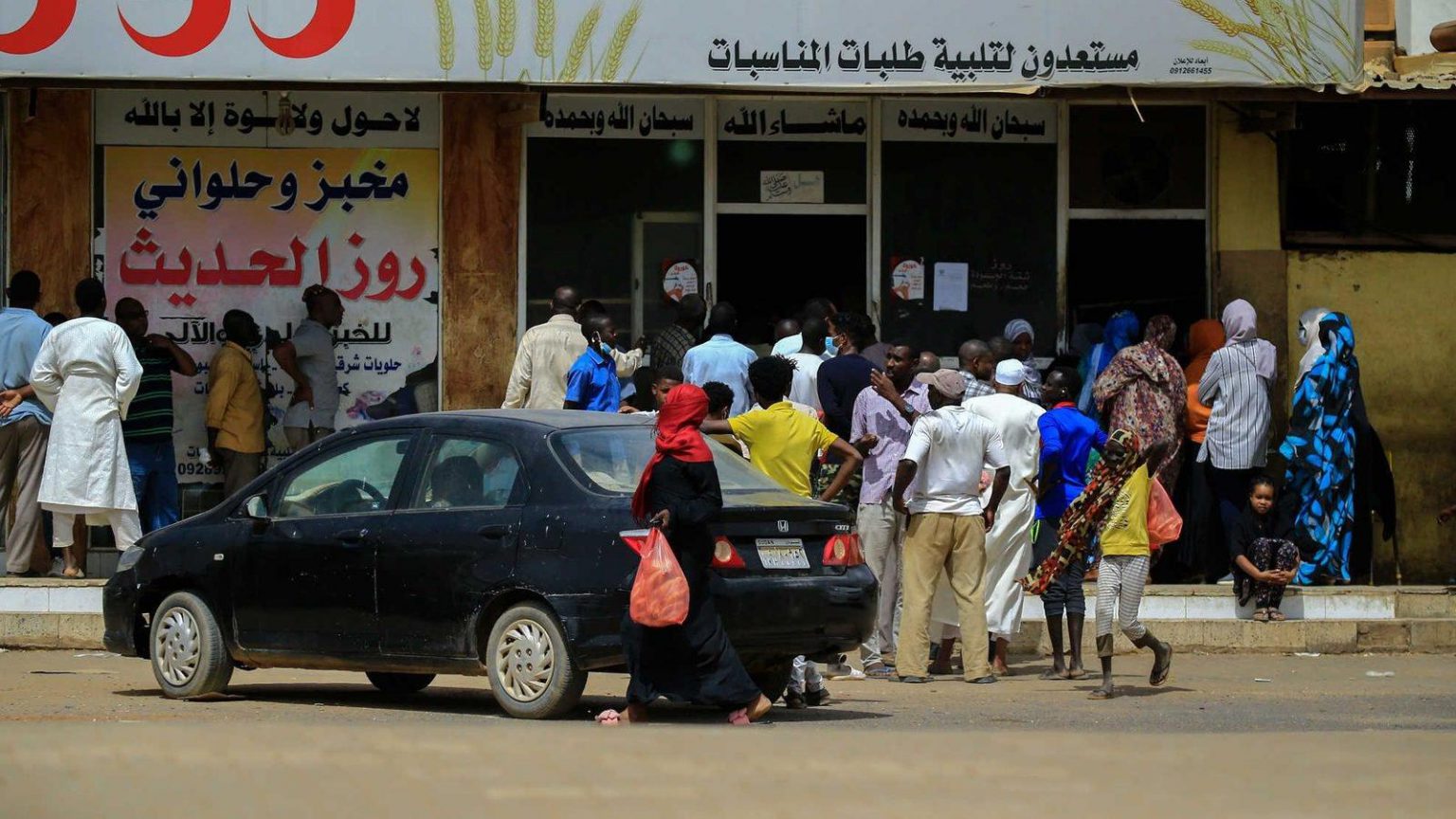
Forty-eight hours were enough for the price of a 25-kilogram sack of flour in Sudan to jump from around 77,000 Sudanese pounds to 108,000, an increase of nearly 40 percent. In a market where the Sudanese pound is struggling to keep pace with rising food costs, the surge has placed bread on the brink of another wave of price increases.
Issam al-Din Okasha, Deputy Chairman of the Bakers’ Union, confirmed that the increase in flour prices came alongside rising operating costs. Bakeries are also facing increases in the prices of yeast, labor, energy and transportation, prompting some bakeries to shut down while others are considering reducing the weight of a loaf or selling two loaves for 1,000 pounds instead of three. At the same time, Siga Flour Mills announced another price increase effective September 2, raising the price of a 25-kilogram sack by 10,000 pounds.
Although prices are not moving at the same pace across all markets, significant increases have been recorded in most areas. In White Nile State, the price of a sack rose from 85,000 to 103,000 pounds, while in Gezira State it increased from 72,000 to 95,000. Siga flour reached 108,000 pounds in Khartoum, while other varieties surpassed the 100,000-pound mark. These variations also reflect a fragmented market affected by the situation in each state, commodity availability, transportation and fuel costs, the source of the flour, and the distance between production and consumption areas.
What is certain is that Sudan’s flour crisis did not begin with the war, but it has worsened significantly since the conflict began. Sudan has long relied heavily on imported wheat, making flour prices highly sensitive to exchange rates, import costs, transportation and energy expenses. The Food and Agriculture Organization (FAO) estimated Sudan’s cereal import requirements for 2025 at around 2.7 million tonnes, with wheat accounting for approximately 90 percent. The war has further aggravated the situation by disrupting supply chains and trade flows while increasing the costs of fuel, storage and distribution.
The trajectory of prices reveals the scale of the transformation. According to market prices and local reports, a 25-kilogram sack of flour cost around 13,000 to 15,000 pounds before the war. By the end of 2023, prices had exceeded 30,000 pounds in some markets, before continuing to rise throughout 2024. Further increases followed in 2025 and 2026, with prices eventually surpassing 100,000 pounds in several markets.
The crisis goes beyond the price of a sack of flour. Every increase puts bakeries in a difficult position, leaving them with two equally painful choices: raise the price of bread, which clashes with consumers’ purchasing power, or reduce the loaf’s weight to maintain the existing price. Meanwhile, rising operating costs squeeze profit margins and may force some bakeries to close.
For households, bread is not a commodity that can easily be eliminated from daily consumption. As incomes decline and the prices of food, transportation and essential services continue to rise, the latest increase adds to an already severe strain on household budgets, potentially forcing families to reduce consumption or change their eating habits.
Throughout Sudan’s history, bread has been more than just a commodity. Living-cost crises and price increases have been linked to several moments of popular protest. The clearest connection between bread and protest emerged in December 2018, when rising bread prices and shortages, alongside soaring living costs and a liquidity crisis, sparked demonstrations that began in Atbara on December 19. The protests quickly spread to other cities and developed into a nationwide popular movement that eventually led to the ouster of Omar al-Bashir’s regime in April 2019. Although the bread crisis alone did not cause the fall of the regime, it was one of the key triggers of the protests.
The current increase is once again putting bread at the center of attention, but under very different and harsher circumstances: a devastating war, mass displacement, declining incomes and deteriorating services. These conditions make rising prices even more closely tied to families’ ability to cope with the pressures of everyday life.
The choices are narrowing for both baker and consumer: a higher price, a smaller loaf, or a bakery forced to shut down. The scale of the increase in flour prices illustrates the pressure. From around 13,000 pounds for a 25-kilogram sack before the war to 108,000 today, the price has risen more than eightfold. The figure alone captures the magnitude of the transformation that has hit both the market and the Sudanese pound.
And therein lies the paradox: the loaf that once became a spark for protest is now itself part of a crisis eroding people’s ability to endure. As flour chases the pound, the question moves closer to the very limits of survival: Will rising bread prices once again open the door to protest, or will the fundamentally different circumstances of today — the war, people’s exhaustion and their limited options — lead them to swallow yet another increase, just as they have swallowed so many bitter hardships during these difficult years?