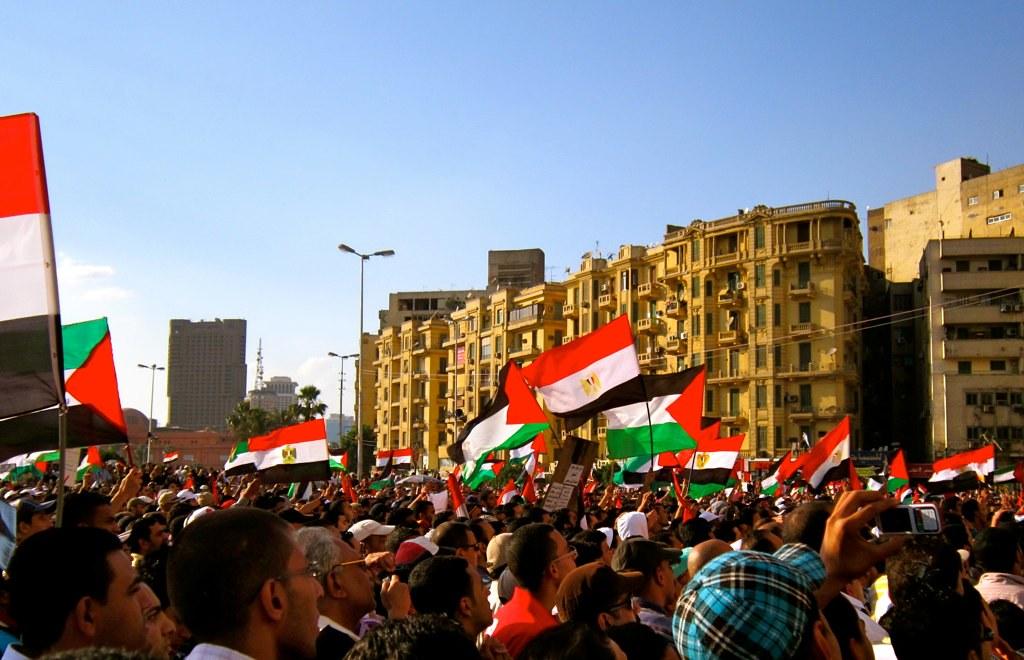
The decision by the states of Kassala and the Red Sea in eastern Sudan to remove content related to the December Uprising from primary school curricula including any phrases referring to “Freedom, Peace, and Justice”—has sparked significant controversy across various sectors of Sudanese society.
The decision included deleting a lesson titled “Freedom, Peace, and Justice” from the fourth-grade Arabic language textbook, removing composition topics regarding the December Uprising, and deleting “The Unity of My Country” from the third-grade reading book. Additionally, “Unit Five” was removed from the textbooks of the fourth and fifth grades of basic education.
Subsequently, the Sudanese Minister of Education, Al-Tuhami Al-Zain Hajar, issued a decree to form a high committee to review general education curricula to ensure they align with the current general conditions in Sudan and face existing challenges. Specialized committees were also formed to review pre-school and secondary education curricula, raising the possibility of further decisions to remove the December Uprising from middle and high school syllabi.
In contrast, the decision met widespread rejection from activists, teachers, and public opinion. Social media platforms buzzed with criticism, with many viewing the move within a broader context aimed at “erasing revolutionary awareness and civic values in light of the current war.”
The government of former Prime Minister Abdalla Hamdok, which took power following the fall of President Omar al-Bashir in 2019, had previously amended curricula by adding lessons documenting the December Uprising and its slogans in Sudan.
Burying the Uprising
In this context, the head of the Teachers’ Committee in Kassala State stated that “the educational community was surprised by the directives of the Director of Primary Education in Kassala to delete the fourth unit of the Information Technology syllabus, which addresses the principles of freedom, peace, justice, and the December Uprising—despite the fact that this director assumed his position carrying the slogans of that very uprising.”
He explained that “the deleted portions represent the noble values called for by the December Uprising and its slogans, which are part of the dreams of the youth and the Sudanese people. What happened is an attempt to erase historical memory, silence voices through selective censorship, and bury the uprising.”
The Sudanese Teachers’ Committee in Kassala State expressed its absolute rejection of “these decisions, which are considered illegitimate.”
Shaping Awareness
For his part, community activist Muawiya al-Faki stated that “the current war is not limited to weapons and field battles; it extends to an attempt to reshape public awareness, especially among children and young people, by excluding concepts associated with the uprising, such as freedom, peace, and justice, from school curricula.”
Al-Faki added, “The decision represents a direct targeting of the December Uprising and its noble values. It is an attempt to distance new generations from understanding modern Sudanese history, as well as linking it to the current political and security context. In my opinion, it is part of a broader struggle over memory and identity.”
The activist noted that “the December Uprising flows in the blood of the Sudanese people and dominates the hearts of children who have memorized its deep slogans. While they can delete it from books, they certainly will not be able to erase it from their minds.”
An Embodiment of Freedom
Al-Zain Khadir, a voluntary activist in Omdurman, says that “the goal of the December Uprising was foundation and reform. The slogan ‘Freedom, Peace, and Justice’ is an embodiment of freedom from fear, oppression, and the injustice experienced by all Sudanese—civilians and military alike. It also represents peace in its broadest sense, which transcends mere power-sharing agreements, and justice that addresses the history of violations, crimes, and tragedies to break the cycle of impunity.”
He added, “When the uprising called out its slogan ‘The revolution is a people’s revolution and the power is the people’s power,’ that was the minimum of its ambition. But seven years later, the scene looks completely different; there is an attempt to efface it through unjustified decisions.”
Khadir continued, “It has become certain that there is no freedom in the shadow of war, and no peace in a country turned into open arenas for targeting civilians. The uprising may recede, but it remains in the consciousness, resisting through resistance committees and emergency rooms that have faced the war with relief aid, communal kitchens, and attempts to protect what remains of the social fabric.”
A Catastrophic Situation
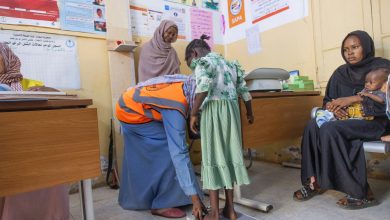
In a related context, retired teacher Osman Baqadi explained that “the prolonged duration of the war and the continuous chaos of its repercussions have extended to education, which has reached a catastrophic state in Sudan in the absence of the state and rational decision-making to save millions of children from being lost.”
Baqadi added, “Education must be separated from politics, and the role of schools in consolidating national and historical values must be protected, especially at an age that is most influential in shaping awareness. I wonder, after these unjust decisions to efface identity and delete lessons on the December Uprising: What is the fate of education in Sudan? Where are politicians taking it amidst a war whose fires still reach every aspect of life?”
The retired teacher concluded by saying, “Unfortunately, these decisions were circulated in the same format in Red Sea State, requiring schools to delete everything related to the December Uprising based on technical directives formed by the Federal Ministry of Education to review curricula in general. The educational community is currently on edge, waiting for new decisions that could exacerbate the educational crisis in the country.”