The Sudanese political arena has witnessed intense controversy over the past two days sparked by the June 30, 1989 System Dismantling and Public Funds Recovery Committee revealing the official resumption of its activities after a hiatus of more than five years, with former Sovereign Council member Mohamed al-Faki Suleiman appointed as its head.
Many believe that the committee’s resumption of work completes a national mission that was obstructed by the October 25, 2021 coup, and that the decision came at the right time after the Muslim Brotherhood was declared a terrorist group. Meanwhile, others questioned the committee’s ability to dismantle the Islamists, citing its current lack of enforcement mechanisms and the presence of several of its members outside the country.
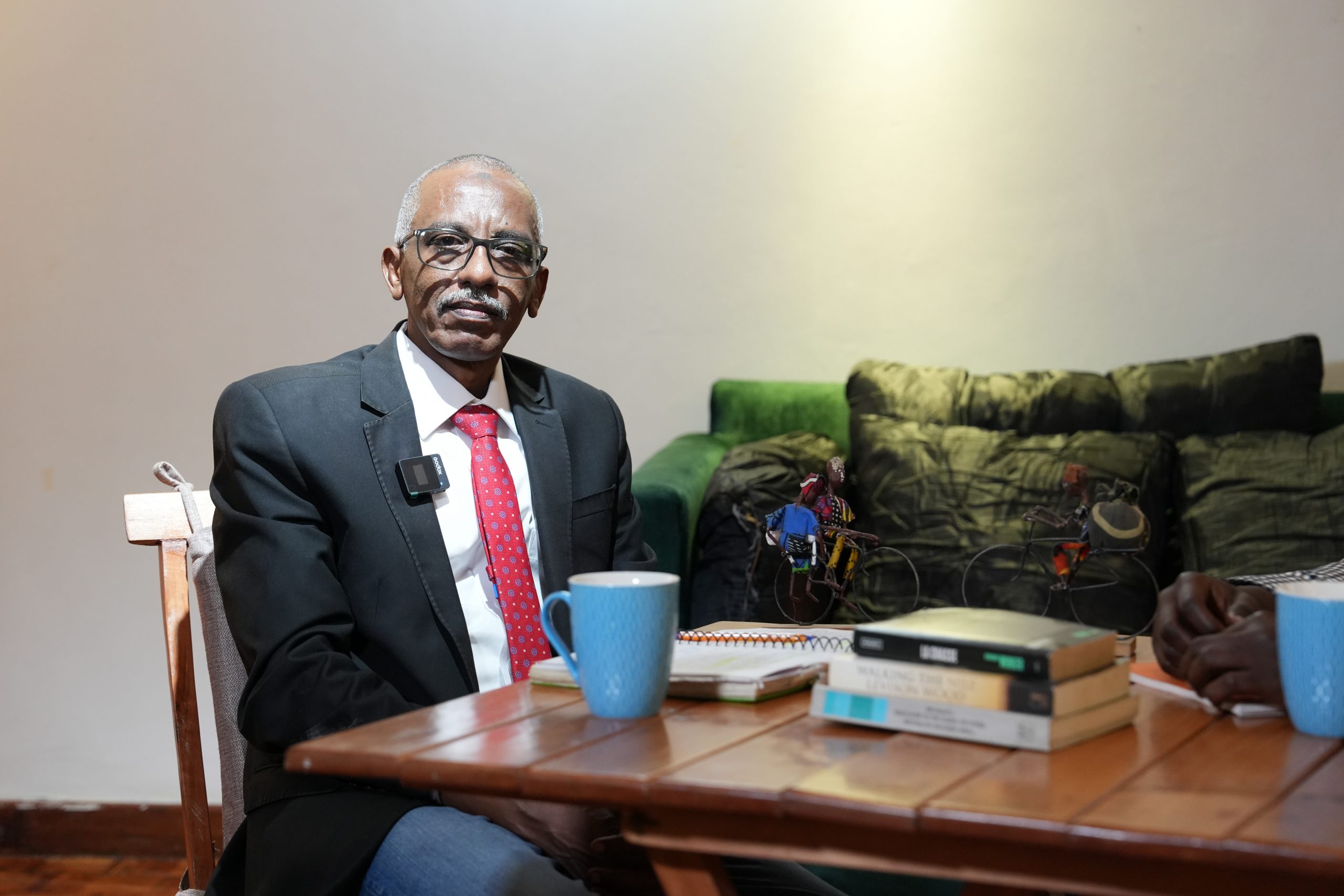
(Mashawir) conducted an interview with the committee’s rapporteur, lawyer Wajdi Salih, to talk about the dismantling committee’s plan for the coming phase, as well as the implementation mechanisms it follows in dismantling the Islamists and legally pursuing members of the organization.
Which entity issued the decision for the return of the Empowerment Removal Committee, and from where does it derive its legitimacy?
This committee is one of the institutions of the glorious December Revolution, and it was established to achieve one of its most important goals, which is dismantling the structure of the June 30 regime. Its legitimacy is derived from the revolution itself, and not from any authority existing now, whether in Port Sudan, Khartoum, or elsewhere.
Salih added, as for those who try to link it to the current authority, they are only seeking to link it to a coup that has no legitimacy in the first place, and therefore does not have the right to stop it.
He continued, the decision to resume work was not issued by any external party; rather, it is an internal decision taken by the committee after its meeting, where it decided to carry out its duties at this historical stage.
He further stated, the committee is performing the task entrusted to it by the forces of the revolution, and no other party can dictate how it works or define the frameworks of its movement.
What are the means and mechanisms followed by the committee in its work?
It is true that the committee will not work with the same means that were available before the October 25, 2021 coup or before the April 15, 2023 war, but there are other tools and means, especially at the regional and international levels, that allow for the exchange of information and the pursuit of looted funds without the need for an official capacity representing the state.
Salih explained, some tasks that require internal executive bodies will not be initiated until the return of a real authority that expresses the aspirations of the people. However, at this stage, information can be collected and archived, and strong files can be built covering the period before and after October 25, including cases of re-empowerment and changes in the ownership of public assets.
Some doubt the committee’s ability to dismantle the Islamists and recover funds?
Regarding the recovery of funds, it is a step linked to the establishment of a legitimate authority in the future, but current work focuses on tracking and inventorying them. Also, the appearance of the committee will not be as it was previously, but it will remain in contact with the masses as they are the true source of information.
There are great challenges, including the presence of several committee members outside the country. How will it work and what are the guarantees?
In the past, we were targeted because we were working from within the country and under the authority of the October 25 coup, which sought to disrupt the committee’s work because it represents the project of dismantling empowerment. Today, the challenges still exist, but we rely on the support of the Sudanese people and their abilities to overcome these obstacles.
As for the threats, we do not underestimate them, but we believe that we are not more precious than the martyrs who gave their lives for this people.
Salih continued, we will not be distracted from performing our mission by side battles or attempts to empty the revolution of its content.
Is the return of the committee part of political arrangements or an isolated step?
It is certainly not an isolated step; the task of dismantling the June 30 regime is an inherent part of the December Revolution project, and it cannot be achieved without a broad political consensus that reflects the spirit of the revolution.
Salih added, the committee is part of this project and not an entity separate from it.
How do you deal with the return of elements of the former regime to state institutions?
We are closely monitoring all cases of former regime elements returning to the civil service and state institutions, and we are working to document and expose them to public opinion. We have a database and previous information that enables us to classify and track everyone who holds a position within state institutions.
Is it true that the return of the committee took place with the approval of international parties such as the Quartet?
No foreign party has any connection to the decision for the committee to return. This is a decision we took within the committee independently since the 17th of last month. If there are regional or international circumstances that can help in performing the mission, we will benefit from them, but the decision is purely Sudanese.
How do you see the role of the committee in any upcoming democratic transition?
A true democratic transition cannot be achieved without dismantling the structure of the June 30 regime, as well as the structure established by the October 25 coup. This is a basic condition for building a democratic state.
What is your message to the political forces that see the committee as a tool of exclusion?
We are open to any objective criticism aimed at developing the committee’s work and improving its performance. As for those who refuse to dismantle the structure of the old regime, we say to them clearly: this position does not serve the project of the December Revolution and cannot be counted within its path.
Wajdi Salih added, in light of a complex political reality open to multiple possibilities, the return of the Empowerment Removal Committee appears to be an attempt to restore one of the most important paths of the December Revolution, even if with different tools. Between the challenges of the interior and the complexities of the exterior, the real bet remains on the awareness of the Sudanese street and its ability to protect the goals of its revolution and turn its slogans into a political reality that rebuilds the state on the foundations of justice and transparency.