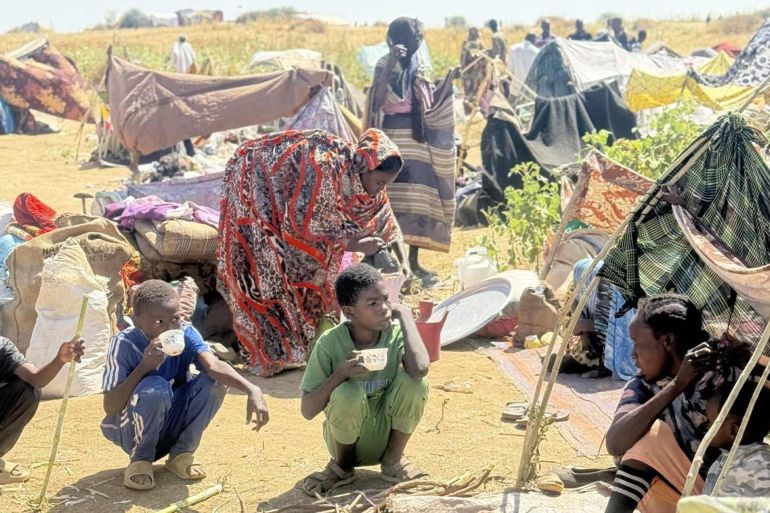
Thousands of Sudanese refugees living in camps across neighboring African countries are facing a worsening humanitarian crisis as food and medicine shortages deepen and international humanitarian assistance continues to decline. The reduction in aid has intensified hunger and contributed to rising cases of malnutrition, particularly among children, pregnant women, and the elderly.
Camp residents say their daily suffering is increasing with no end in sight to the war in Sudan, while several humanitarian organizations have scaled back or suspended assistance for food and medical supplies.
Hunger and Hardship
In Uganda’s Kiryandongo Refugee Settlement, home to around 36,000 Sudanese refugees, many families are confronting severe hunger after the World Food Programme (WFP) replaced food distributions with limited cash assistance.
Mukhtar Babiker, who has lived in the settlement for more than two years, told Mashaweer:
«”The limited food ration that thousands of Sudanese refugees depended on has stopped completely, leaving most people facing hunger, especially after humanitarian assistance was reduced.”»
He explained that WFP had previously provided each person with a monthly food package consisting of 12 kilograms of maize flour, 3 kilograms of beans, 500 grams of salt, and one liter of cooking oil. The ration was later reduced to 60 percent, then to 30 percent after six months, before being replaced with modest cash payments that are also expected to be reduced.
Babiker added:
«”We have no alternatives. There are no job opportunities here, and I cannot rely on support from my family in Sudan because they are suffering under similar conditions.”»
New Challenges
The hardships facing Sudanese refugees in Uganda extend beyond food shortages. Temporary shelters have been damaged by strong winds and heavy seasonal rains, leaving many families exposed to the elements.
Sanaa Al-Sharif told Mashaweer that the plastic sheeting used to build shelters has exceeded its expected lifespan of eight months, yet humanitarian organizations have not replaced it as needed.
She said:
«”We are facing tremendous hardship, especially with the heavy rains. We hope the war ends soon so we can return to our homes and our country.”»
Community Responses
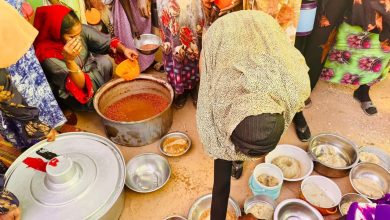
As hunger worsens and options diminish, Sudanese refugees in Uganda’s Palabek Refugee Settlement have revived the tradition of community kitchens, locally known as Takia, which served as a lifeline for millions of people during the war in Sudan.
Namarig Sheikh El-Din, who supervises one of the community kitchens, told Mashaweer:
«”Under the current circumstances, Sudanese refugees have no choice but to strengthen solidarity by sharing whatever food is available among members of the refugee community.”»
She added that the community could not remain idle while possessing traditions and values capable of providing a lifeline during the food crisis.
According to Sheikh El-Din, eight community kitchens have been established, preparing traditional Sudanese meals in a modest effort to ease hunger.
However, she stressed that these kitchens operate with very limited resources, relying entirely on donations sent through mobile banking applications.
«”These volunteer initiatives help reduce hunger, but they are not a solution. The situation requires large-scale intervention by humanitarian organizations.”»
Alarming Humanitarian Conditions
A report issued by the Regional Center for Training and Civil Society Development highlights the deteriorating humanitarian situation facing Sudanese refugees in Uganda’s Palabek Refugee Settlement, citing serious security, health, and livelihood challenges, as well as inadequate basic services.
The survey, conducted among 50 refugees, found that most residents are of working age, while women account for 60 percent of the camp population because many men remain inside Sudan for economic and security reasons.
According to the report:
– 82 percent of respondents reported security threats inside the camp, including theft and gender-based violence.
– Most participants described health conditions as poor, citing waterborne diseases and inadequate medical services, particularly affecting women and children.
– 70 percent of refugees depend on food assistance, which they described as insufficient, while employment opportunities and adult education programs remain almost nonexistent.
The report calls for urgent action to improve security, strengthen health and livelihood services, create employment opportunities, and expand education programs in order to prevent the humanitarian crisis from worsening further.