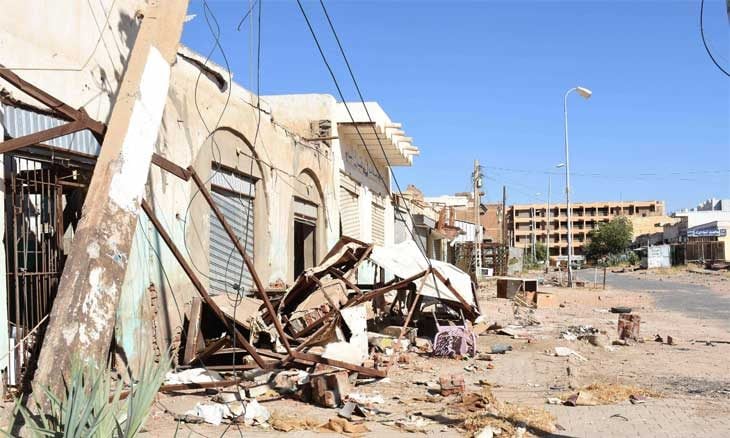
Since the outbreak of war between the Sudanese Armed Forces and the Rapid Support Forces (RSF) in mid-April 2023, Sudanese states far from the frontlines have witnessed a significant rise in crime, including murder, armed robbery, theft, fraud, and cyber-enabled scams. The increase has coincided with mass displacement, the proliferation of weapons and narcotics, rising unemployment and poverty, and the escape of high-profile criminals from prisons who later sought refuge in these relatively safer states. As a result, the consequences of the conflict have spread into communities that have not experienced direct military confrontations.
The sharp rise in crime has prompted police departments to intensify security operations, leading to the arrest of suspects involved in murder, arms trafficking, and drug smuggling, highlighting the scale of the security challenges created by the conflict.
According to security observers, the increase in crime reflects the mounting pressure on Sudan’s justice and law enforcement institutions, as well as the complex security environment that has emerged during the war and is expected to remain a major challenge in the post-conflict period.
Contributing Factors
Retired security specialist Al-Zubair Abdelwahid told Mashaweer that the ongoing war has done more than destroy infrastructure.
> “It has also fueled a steady rise in crime and the emergence of new patterns of criminal activity, including killings committed for robbery, fraud, and deception. These trends have been driven by widespread unemployment, poverty, the proliferation of firearms, and increasing drug abuse. Authorities continue to seize illegal weapons and various types of narcotics during security campaigns.”
He added that the war had opened the door to regional and international smuggling networks operating across Sudan’s porous borders amid a broad security vacuum, turning the country into a favorable environment for organized crime.
According to Abdelwahid, drug trafficking has become one of the principal drivers of crime.
> “It is no longer an isolated phenomenon but an organized activity that has infiltrated Sudanese markets and targeted young people. Crimes are increasingly committed under the influence of drugs, including cold-blooded killings carried out for robbery. More alarming is the escape of thousands of prisoners—including dangerous criminals—since the beginning of the war, allowing many to return with greater impunity because of weakened oversight and limited legal accountability.”
He further argued that displacement and worsening living conditions have directly contributed to violent crimes, particularly homicide, as growing hardship has intensified aggressive behavior. He also noted the arrest of suspects impersonating members of the regular security forces, illustrating the changing nature of criminal activity.
Despite these challenges, Abdelwahid emphasized that security agencies continue to make significant efforts to combat crime and pursue offenders, helping restore a measure of public confidence. However, he stressed the need for stronger oversight and more effective measures to curb the spread of illegal weapons and narcotics.
Growing Aggression
The war, now entering its fourth year, has not only devastated infrastructure but has also left deep psychological scars that have altered social behavior and increased levels of violence within communities.
Mental health specialist Ibtisam Mahmoud said the conflict has become one of the strongest catalysts for aggressive behavior.
> “The war has brought out the worst in many individuals and caused psychological disorders that could persist for years after the fighting ends. These conditions require urgent treatment and psychosocial support before they become chronic and increasingly difficult to manage.”
She explained that while psychological disorders may stem from environmental or hereditary causes, the trauma created by war has become a major trigger that intensifies underlying vulnerabilities.
Mahmoud noted that Sudanese people have endured repeated traumatic experiences, contributing to a growing tendency toward violence. She linked this trend to psychological distress, drug abuse, severe poverty, and prolonged exposure to killings and human rights violations, all of which have normalized violence within society.
> “Today, even minor disputes can escalate into deadly violence. These reactions cannot be separated from the psychological impact left by the war.”
Rehabilitation Needed
Social specialist Ahlam Yousif argued that the consequences of the war extend beyond psychological and security concerns to the erosion of Sudan’s social fabric, creating conditions that facilitate criminal activity.
She said that restoring stability requires more than voluntary returns of displaced people.
> “The country also needs comprehensive social and economic planning that guarantees access to essential services and legitimate livelihood opportunities. Unemployment and poverty contribute to family breakdown and encourage behaviors previously uncommon in Sudanese society, expanding the scope of criminal activity. Preventing these trends from worsening requires both psychological and social rehabilitation.”
Yousif observed that while crime existed before the war, it has increased significantly during the conflict because of weakened legal accountability. Murders, thefts, fraud, and cybercrime involving extortion and online threats have all become more widespread.
She also warned that states once regarded as relatively safe have not escaped the consequences of the conflict. Large inflows of displaced people have strained public services and increased poverty, while crimes have been reported in displacement camps and rented homes occupied by displaced families, including murders committed during robberies.
A Package of Measures
Economics and political science professor Mawahib Abdel Fadil said the continuing war has triggered a severe economic crisis that has become a major driver of deteriorating living conditions and rising crime.
She explained that shrinking economic activity and the loss of income have pushed many people into poverty.
> “Rising unemployment and limited job opportunities have expanded poverty, forcing some individuals to seek illegal means of meeting their basic needs. These pressures have contributed to increased criminal activity, including violent robberies and killings motivated by the need for money or food.”
She added that the large numbers of displaced people hosted by relatively safer states have placed enormous pressure on public services and labor markets while contributing to a sharp decline in production, creating fragile economic and social conditions that have fostered criminal activity.
Abdel Fadil also pointed to declining incomes, soaring inflation, eroding purchasing power, and the widening gap between people’s needs and financial capacity as clear indicators of growing social and security instability.
Concluding her remarks, she stressed that combating crime requires a comprehensive package of political and economic measures, including creating employment opportunities, supporting small businesses to improve livelihoods, and expanding civilian protection mechanisms to reduce crime and promote long-term stability in Sudan.