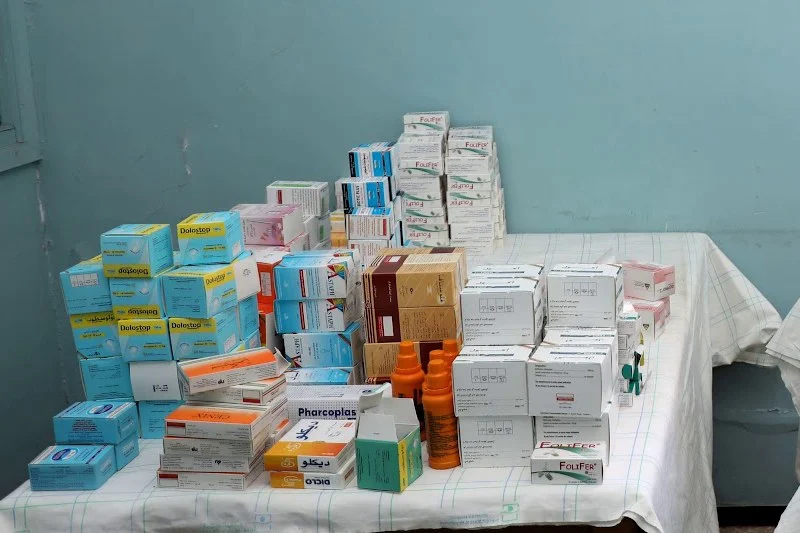
As Sudanese people continue to face severe crises in food, healthcare, and security due to the ongoing conflict between the Sudanese army and the Rapid Support Forces (RSF) for nearly 30 months, deadly diseases and epidemics have spread amid a critical shortage of medicines. At the same time, expired and counterfeit drugs—known locally as “silent death”—have flooded the black market, posing a grave threat to thousands of lives in a humanitarian and health tragedy of unprecedented scale.
The pharmaceutical distribution infrastructure has suffered massive destruction since the outbreak of the war, as warehouses, pharmacies, and facilities belonging to pharmaceutical companies and international organizations were looted or bombed. This has left the country unable to supply life-saving medicines, while unregulated, smuggled drugs have proliferated due to the absence of oversight.
Sudan’s annual pharmaceutical imports have plummeted from $360 million to just $50 million, while about $150 million circulates in the parallel market, revealing how the war economy now dominates the drug sector.
The National Medicines and Poisons Board under the Ministry of Health has warned of the widespread circulation of substandard and unverified medicines, saying that despite its ongoing efforts to curb the phenomenon, results remain limited.
Chaos and Pain
Ijlal Suleiman, a resident of East Nile in Khartoum North, recounted how her mother died after taking counterfeit malaria medicine.
> “After the funeral, while sorting my mother’s belongings, we found the medicine box she had been using. It was expired since 2019. Our grief deepened knowing that she had died because of this fake drug,” she said.
She added that since the conflict began, Khartoum has descended into chaos, making it nearly impossible to control the illegal trade of expired or spoiled drugs.
> “It’s heartbreaking that people are profiting from the suffering of patients. Finding medicine is extremely difficult, and when you do, it feels like a miracle.”
She explained how she had to search across the three cities of the capital for malaria treatment and eventually bought it off a street vendor in Omdurman’s Sabreen Market, unaware that she was buying poison for her mother.
> “The medical report confirmed that she died of blood poisoning. Selling medicine in the open, exposed to sunlight and dust, is enough to render it toxic. Sadly, my mother’s story mirrors that of hundreds of patients suffering from malaria, dengue fever, tuberculosis, and hepatitis.”
Collapse of Trust
Yousef Abdelrahman from Omdurman described Sudan’s health system as collapsing:
> “There’s no real healthcare, no life-saving medicine, and people no longer trust what’s sold in pharmacies or markets.”
He said fake drug traders operate freely due to a lack of oversight and legal accountability, which has worsened under wartime chaos.
> “My brother died after using counterfeit insulin we bought from street vendors. It was like he never received treatment at all.”
Abdelrahman added that the war must end before any effort to combat pharmaceutical corruption can succeed.
The “Silent Death”
Pharmacist Habbab Bakri said Sudan’s pharmaceutical sector collapsed on the first day of the war:
> “Factories stopped, supply chains broke down, and the reserve stock ran out. The unregulated market became the main source of medicine, turning into a thriving trade in deadly toxins—‘silent death’—with total impunity.”
She warned that smuggled medicines often travel long distances under poor storage conditions.
> “Humidity changes the color and taste of drugs, rendering them useless—or worse, poisonous, leading to blood poisoning and kidney failure.”
Bakri said patients with chronic diseases—like heart disease, diabetes, and hypertension—are the most vulnerable, since many of the drugs available are expired or counterfeit.
Smuggling Routes
Pharmacy owner Abu Ubaida Abdelghafour from Omdurman explained that expired drugs have long circulated in Sudan, but the trade has intensified catastrophically during the current conflict.
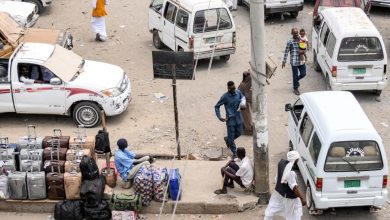
> “After local factories stopped, medicines began entering Sudan through multiple smuggling routes, mainly from South Sudan to Rabak (White Nile State) and through eastern border states.
He added that these drugs pose a serious public health risk, as patients take them unaware of their toxic contents, which can cause treatment failure, worsening illness, and drug-resistant infections, especially with malaria and antibiotics.
Limited Oversight
Mohamed Bashir, Secretary of the Oversight Department at the National Medicines and Poisons Board, acknowledged that the war has severely limited drug regulation.
> “When the army regained control of Khartoum, we began inspecting pharmacies for noncompliant medicines in accordance with the Medicines and Poisons Act.”
He said the latest biannual inspection report showed some improvement in drug availability and a decline in violations due to enhanced monitoring by provincial branches.
Bashir added that the council has formed a high-level monitoring committee with participation from customs, economic security, and standards authorities to prevent the entry of smuggled medicines, and that drug prices are now regulated.
> “We are fighting drug smuggling through inspection campaigns and stronger enforcement under the 2009 Medicines and Poisons Act and the Consumer Protection Law,” he concluded.