Questions are mounting once again in the Sudanese capital, Khartoum, following the spread of allegations regarding fees imposed for the transport and burial of bodies. This has sparked widespread resentment and astonishment among families grieving the loss of loved ones amidst a conflict that has lasted for more than two years.
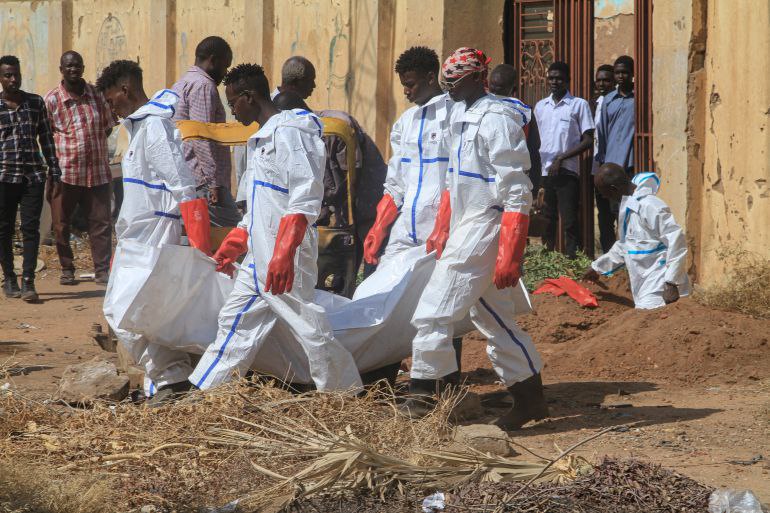
The issue of “corpse transfer fees” surfaced on social media over the past few days at a time when the crisis of accumulated bodies in neighborhoods, schools, and public facilities is worsening, reflecting the scale of human loss and violations witnessed in modern Sudan.
Official Denial
For its part, the Sudanese Ministry of Health confirmed that all services related to the collection, transport, and burial of bodies are provided free of charge, and no fees are imposed on families.
The ministry explained to Al Arabiya Net that transport operations are carried out through direct coordination between health authorities and local municipality headquarters. These operations are supervised by a joint committee involving relevant authorities without any financial charge, whether symbolic or otherwise.
Similarly, the Forensic Medicine Authority in Khartoum State emphasized that what is being circulated regarding fees or financial demands is baseless. They stated that services are provided for free despite the massive logistical challenges in collecting and organizing the remains.
The Authority clarified that it has managed to collect and transport 15,000 bodies from neighborhoods and schools since April of last year. It expects to declare Khartoum State free of bodies buried outside of formal cemeteries by the middle of this year.
Field Testimonies
However, field testimonies from families and citizens tell a different story. One citizen reported in a social media post that the forensic authority requested sums of money reaching up to 30 million Sudanese pounds to transport bodies from the Salha neighborhood in south Omdurman to outlying cemeteries.
He noted that while these demands were not officially documented, they represent a form of exploitation amidst the crisis.
Another citizen, Ali Abayazid, described the situation in the Al-Salama neighborhood in southern Khartoum after the withdrawal of the Rapid Support Forces (RSF). He stated that the cemeteries were completely full and that local youth were forced to clear the streets of bodies after the liberation of southern Khartoum, in scenes he described as “beyond imagination.”
He added that “some houses and neighborhoods were ‘locked in with the dead'” in ways that are difficult to even conceive. He pointed out that operations to exhume temporary graves in playgrounds and public squares have taken place as part of the authorities’ efforts to organize the remains.
Mass Graves
Field estimates indicate the presence of thousands of accumulated bodies in Khartoum alone, while mass graves have extended to Wad Madani and other areas of central Sudan.
Prosecutor General Intisar Ahmed Abdel Aal confirmed that the delay in opening graves is due to the enormous volume of victims. She added that there are ongoing efforts to transfer remains to proper cemeteries and to hold those responsible for the violations accountable.